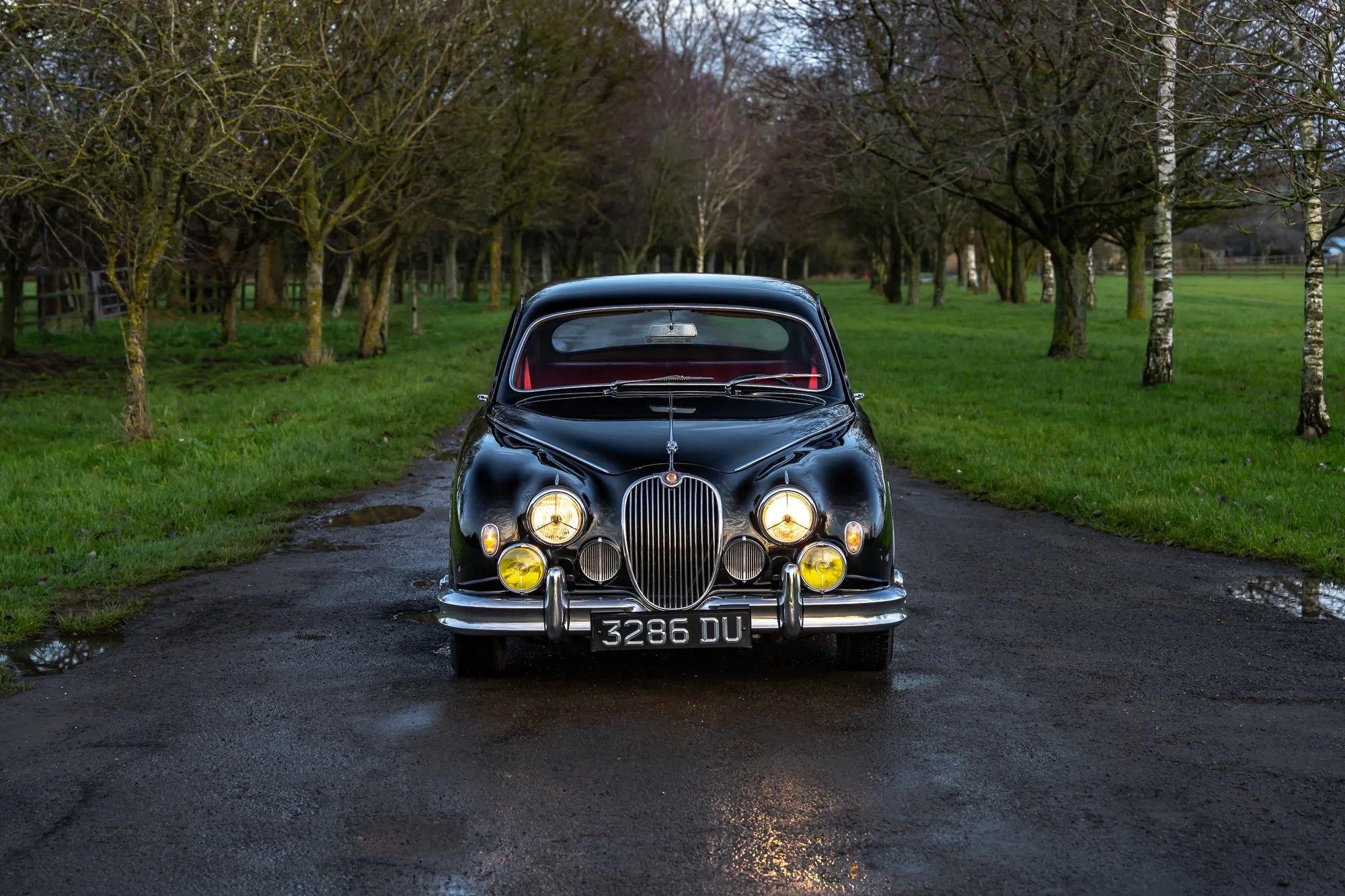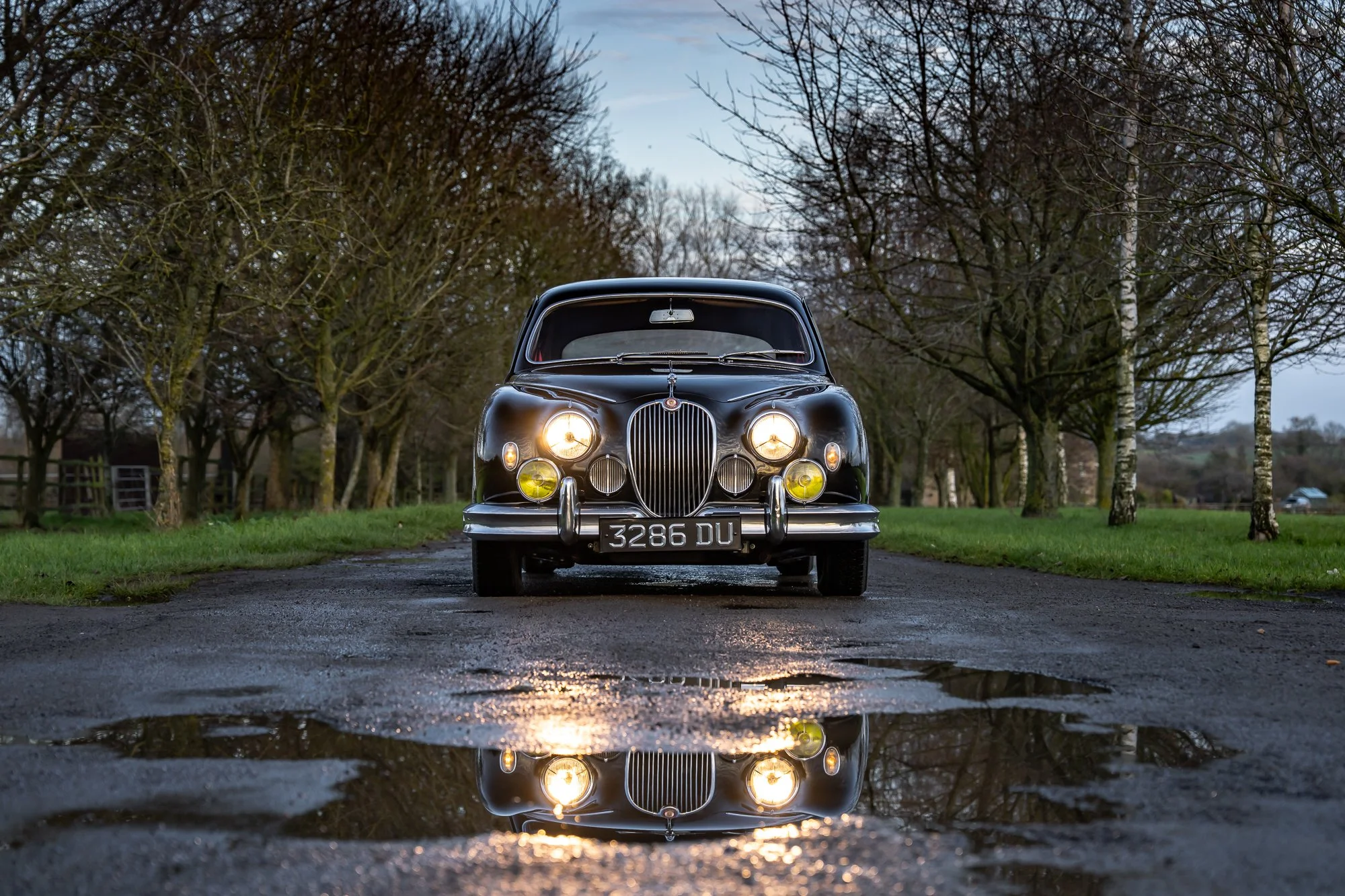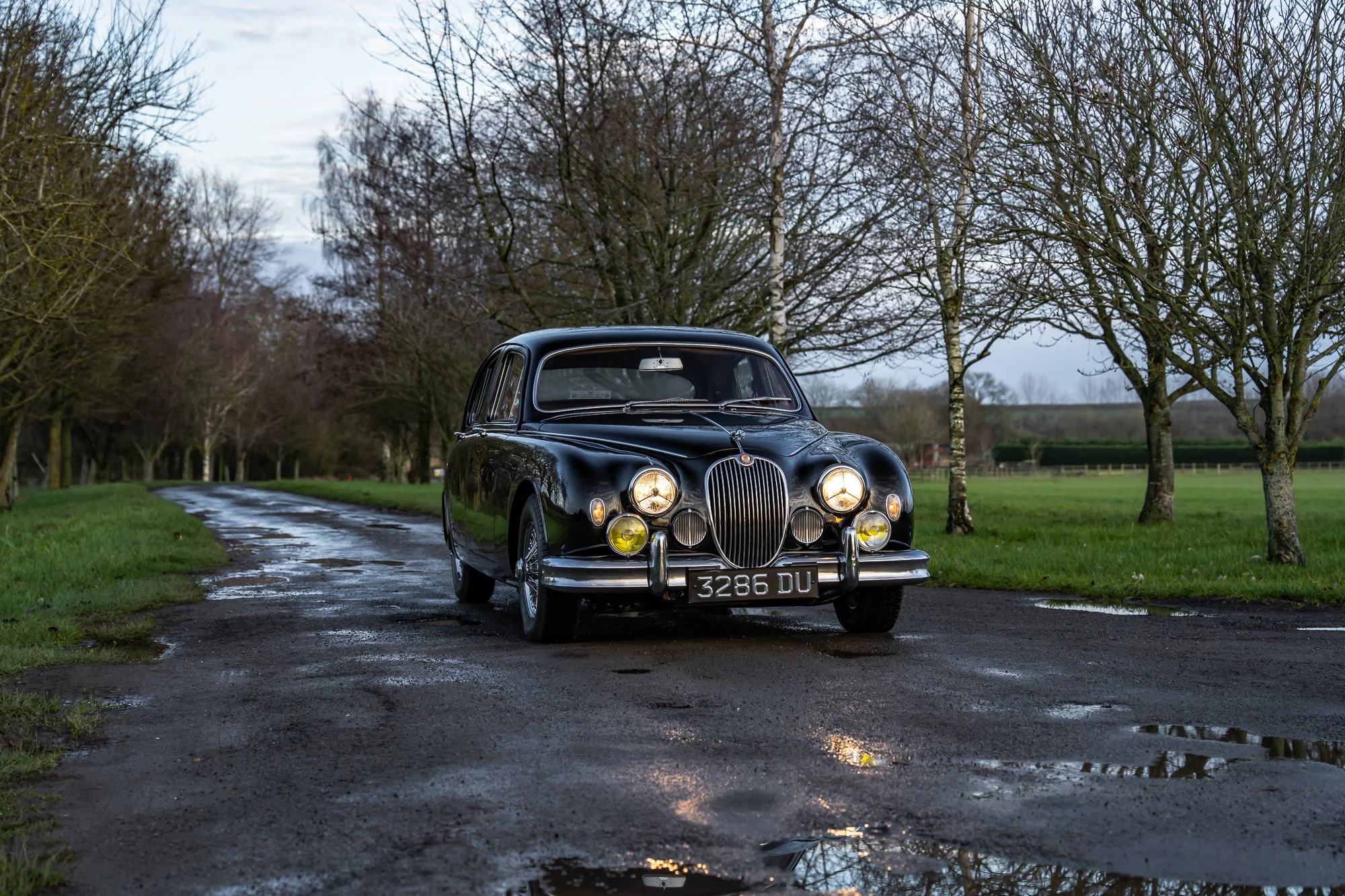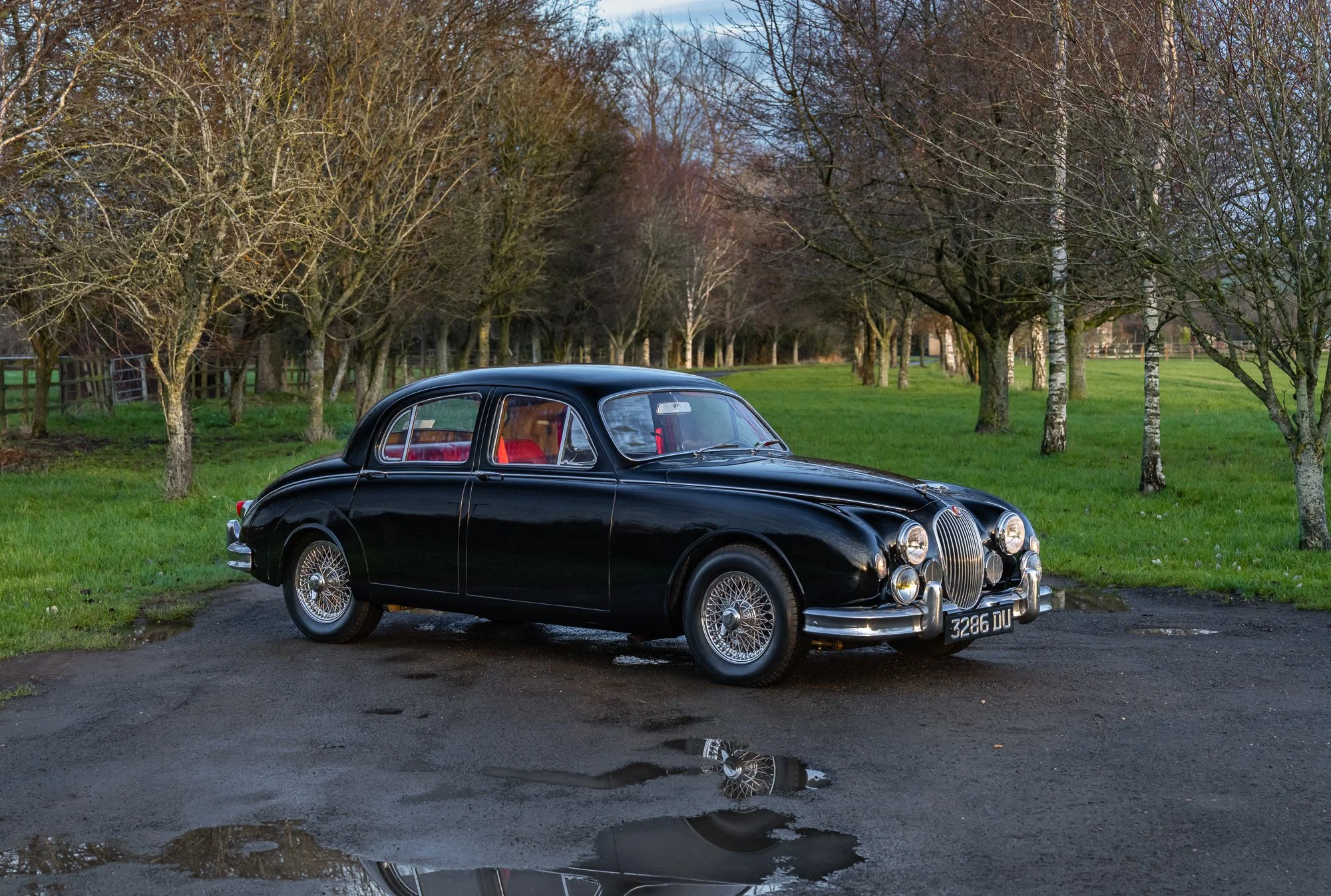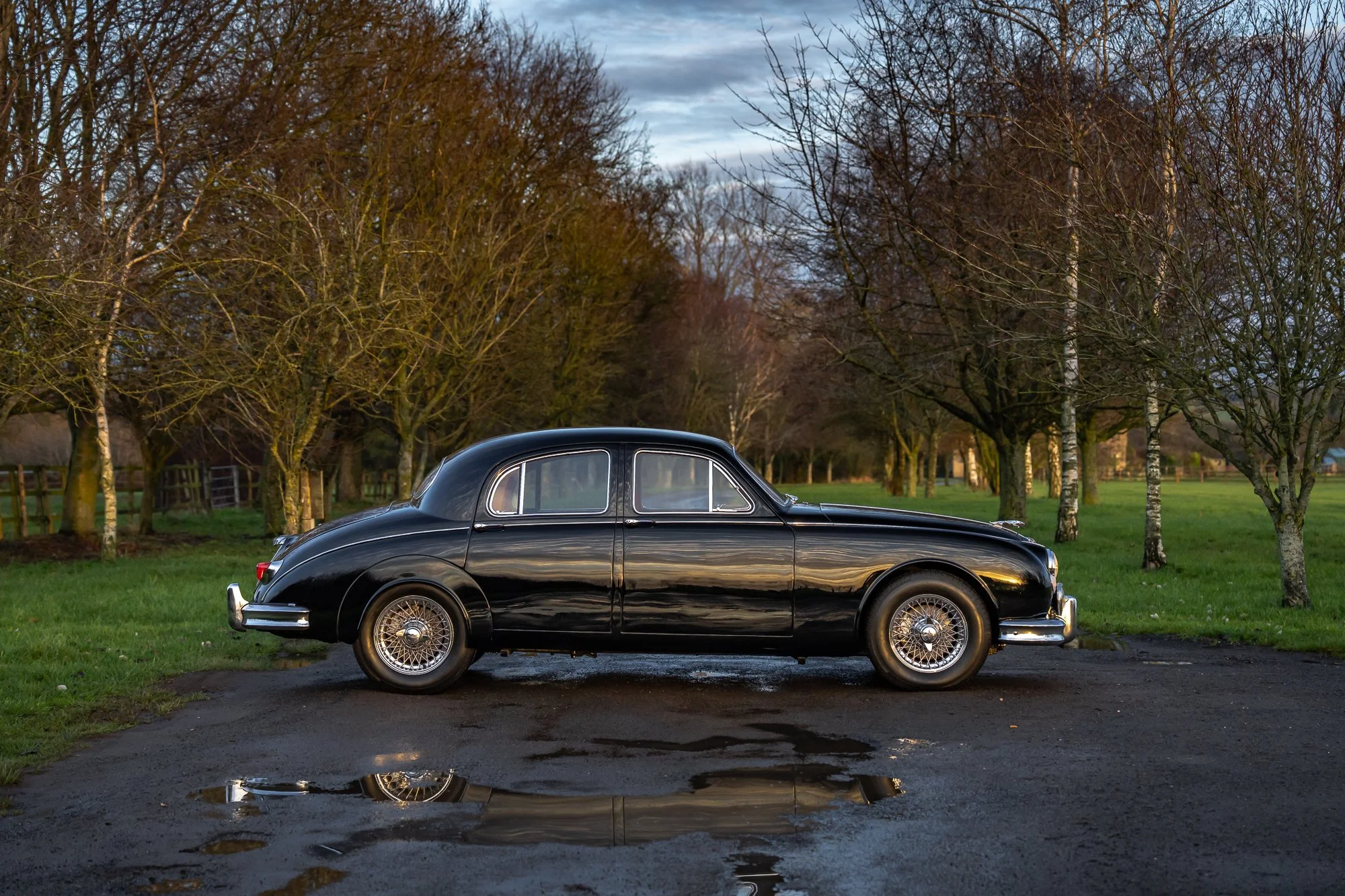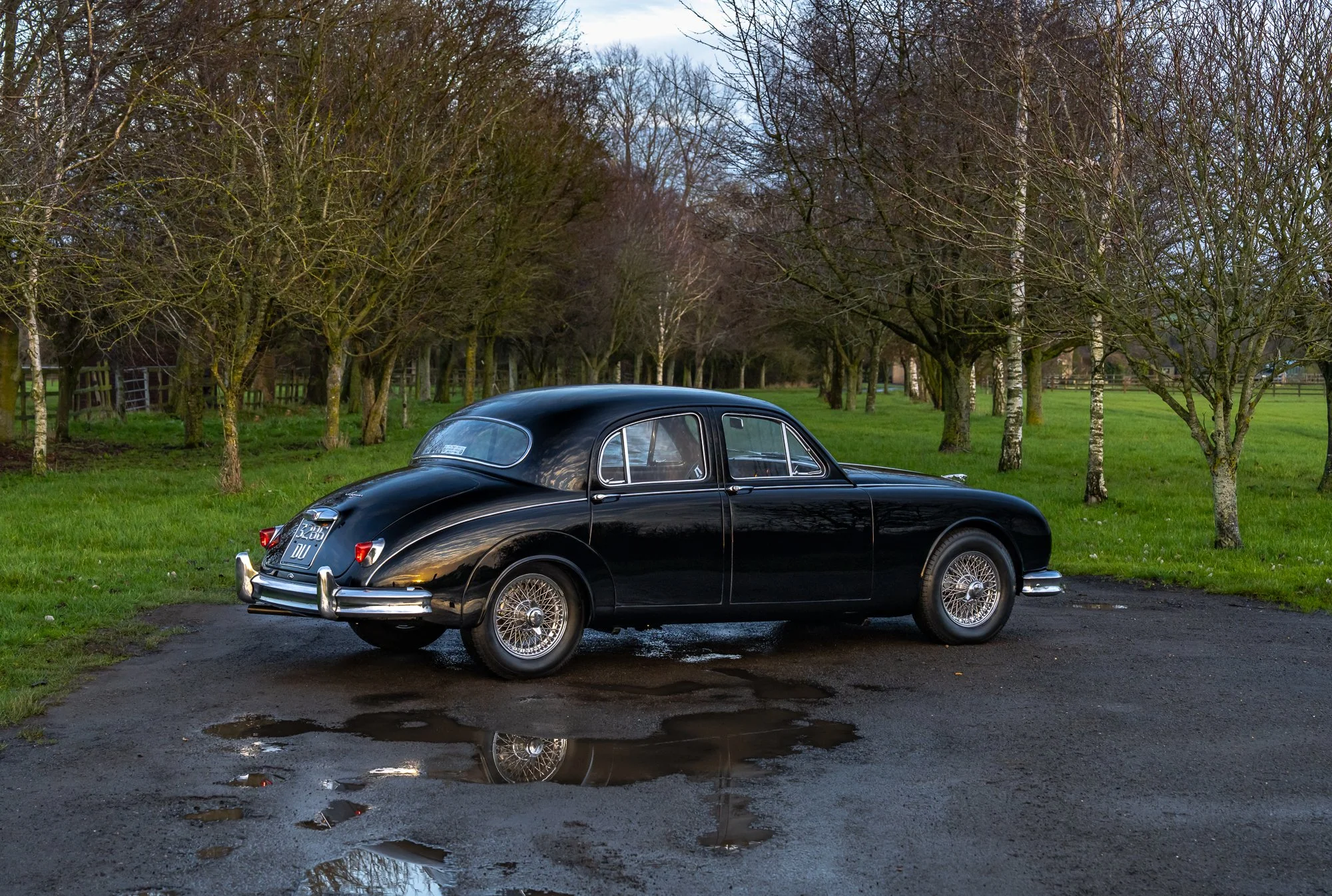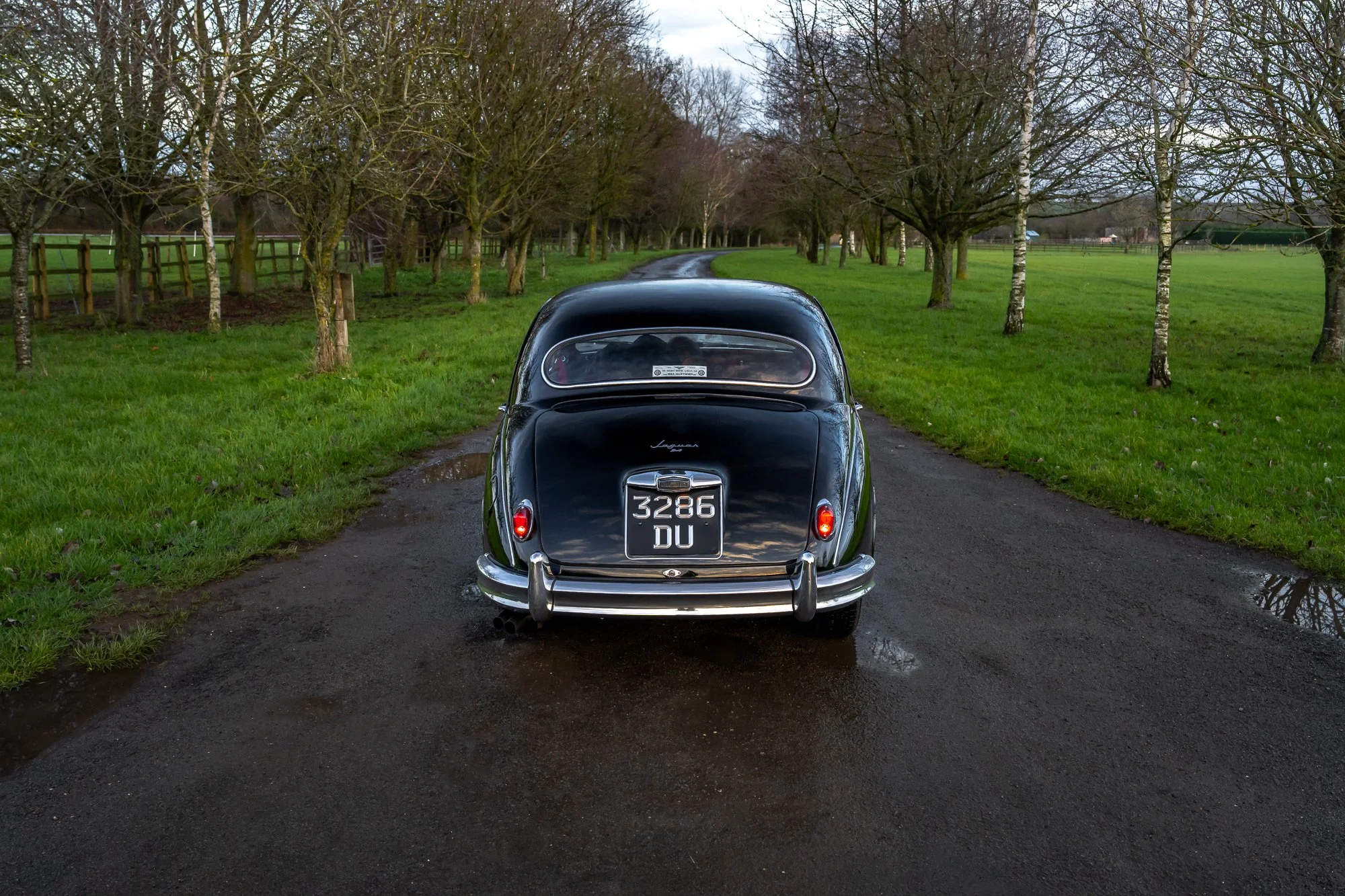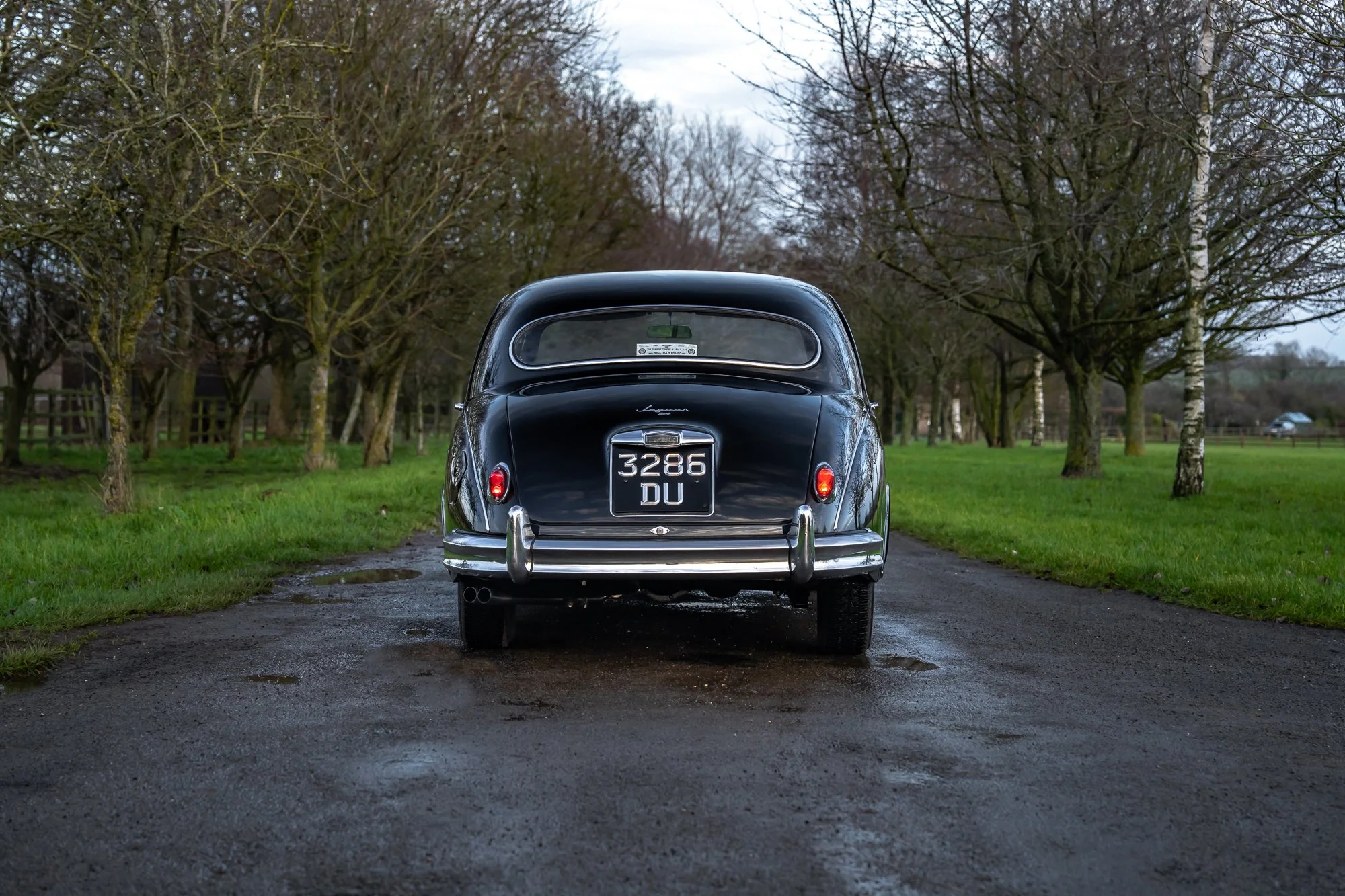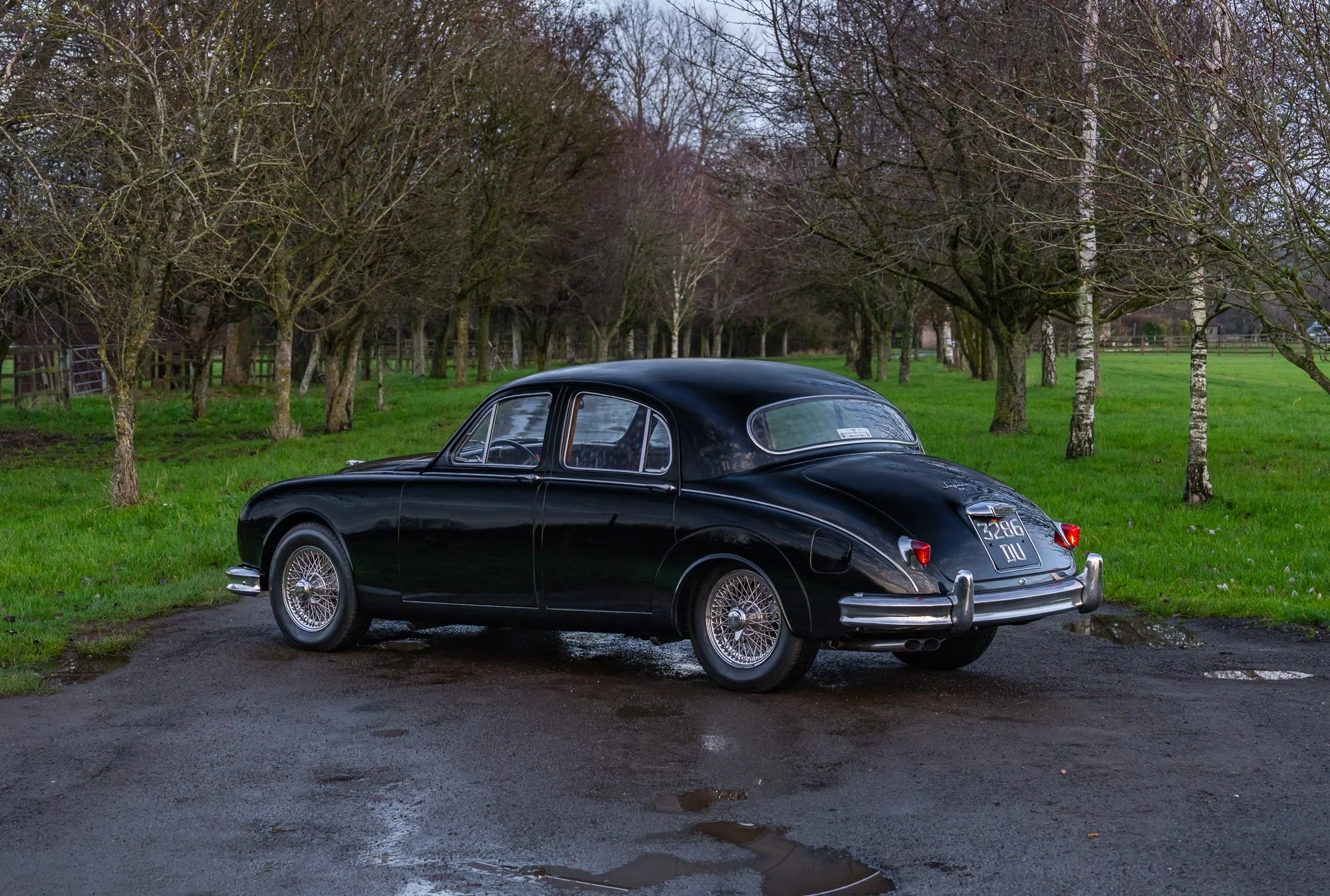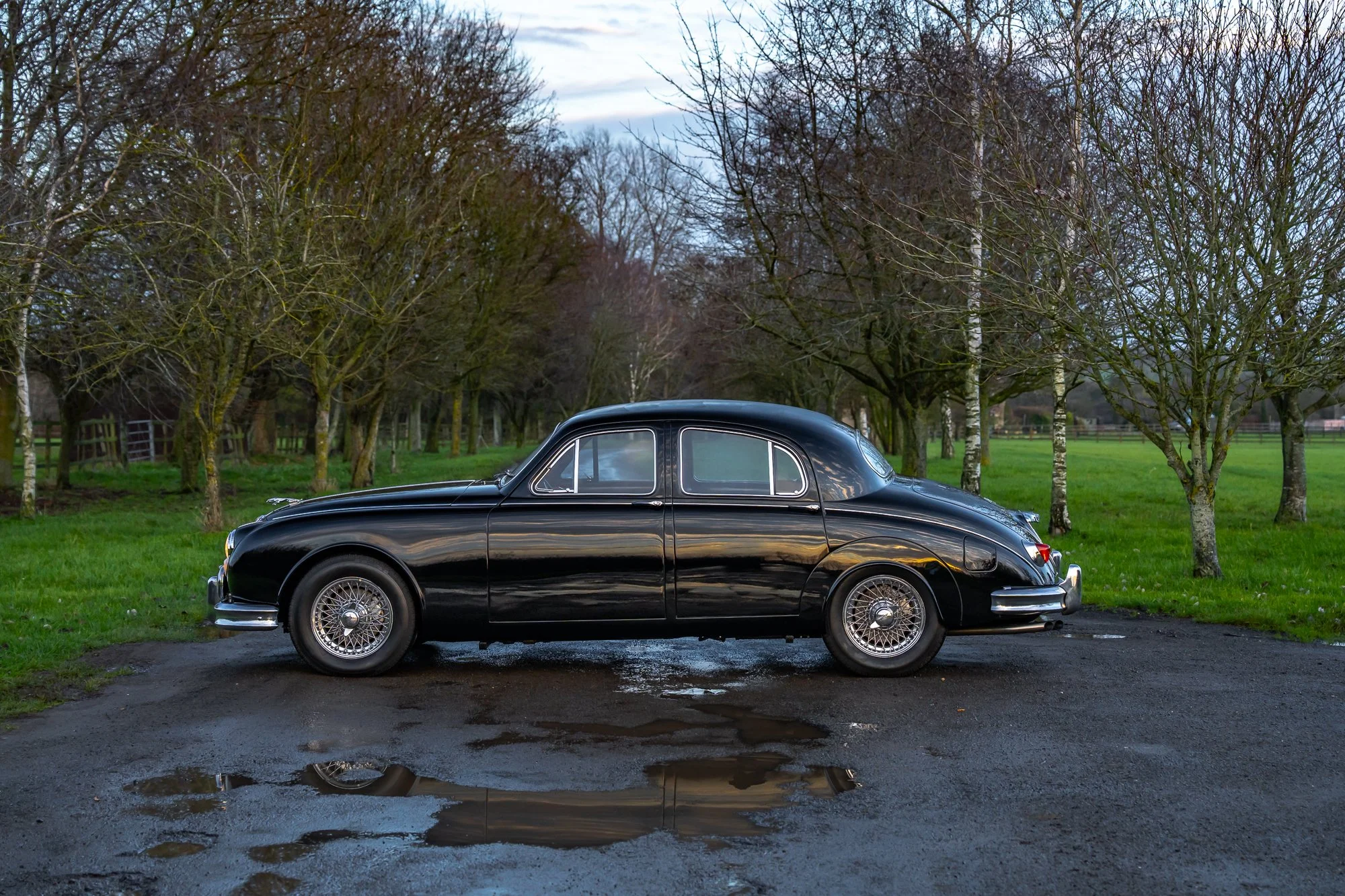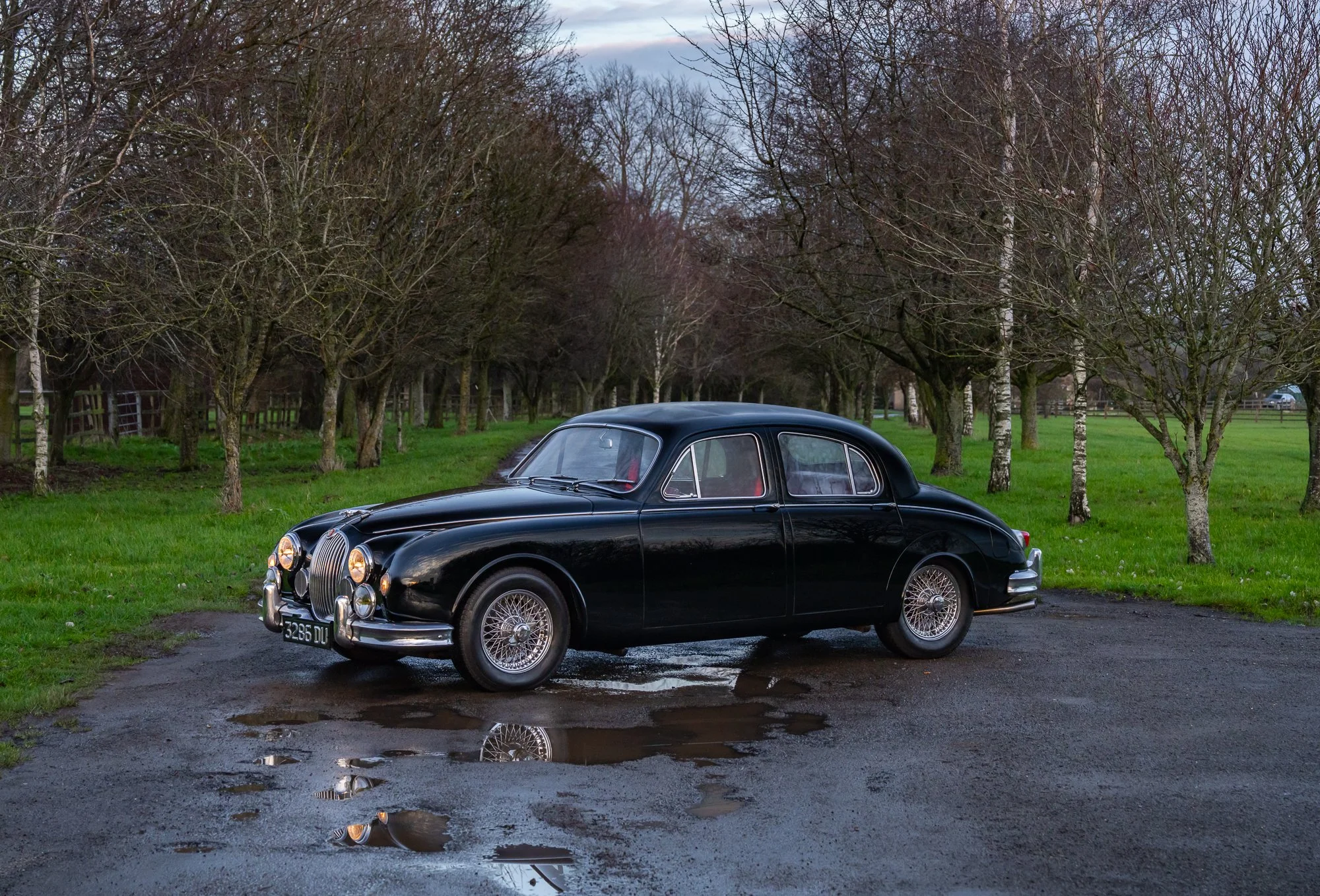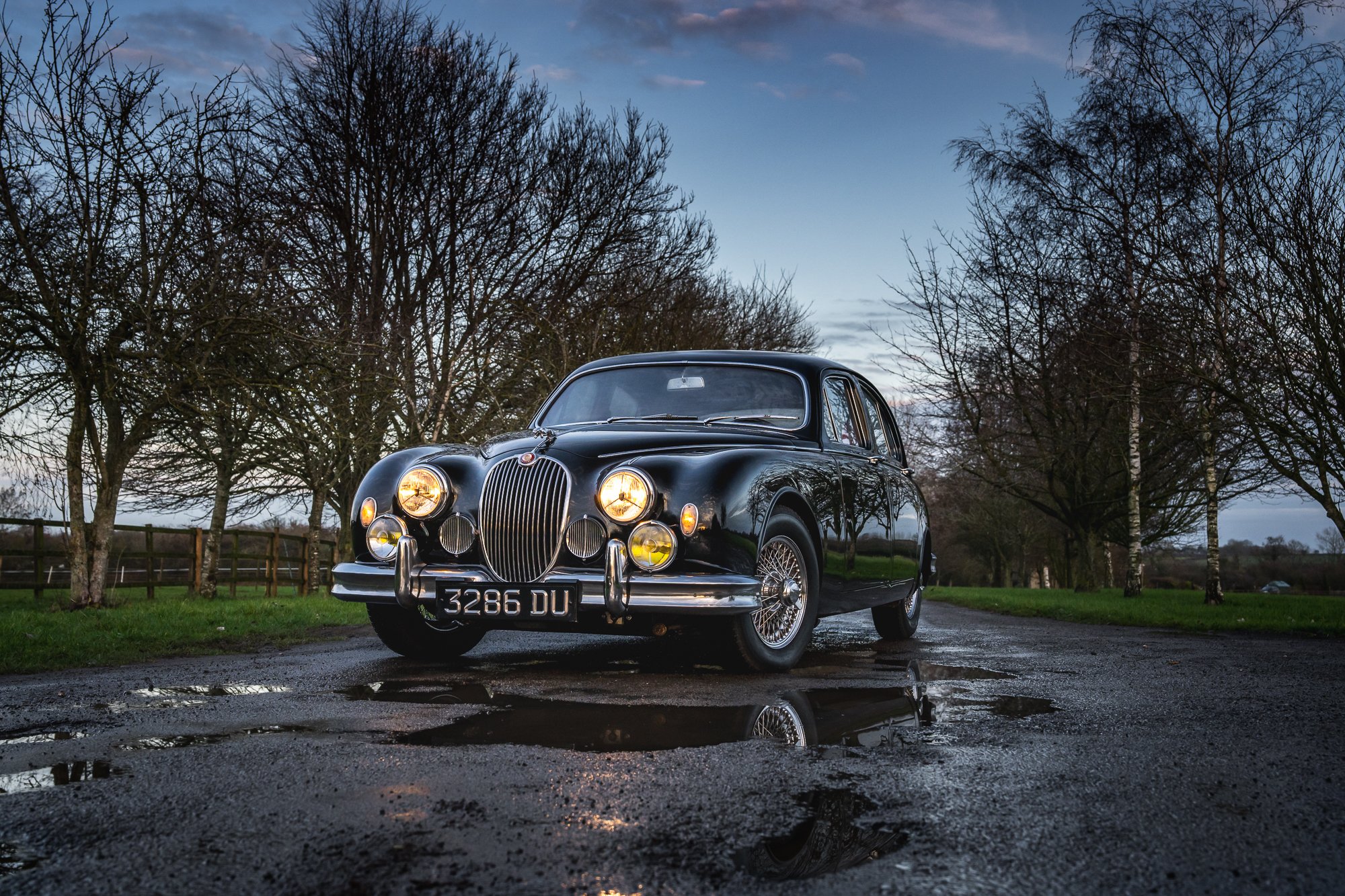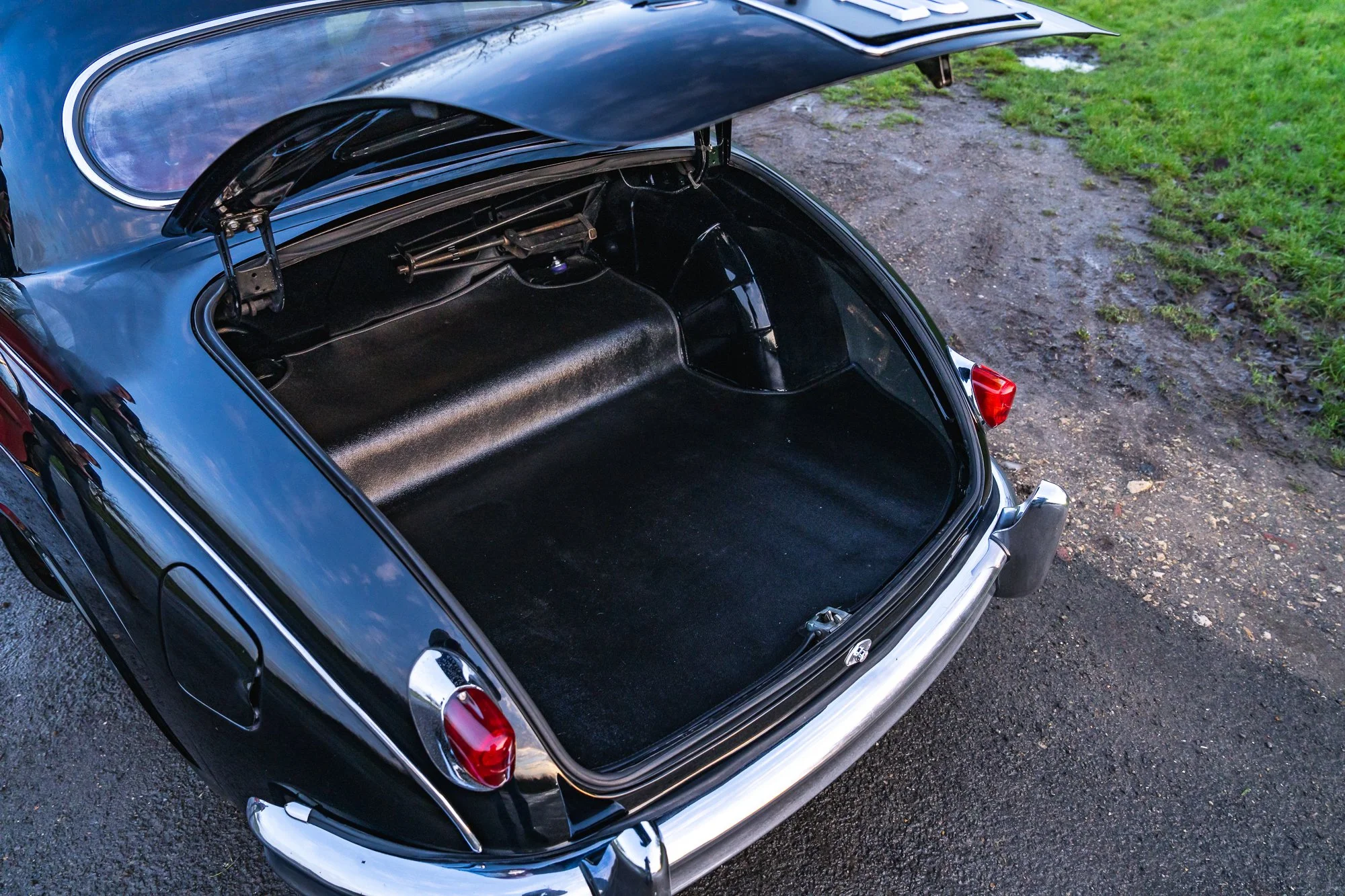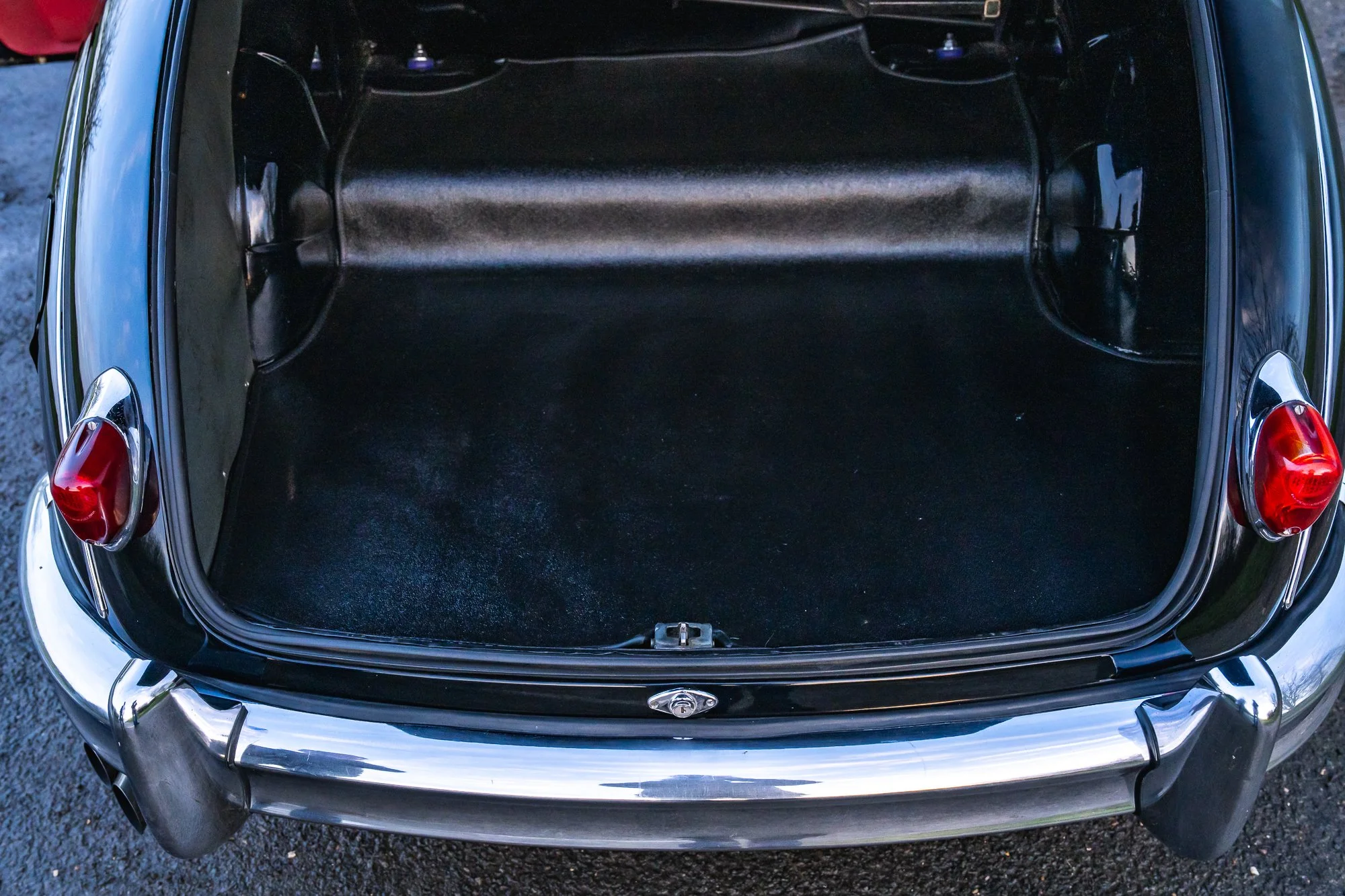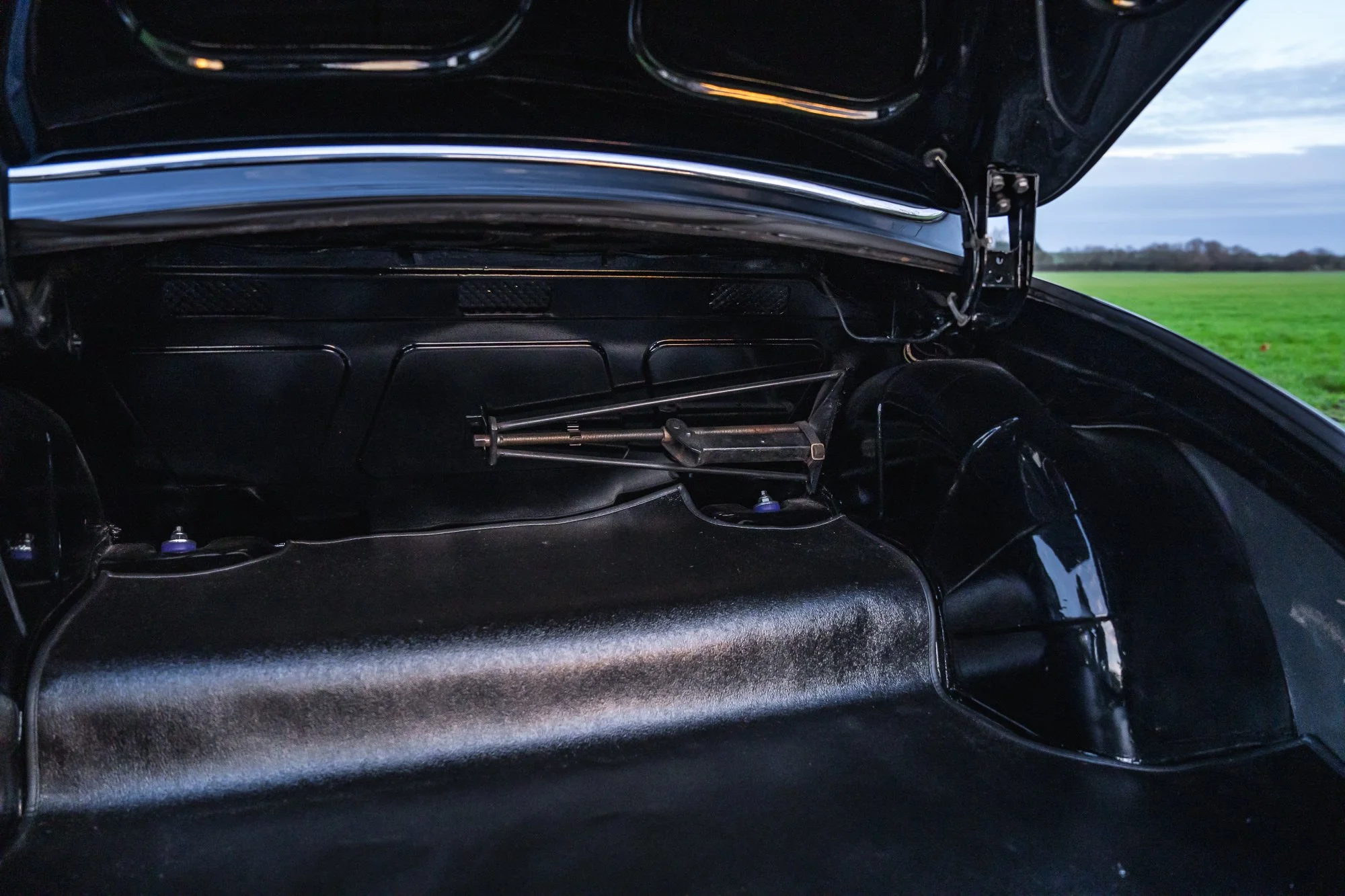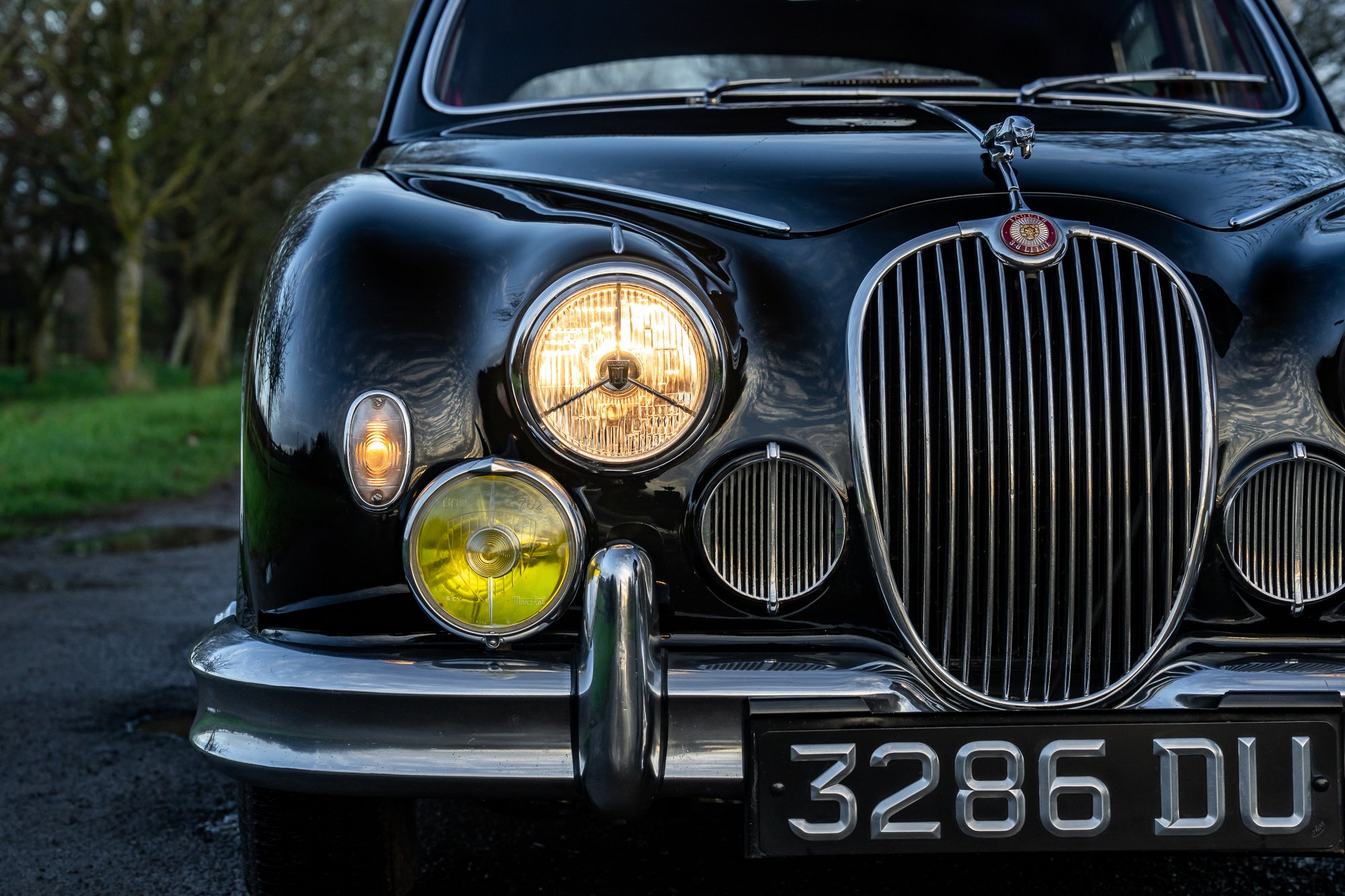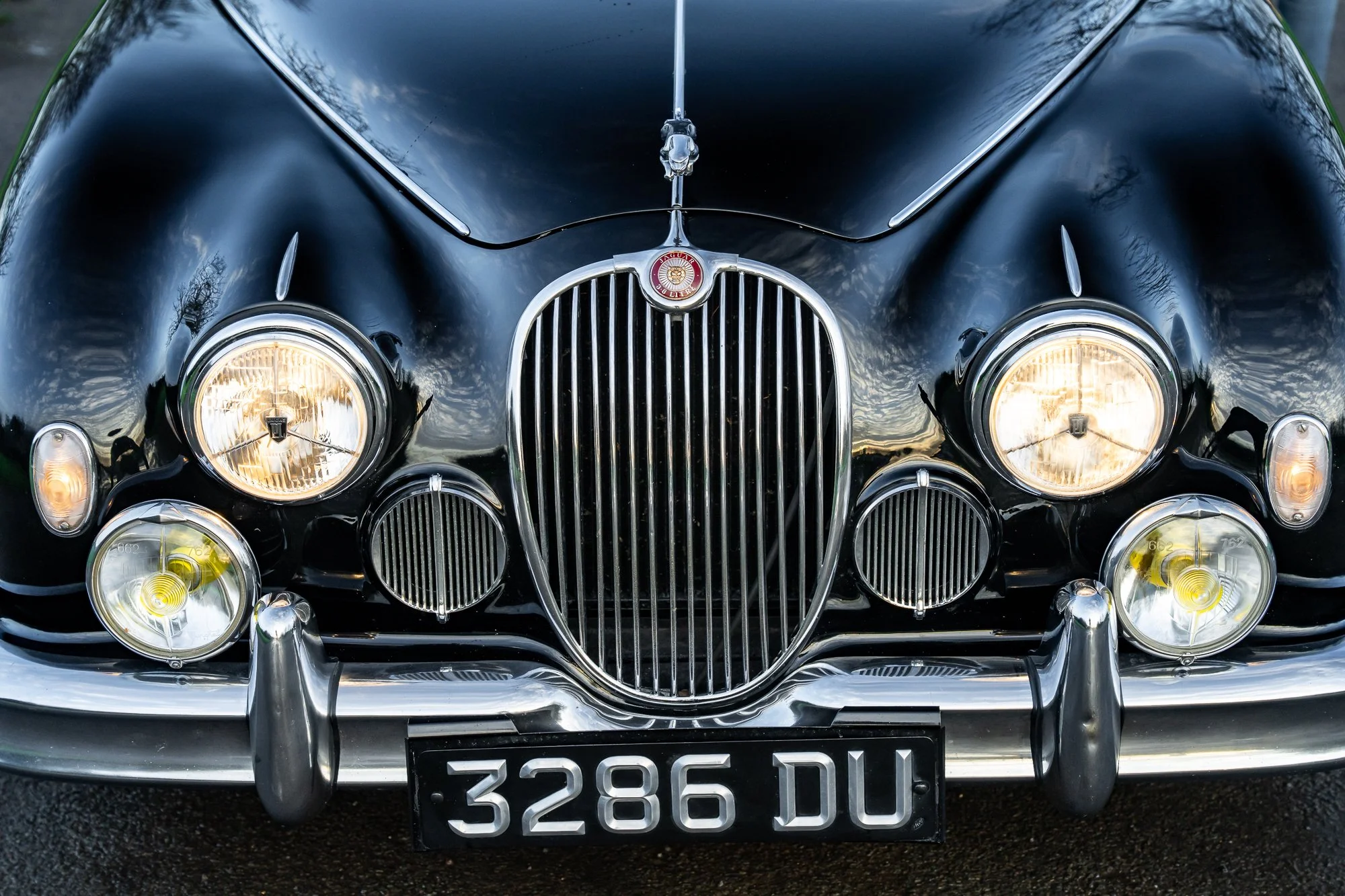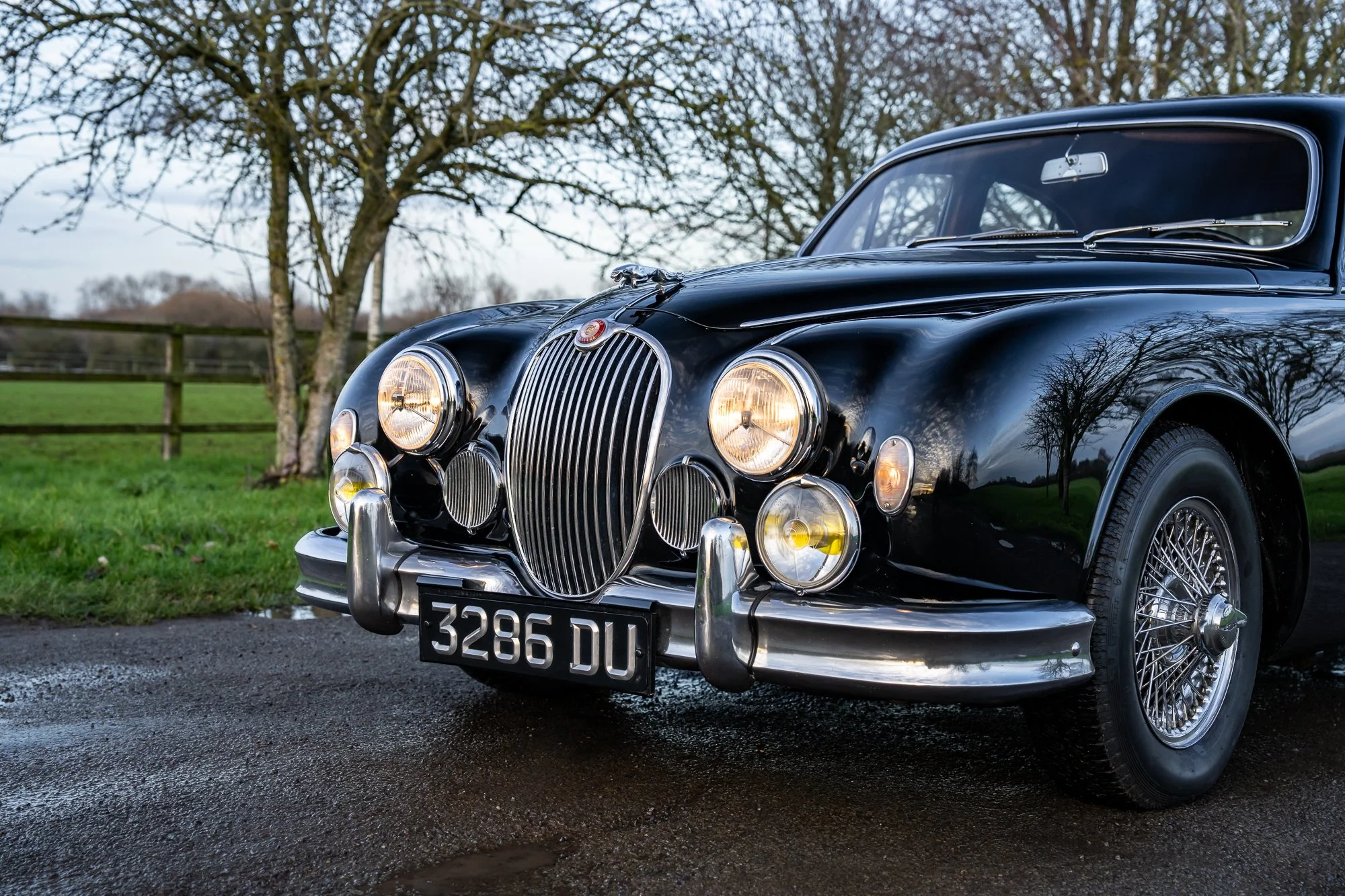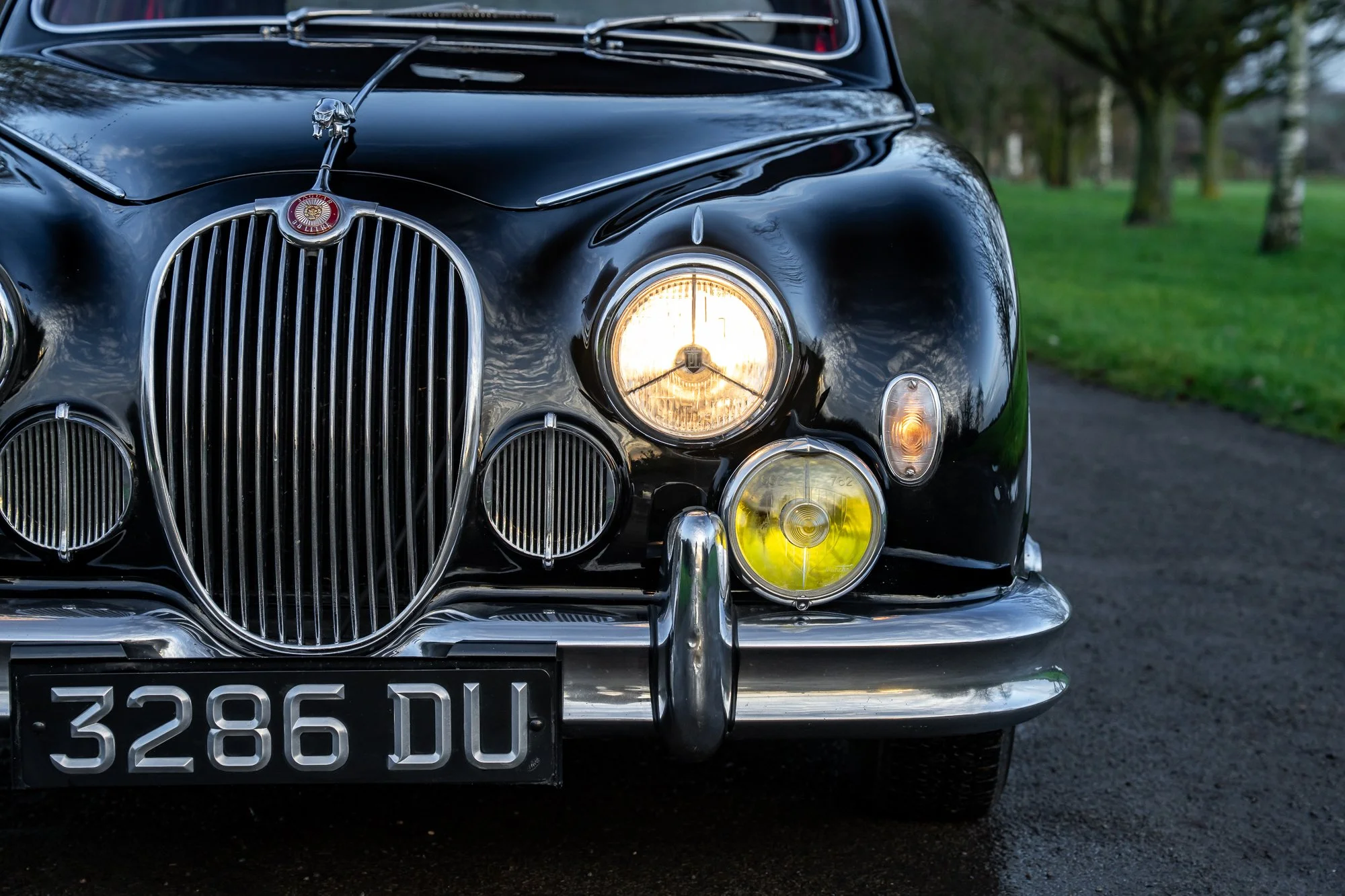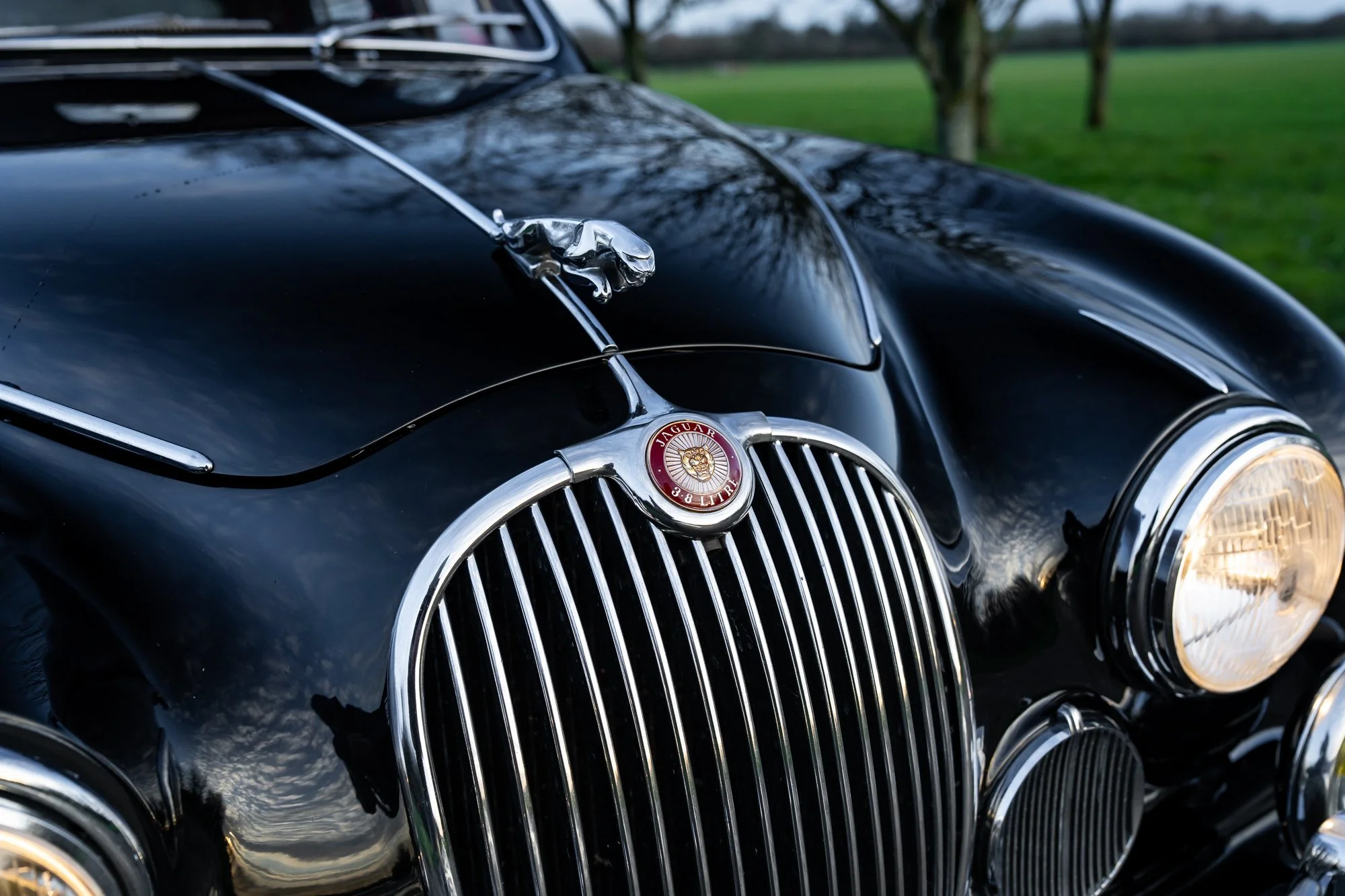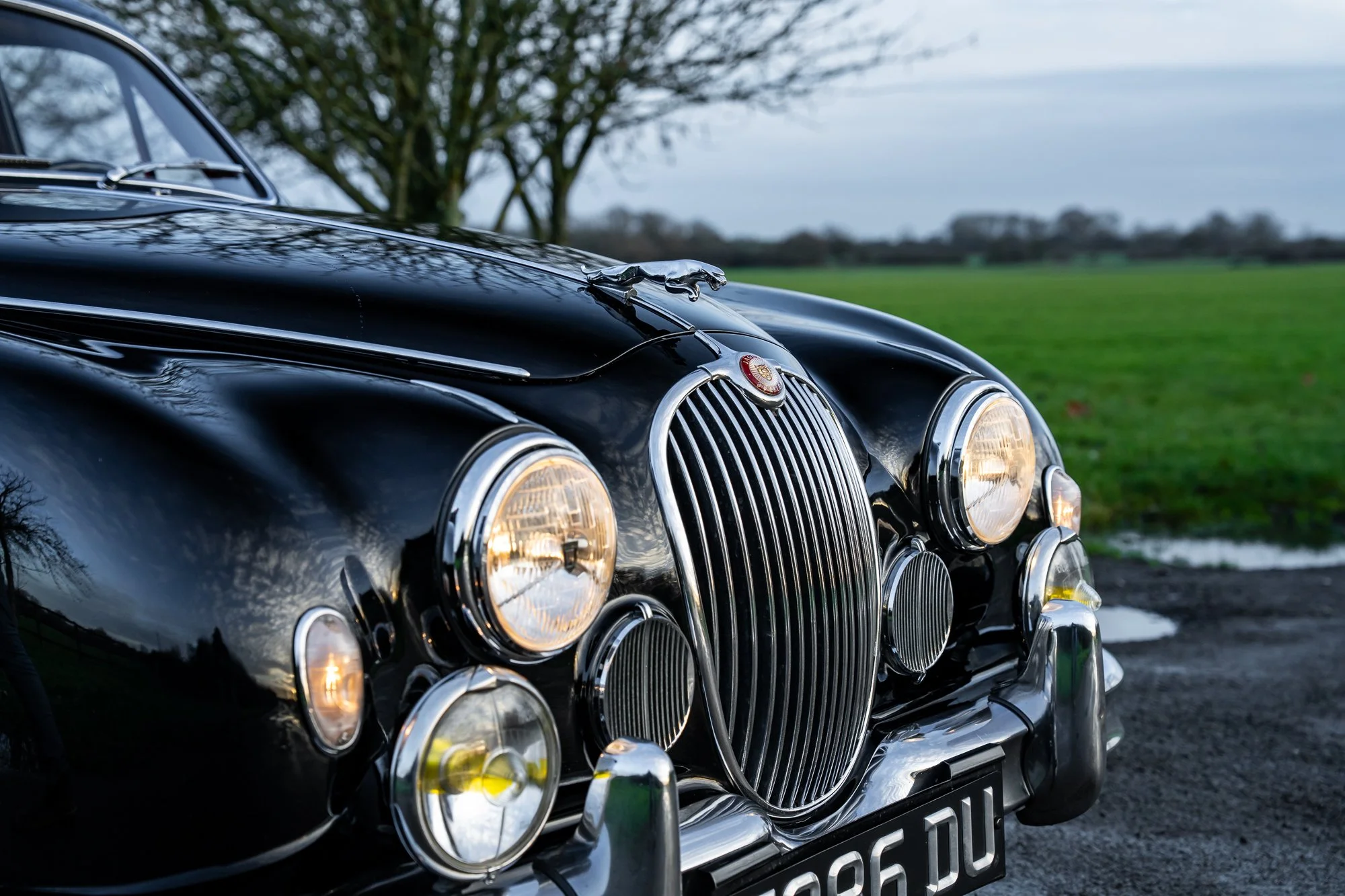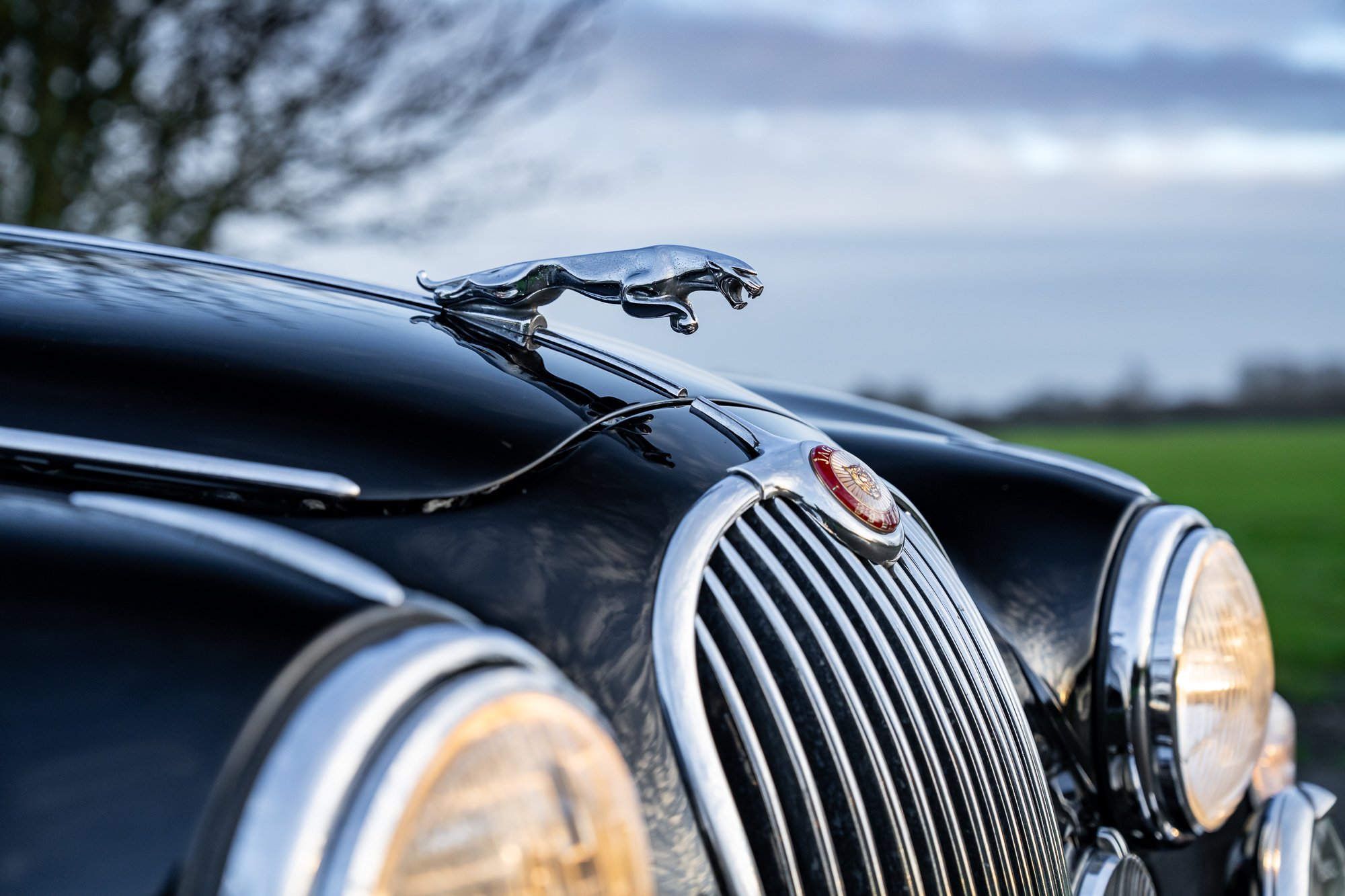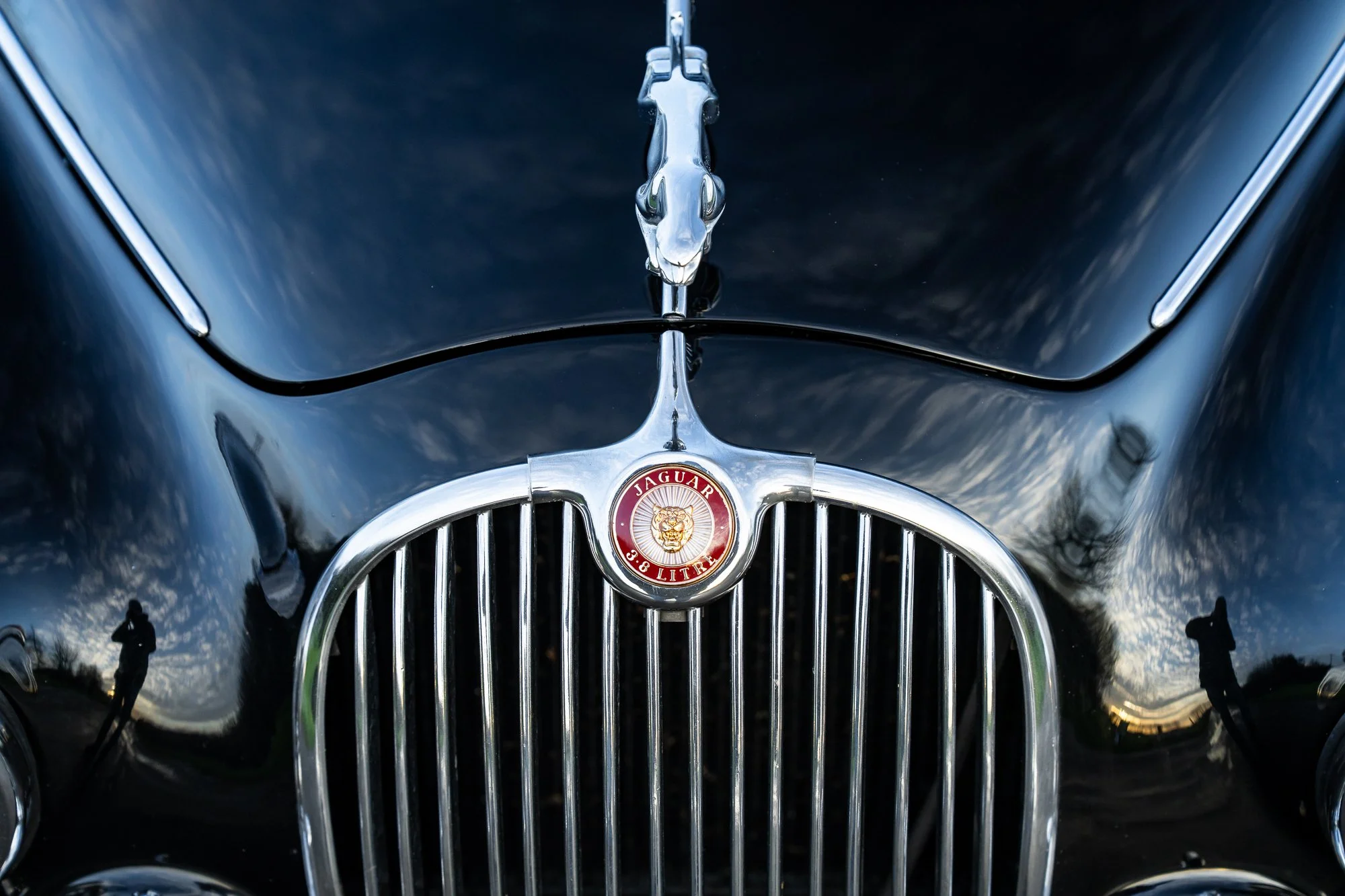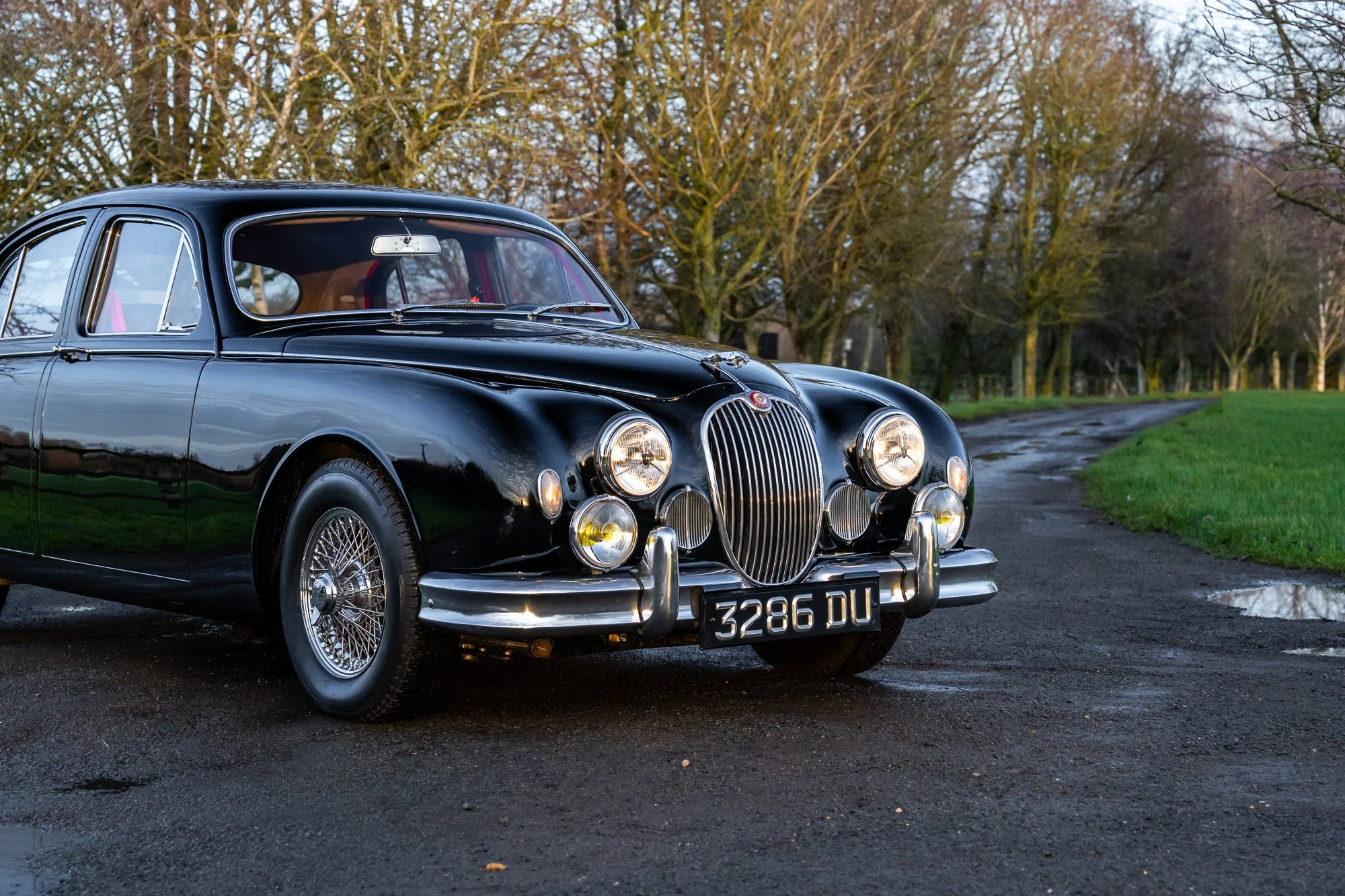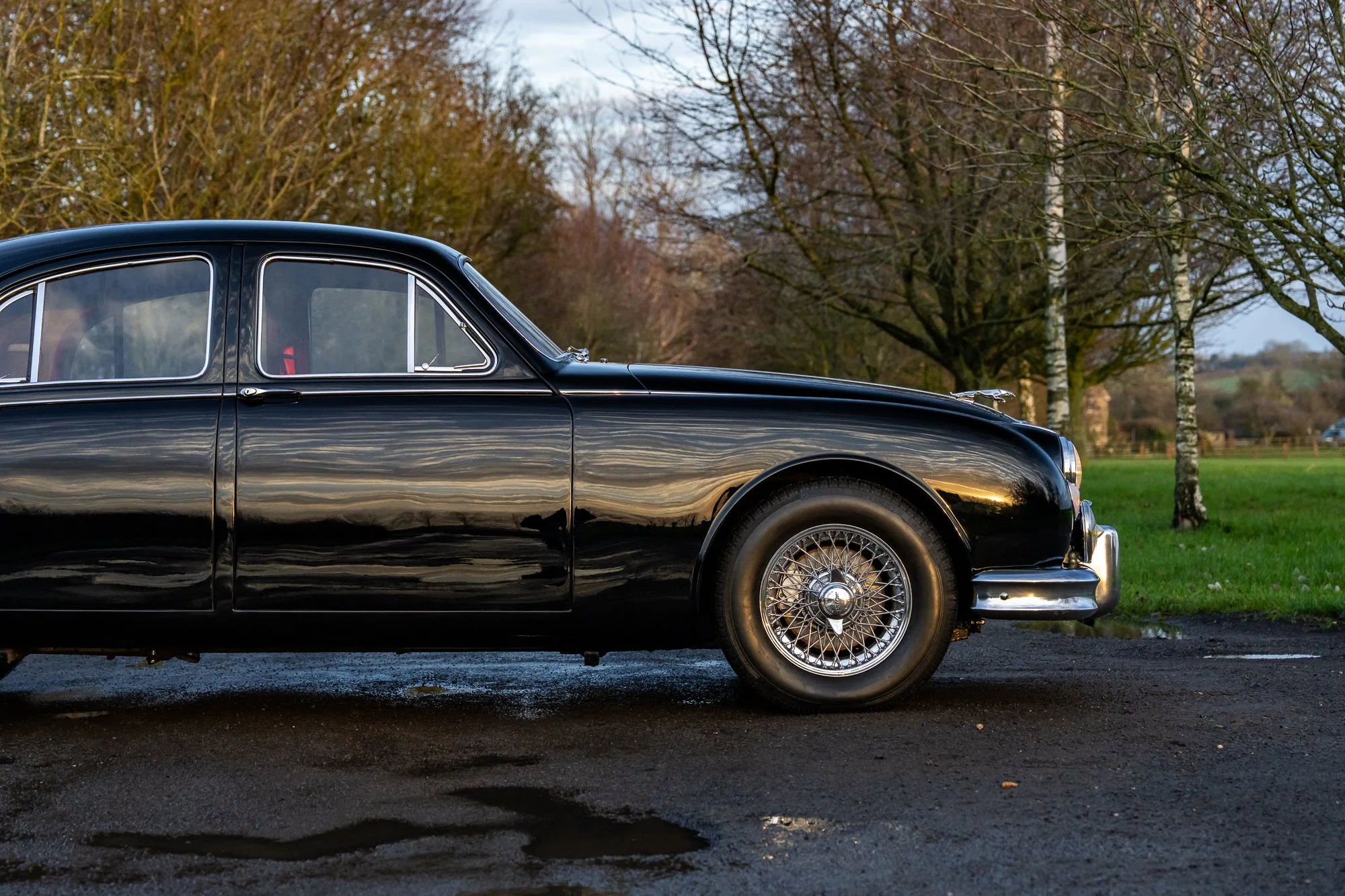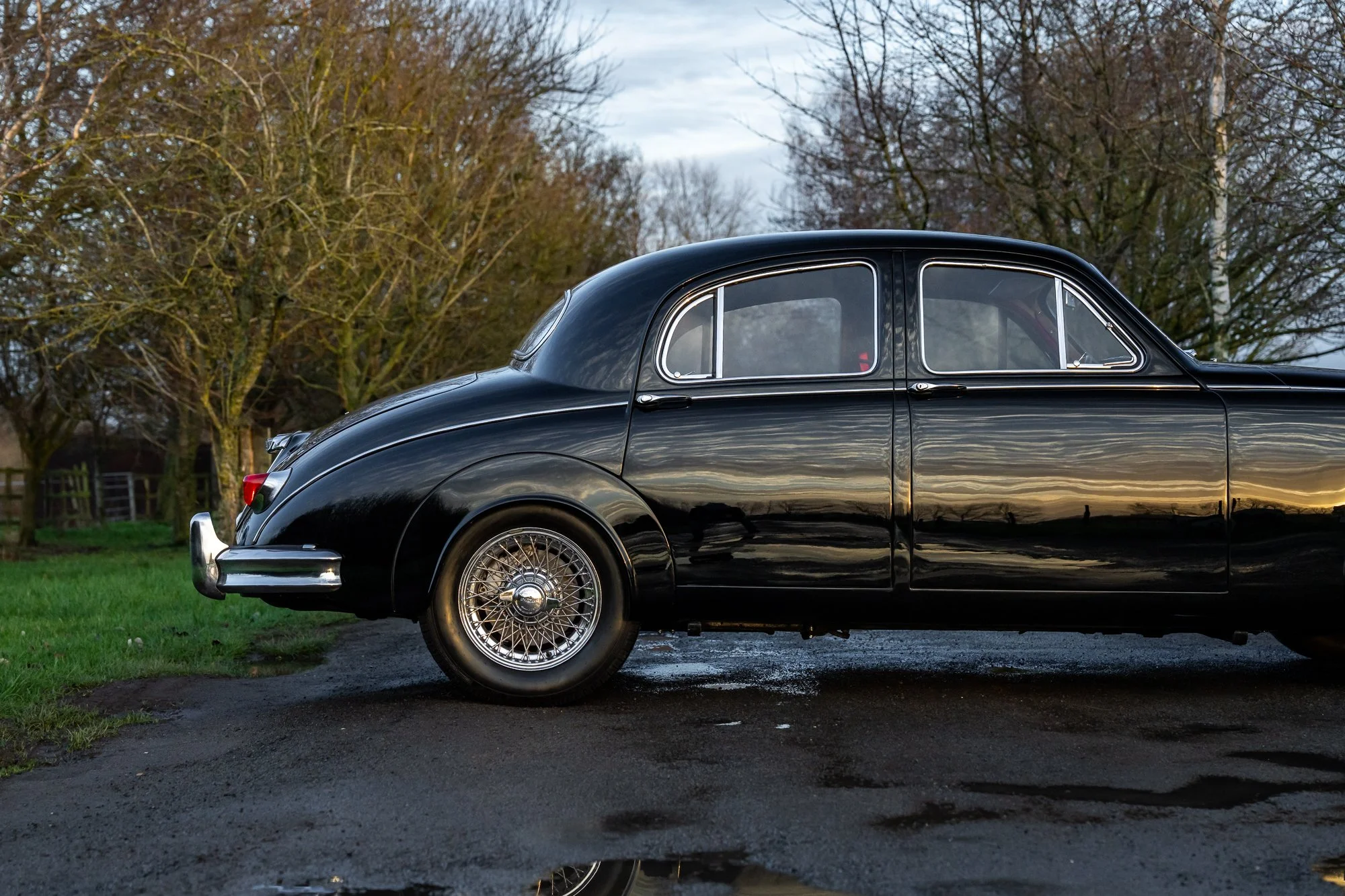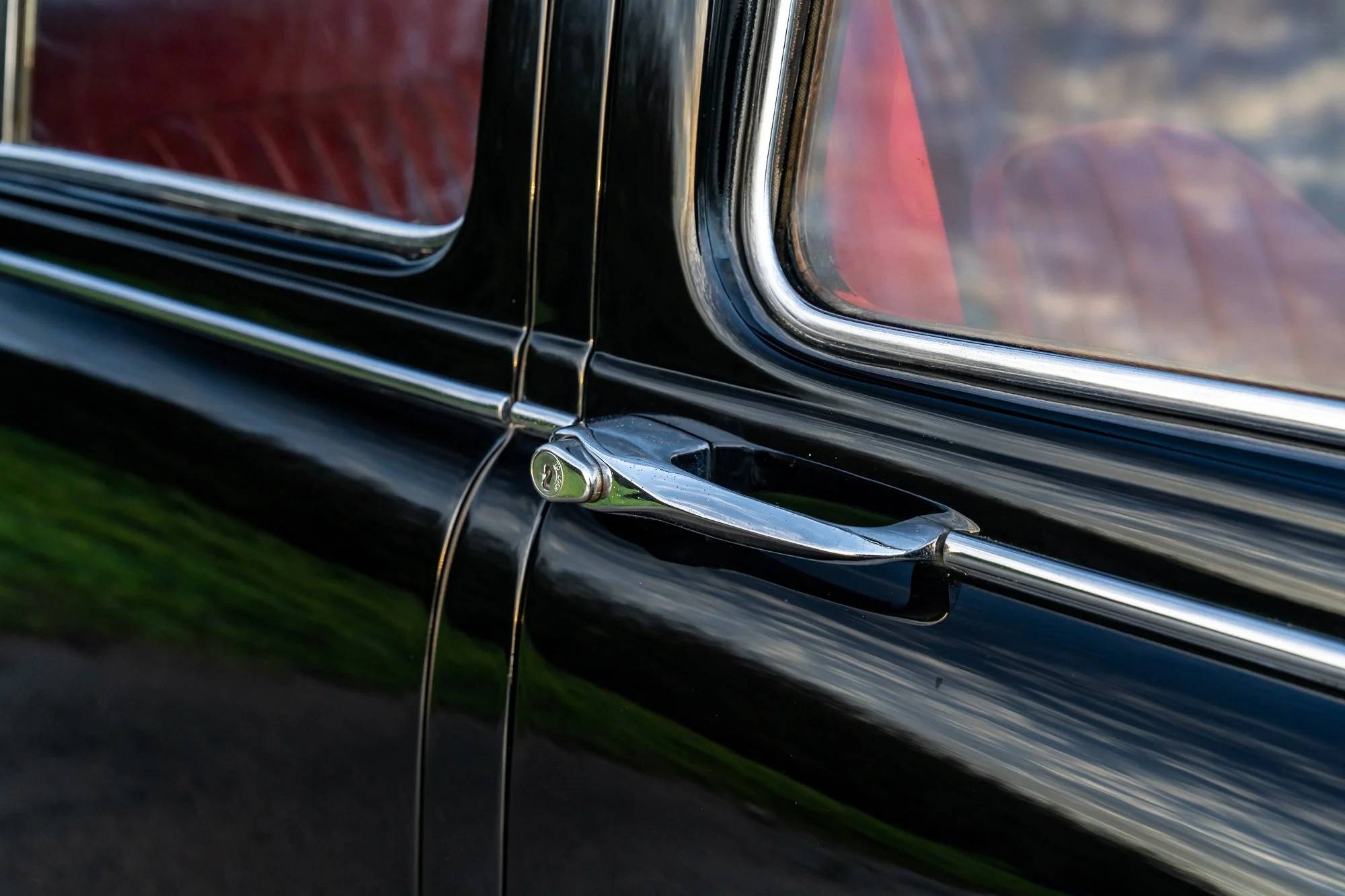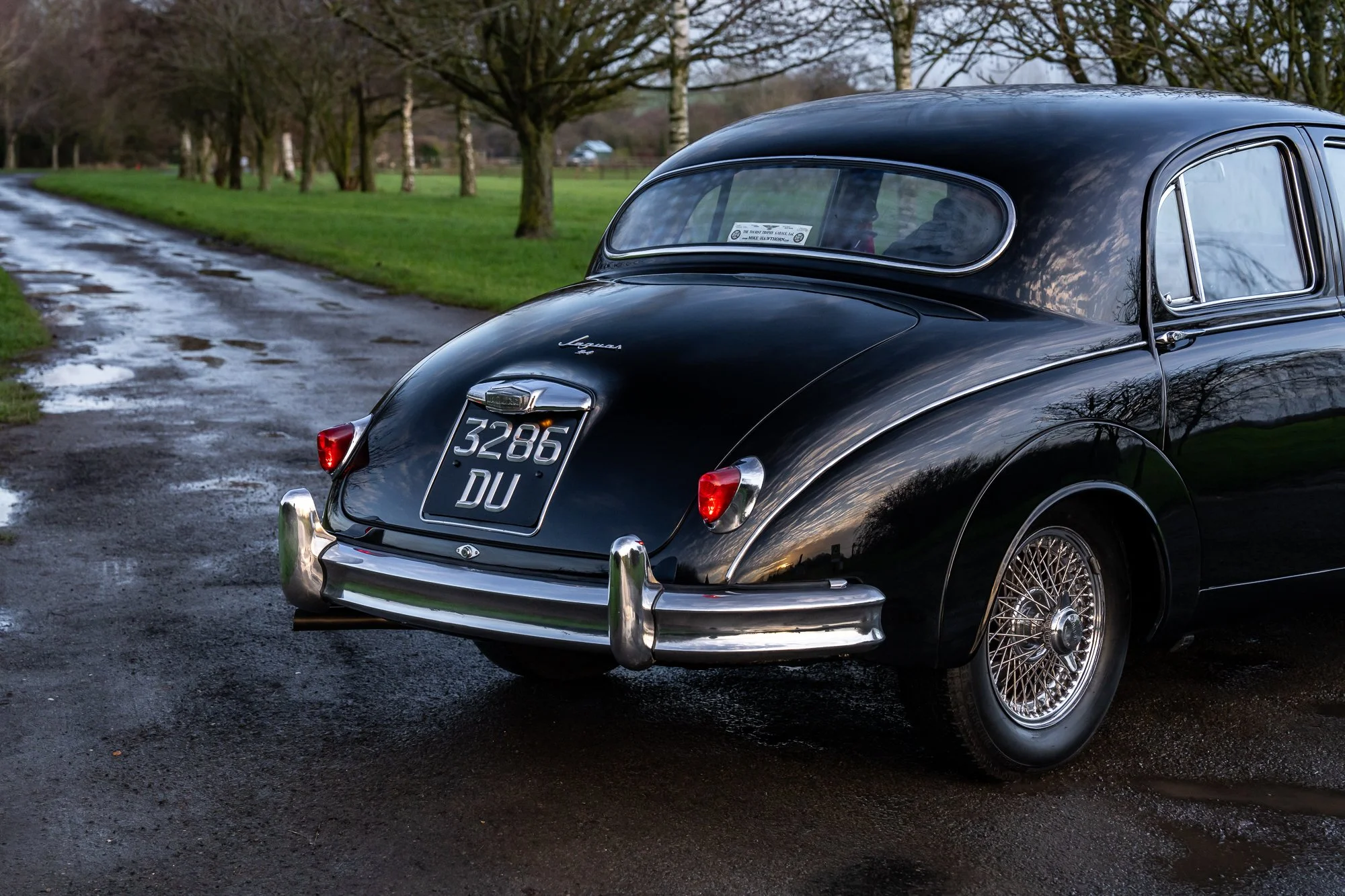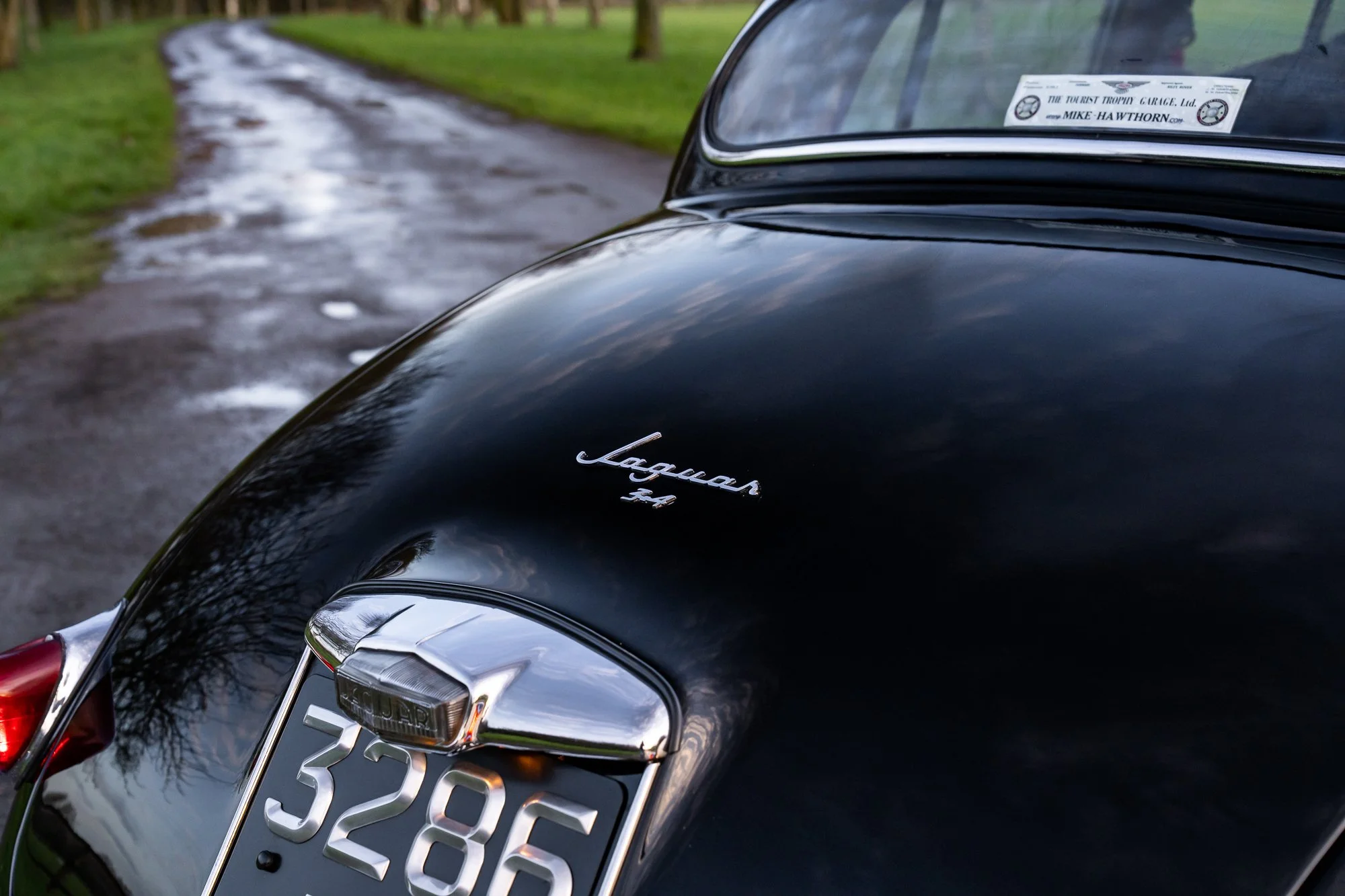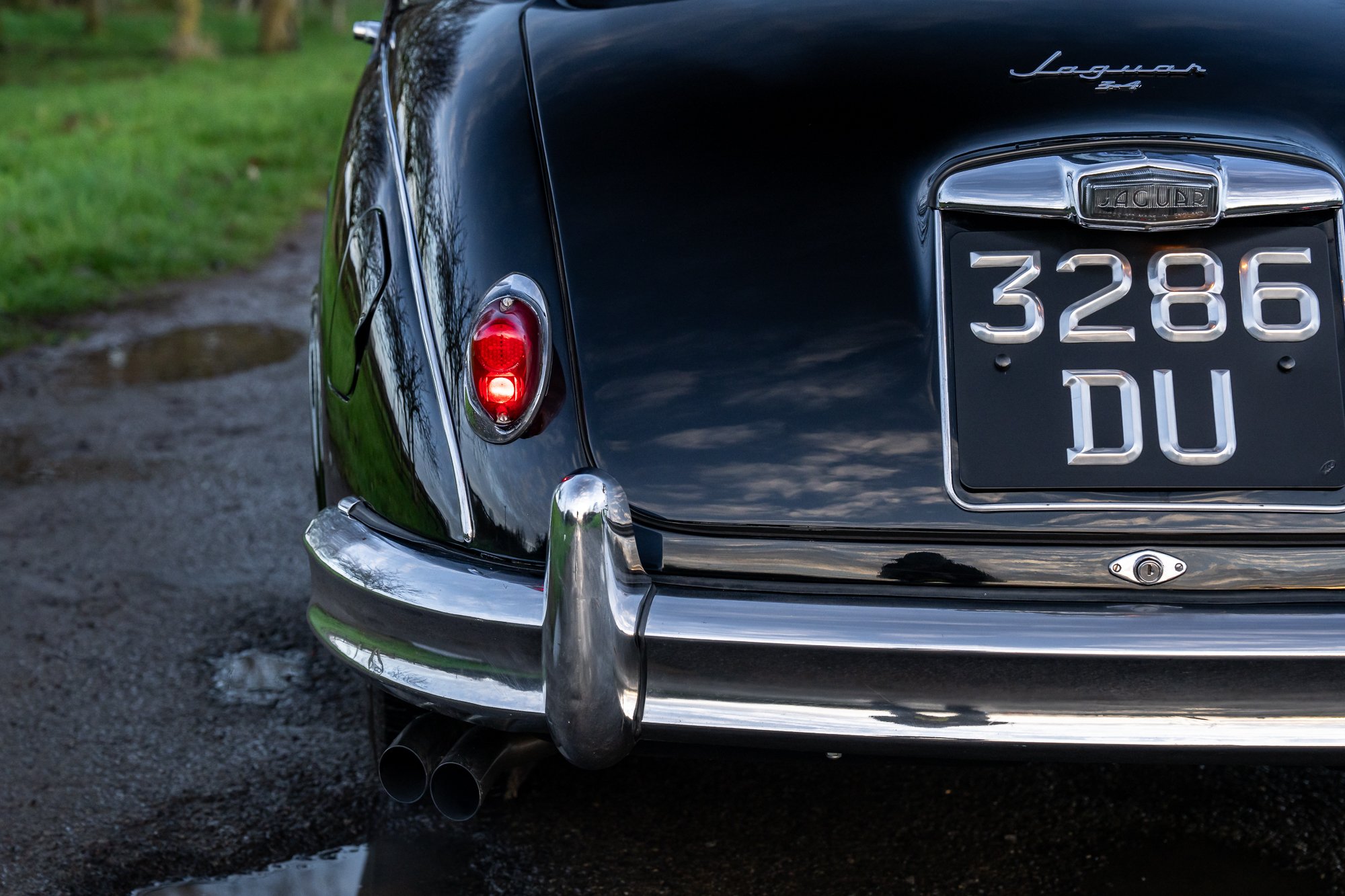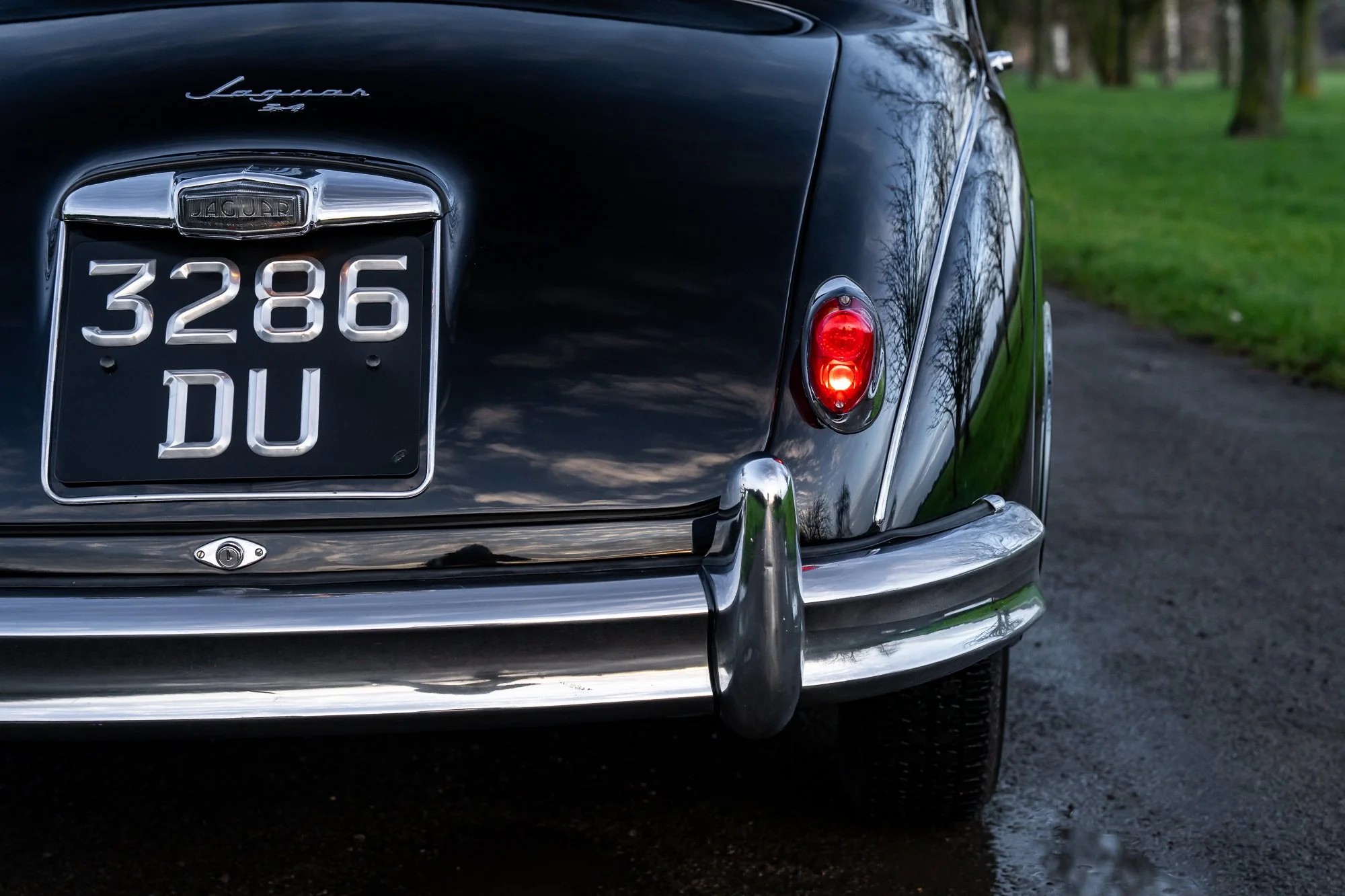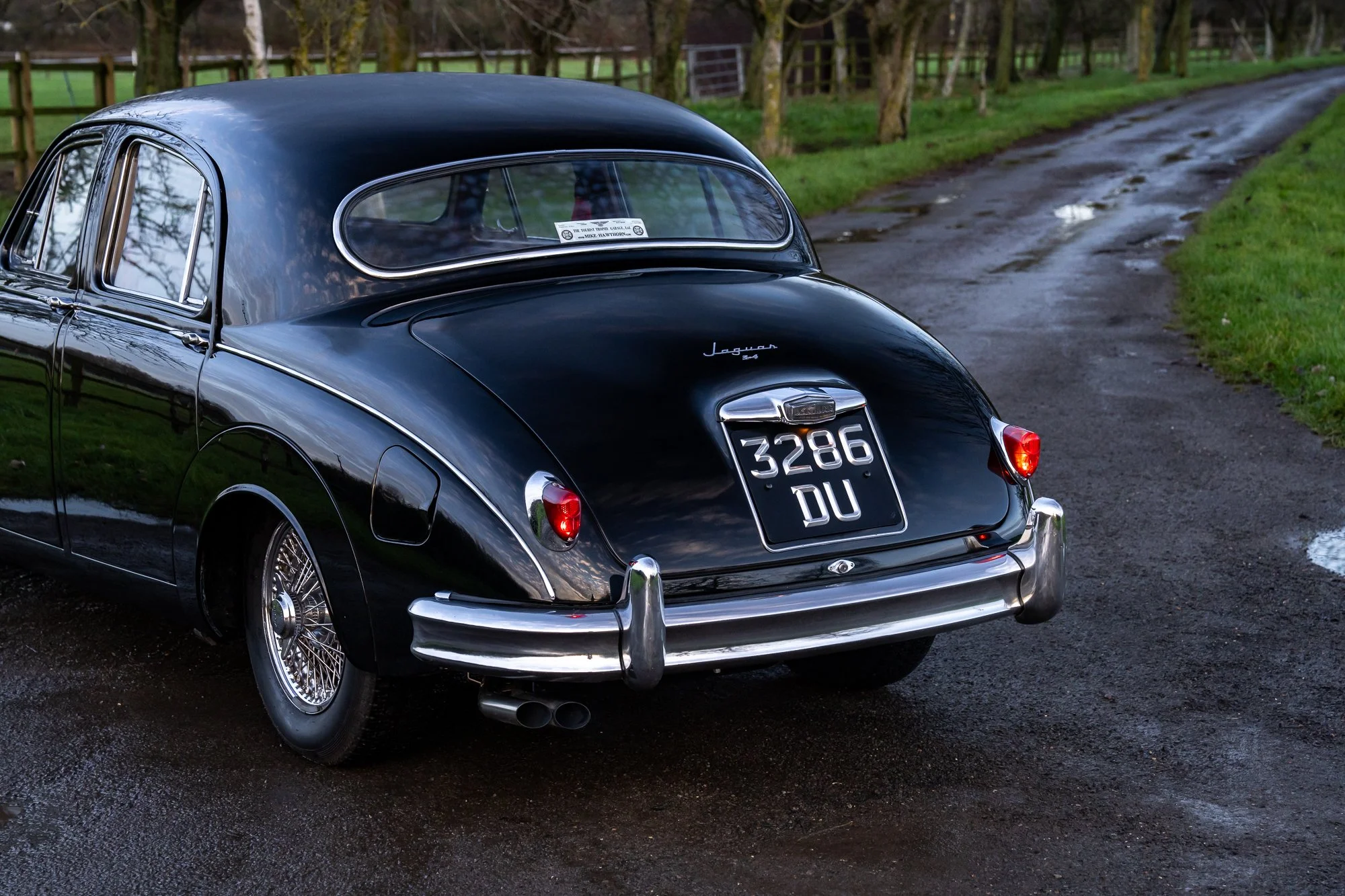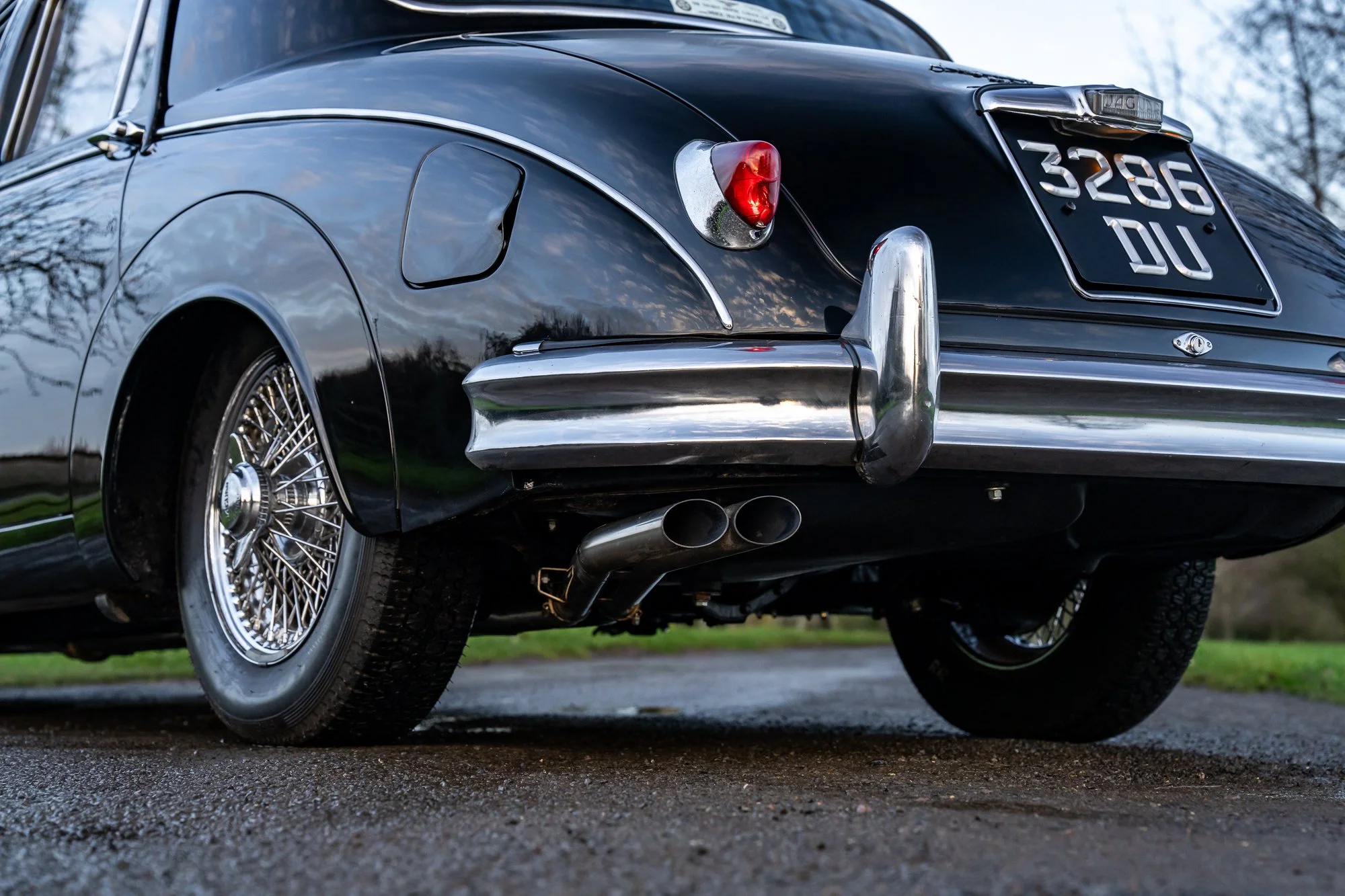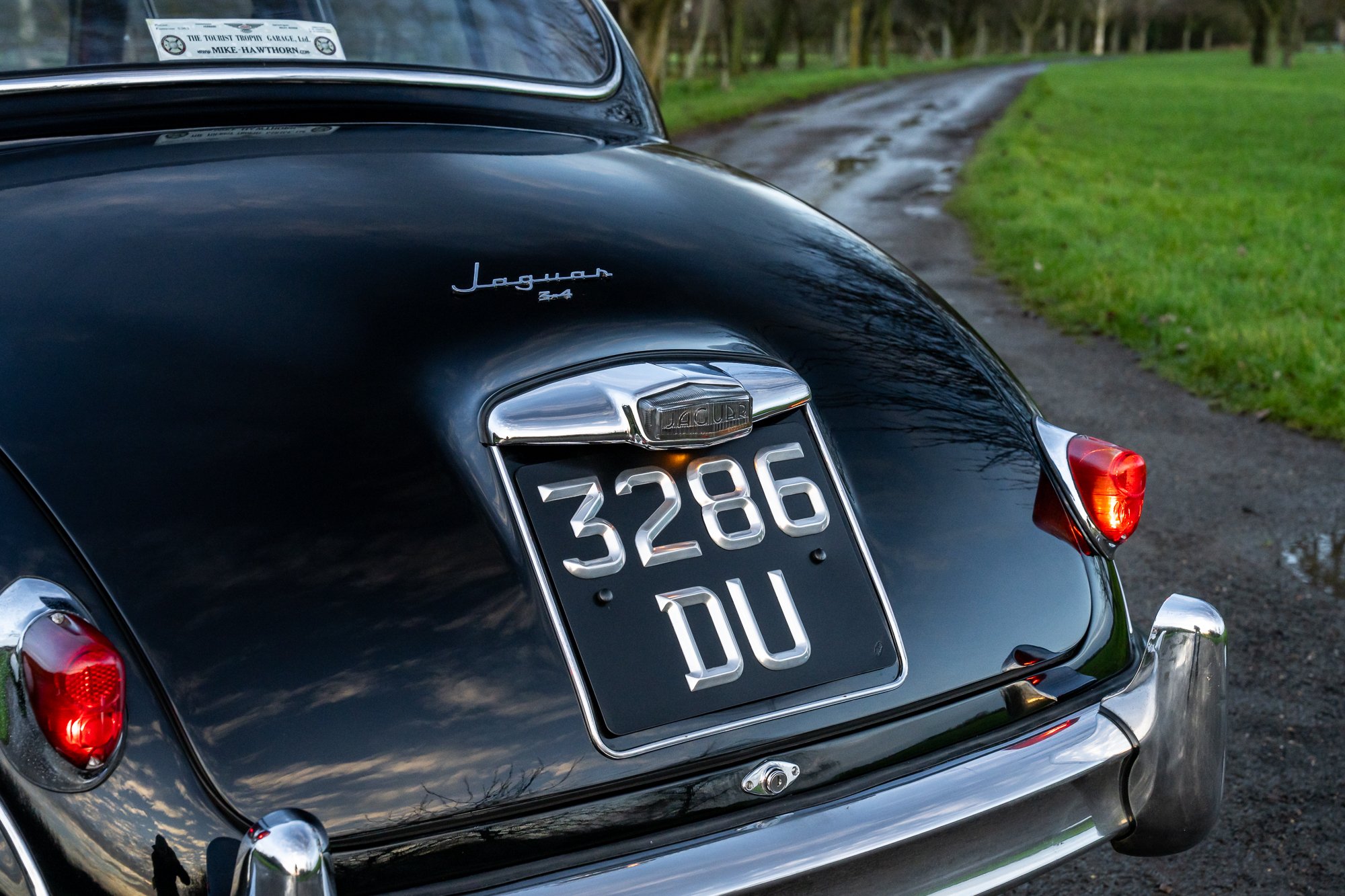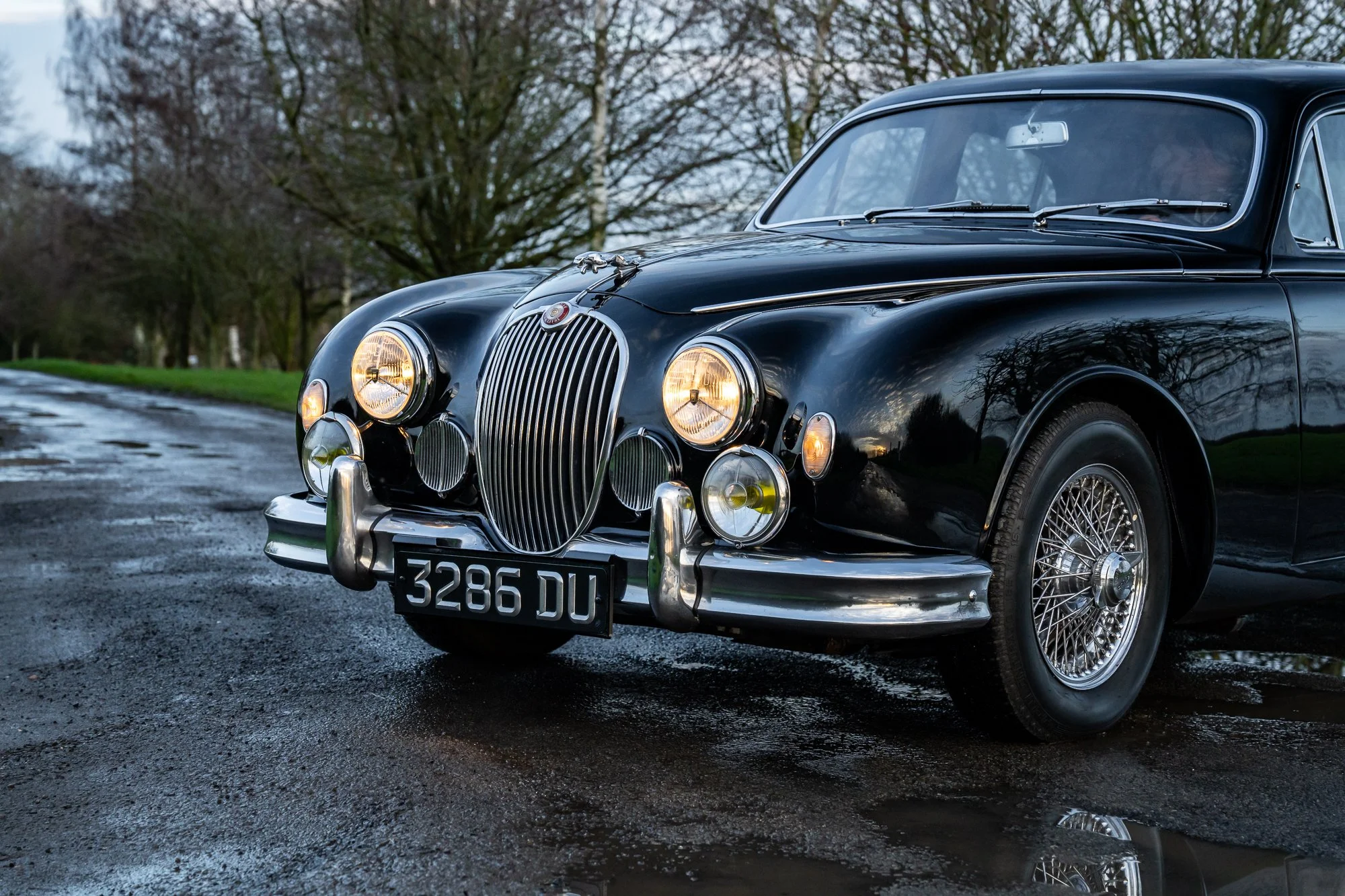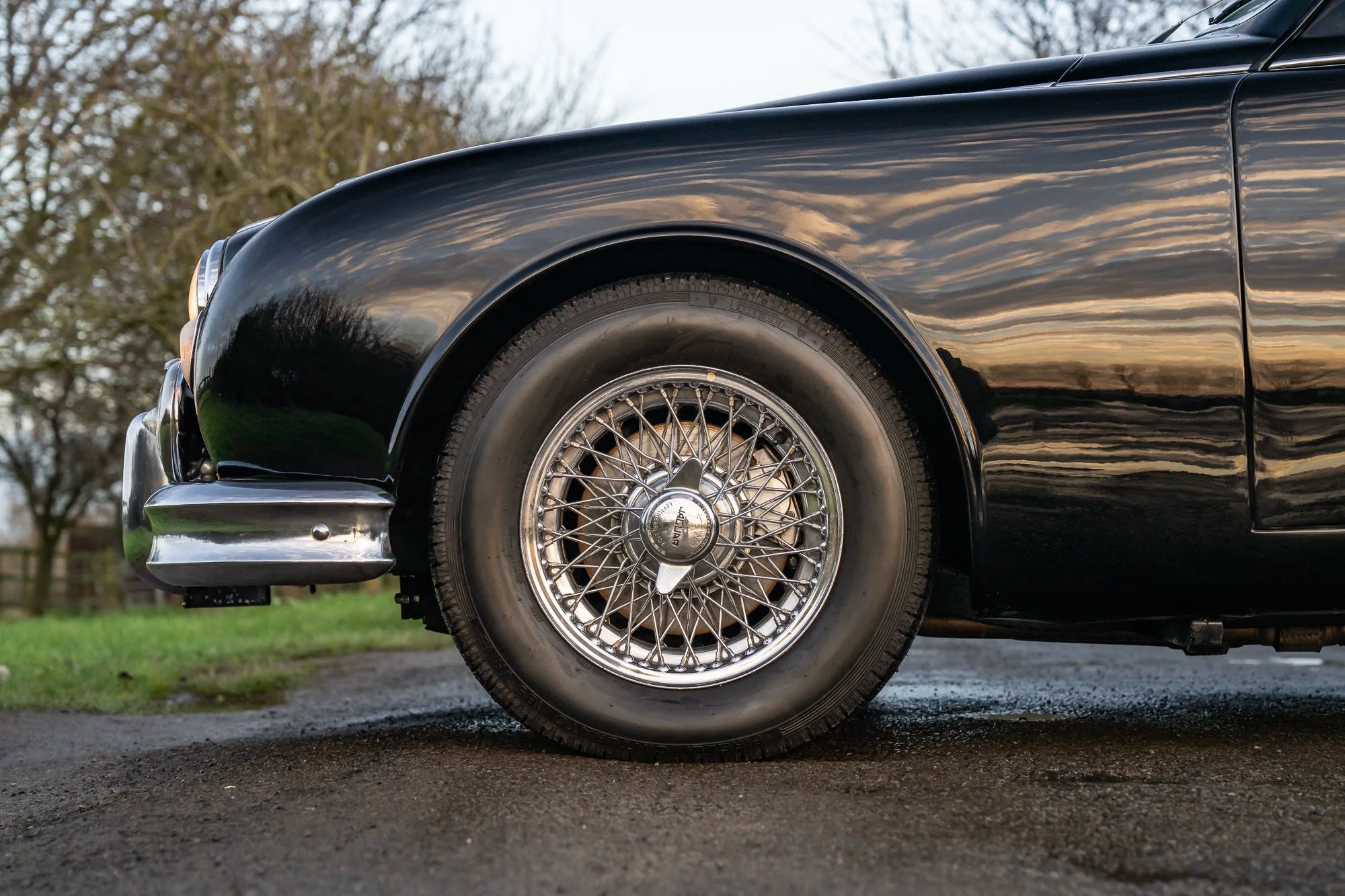
1959 Jaguar Mk I 3.8 Litre
£49,950
Believed to have been built with a 3.8 Litre engine from new
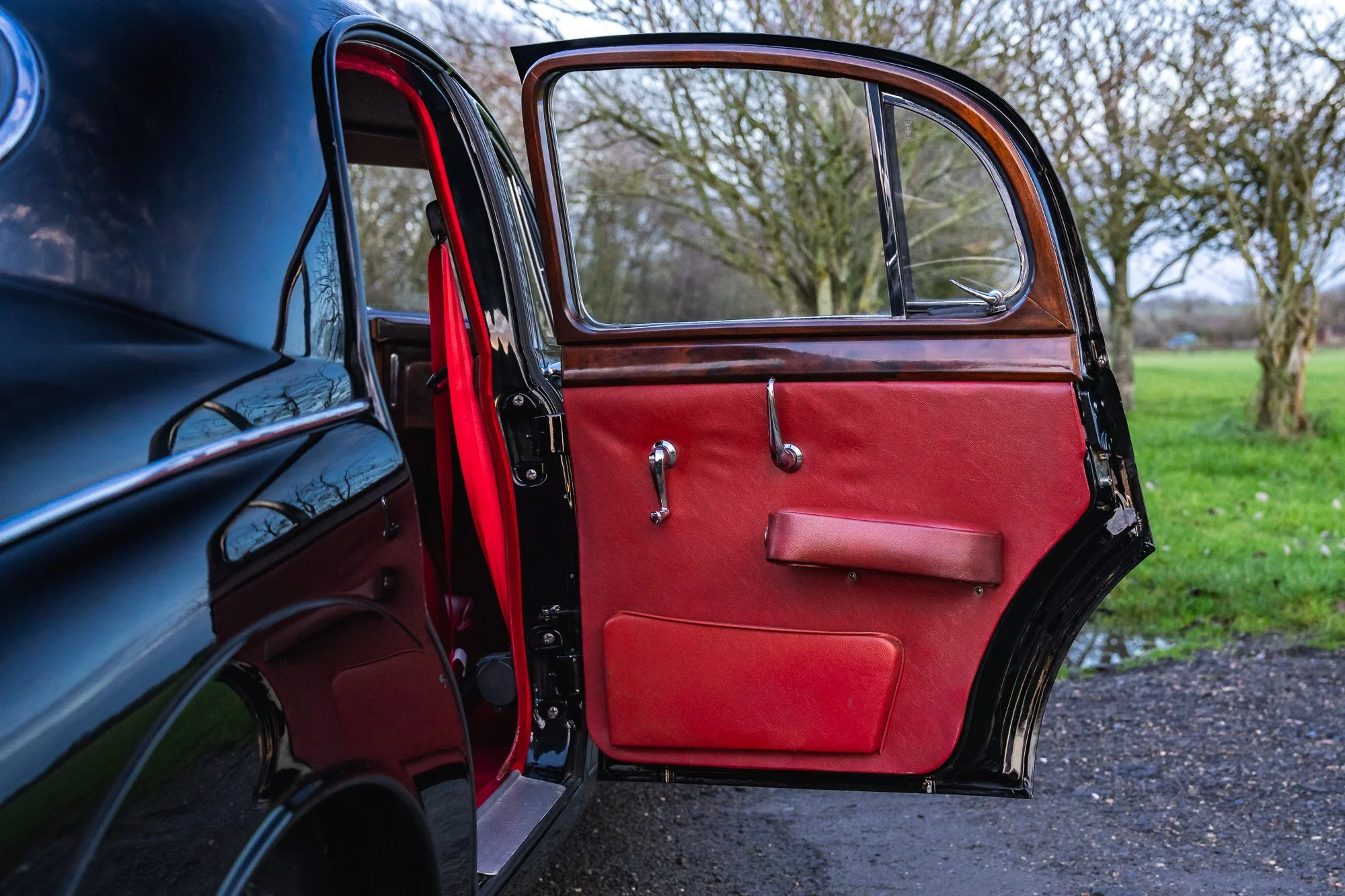
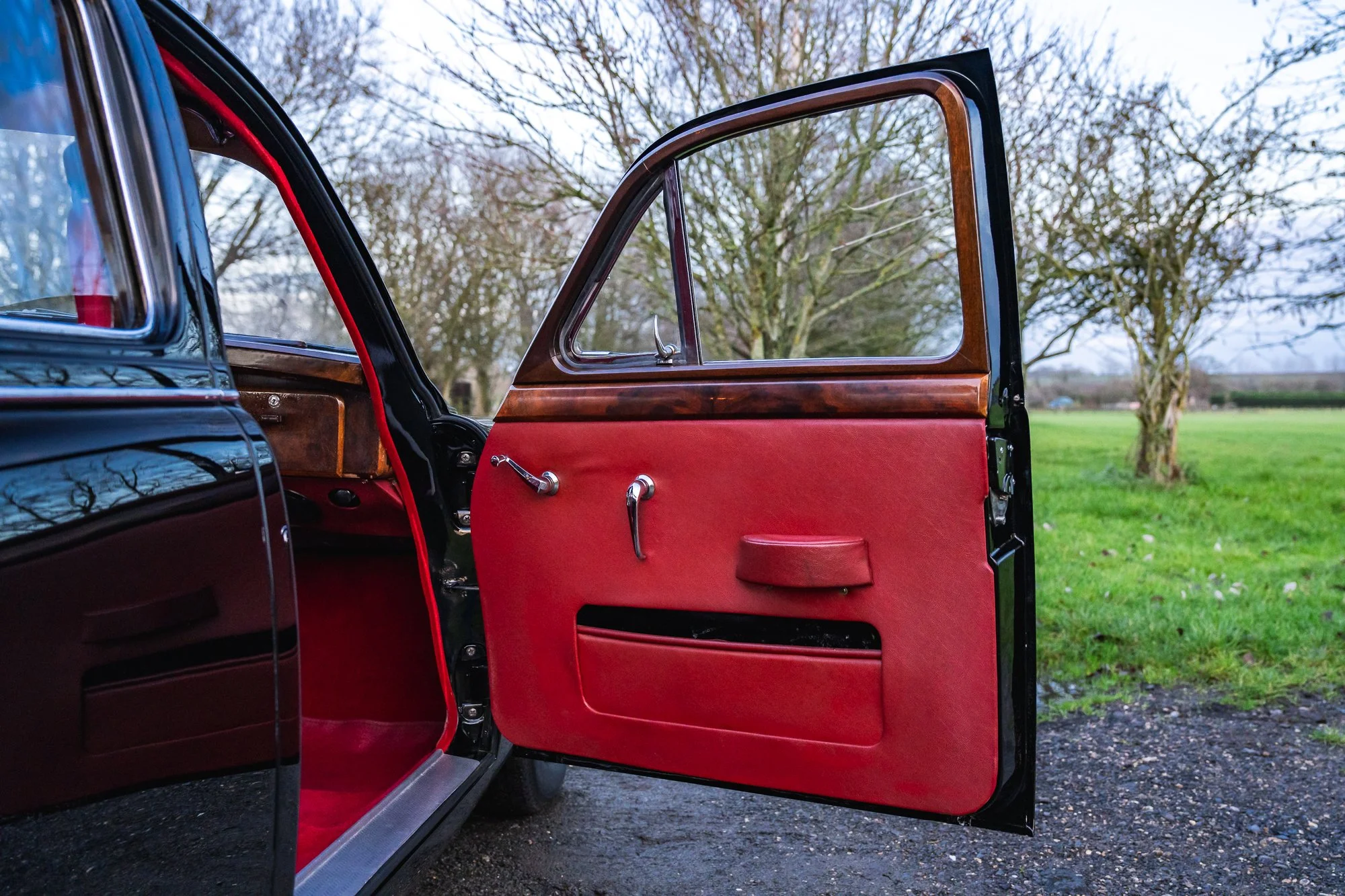
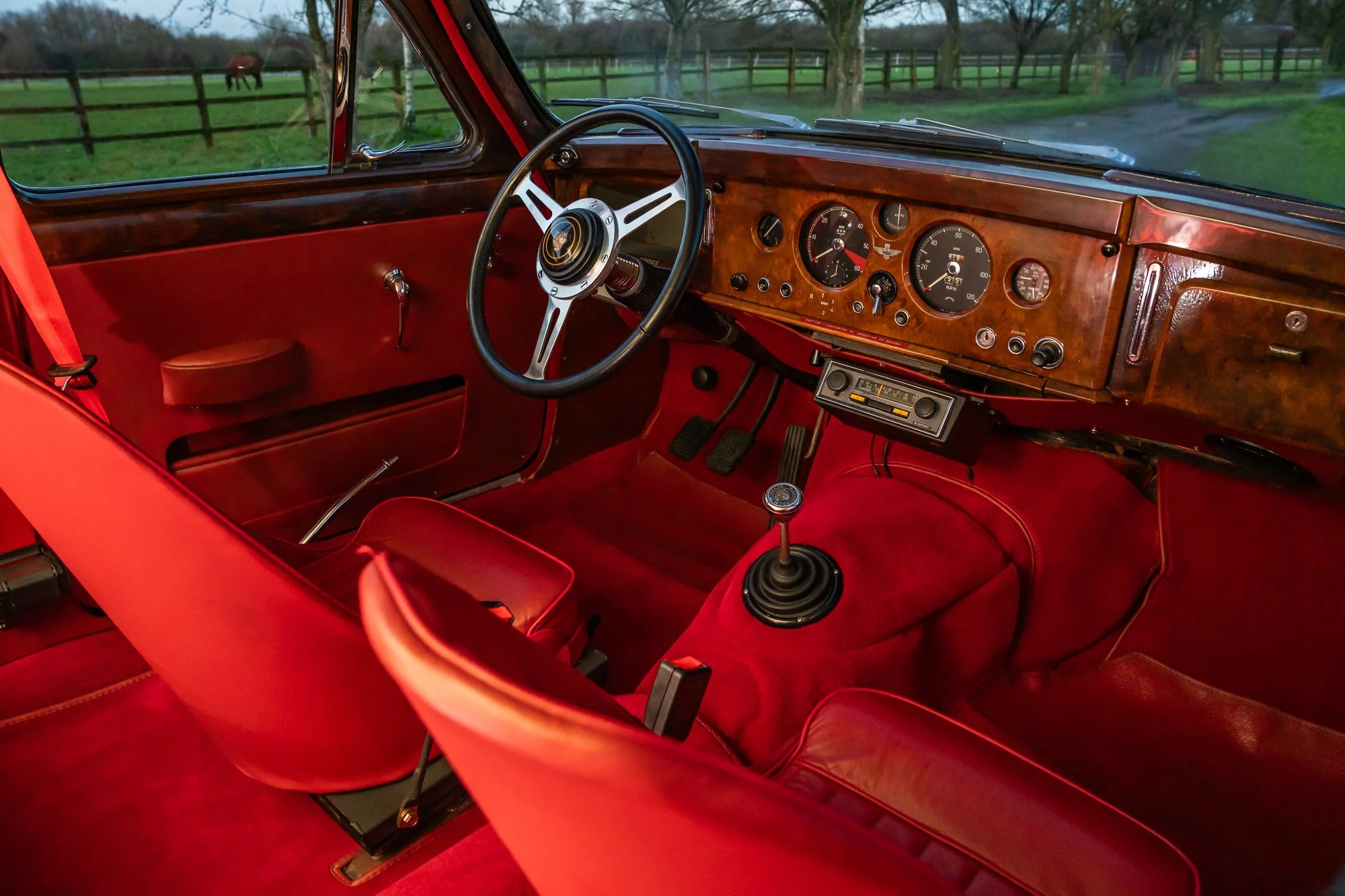
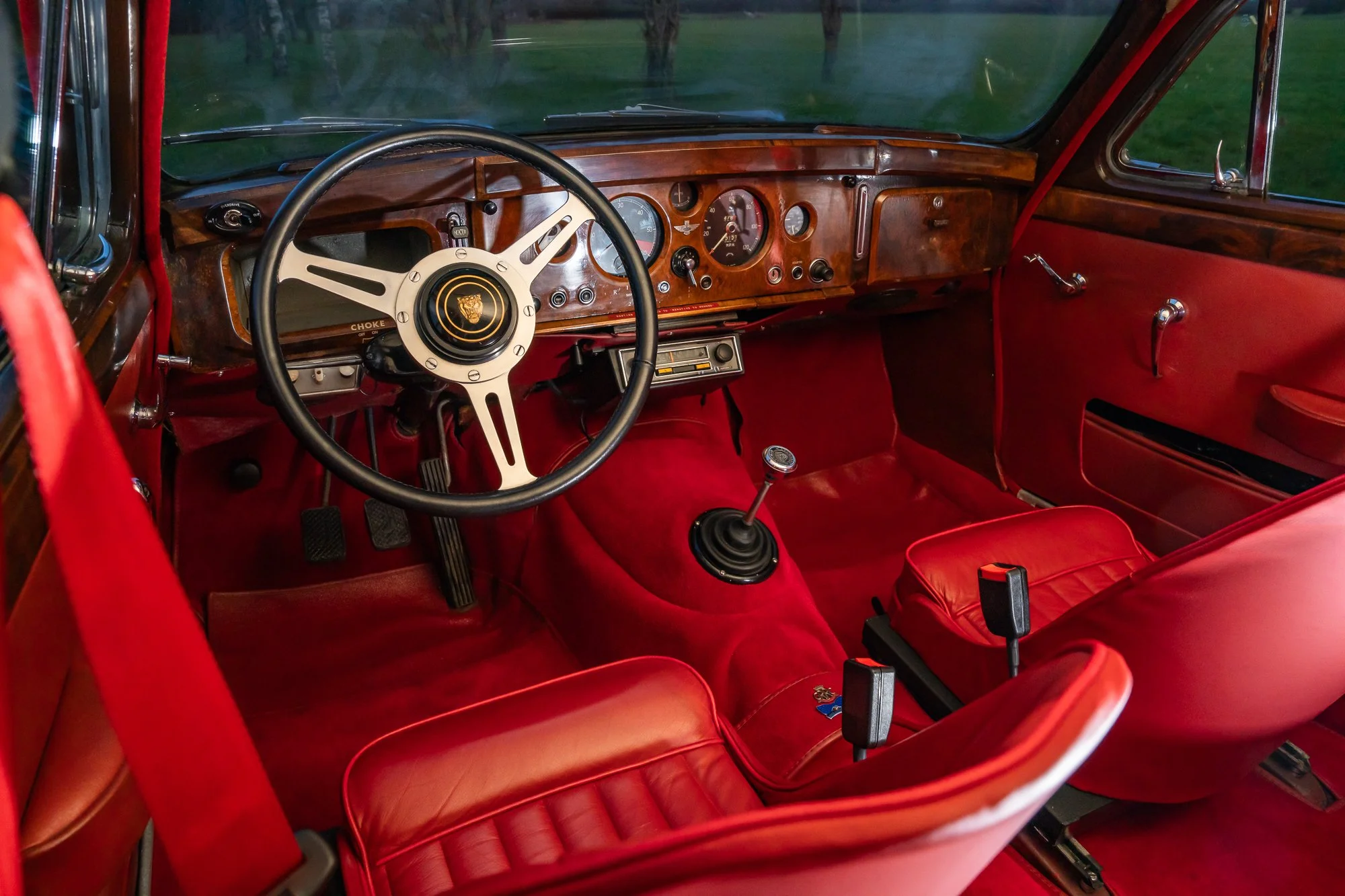
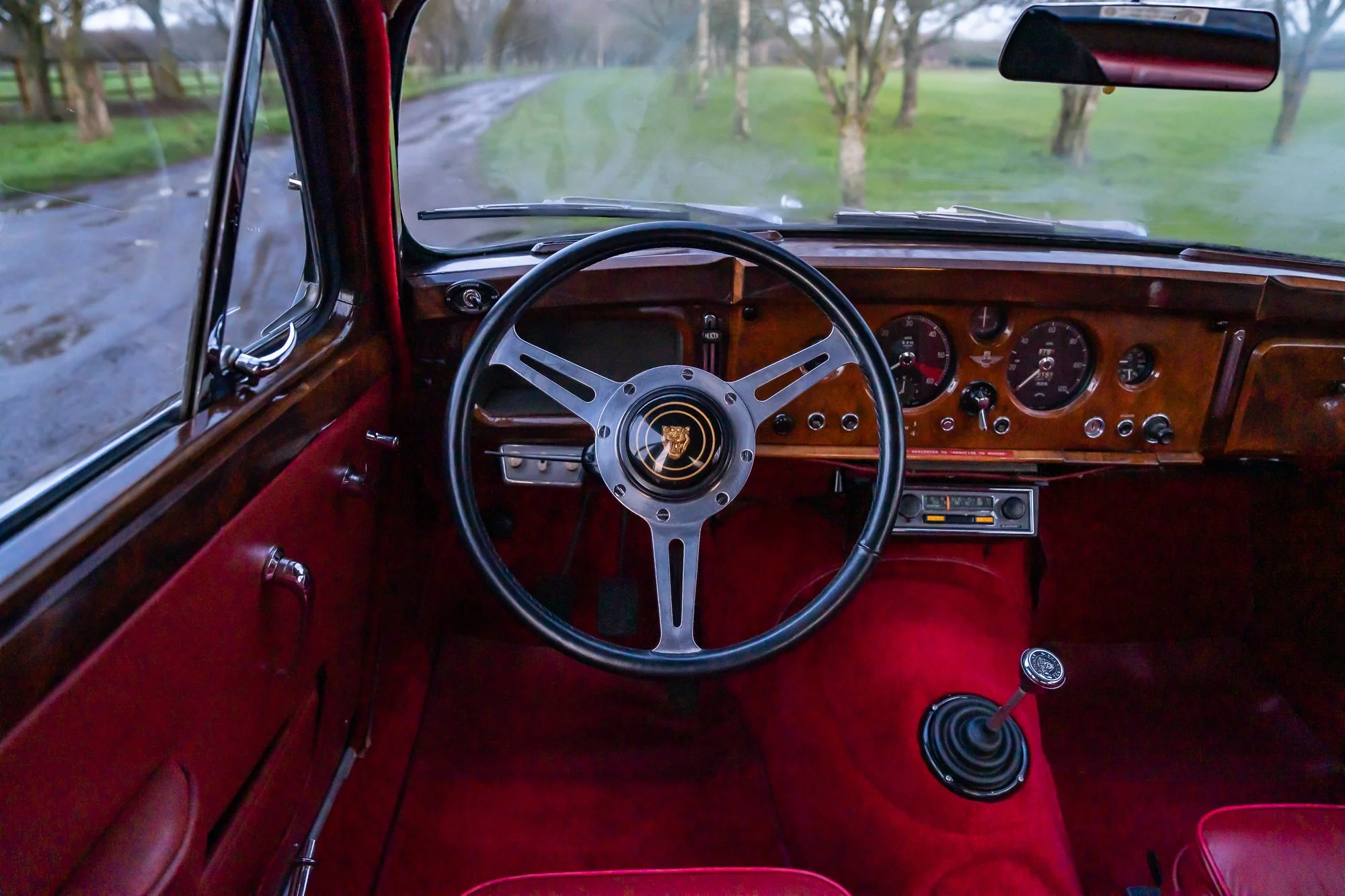
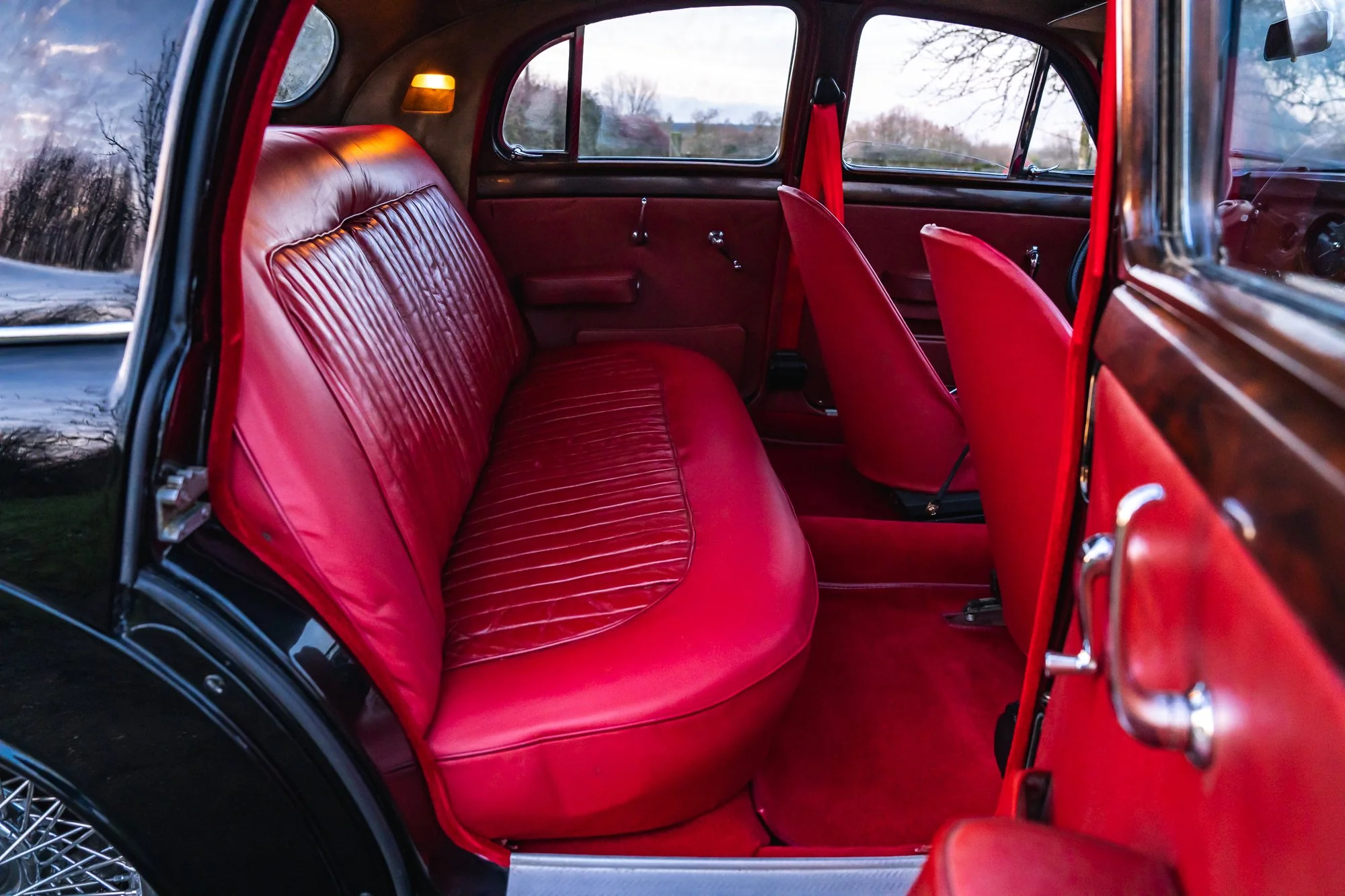
Original Colour Specification of Black with Red
JD Classics rebuild to fast road specification
Incredible history file including original business card of the salesman who sold it and factory order form
Sophisticated 50’s gentleman looks with fire spitting attitude
Model History
When the Jaguar 2.4 Litre (Mk I) was launched in 1955, Jaguar really was on top of the world. They had won Le Mans three times and would go on to win again in 1956 and 1957. Their cars were incredibly popular, especially in the USA where the factory couldn’t keep up with demand.
A move in 1951 to Daimler’s Browns Lane factory meant that demand could not only be met but Jaguar could dive into the mid-size saloon market. Thus leading to the creation of the Mk I, or as it was known at the time, the Jaguar 2.4 Litre. They would become known as the Mk I after the launch of the Mk II in late 1959.
The 2.4 Litre was Jaguar’s first monocoque road car, featuring the legendary straight-six engine, double wishbone front suspension and even the rear suspension set up from the D-Type. Power was a modest 112bhp, which doesn’t sound a lot by today’s standards but was nearly double what some of the home competition were producing. It also meant a top speed of 100mph, which again, at the time, was quite the feat.
Although offering plenty of power for the Home market, the little 2.4 Litre wasn’t going to cut the mustard across the pond and so the 3.4 Litre engine found in the XK140 was fitted, creating the Jaguar 3.4 Litre. Now offering 210bhp, this was a proper “full fat” version of the fast saloon. So much so, that the drum brakes became quite the achilles heal and disc brakes became an option on the 3.4 Litre.
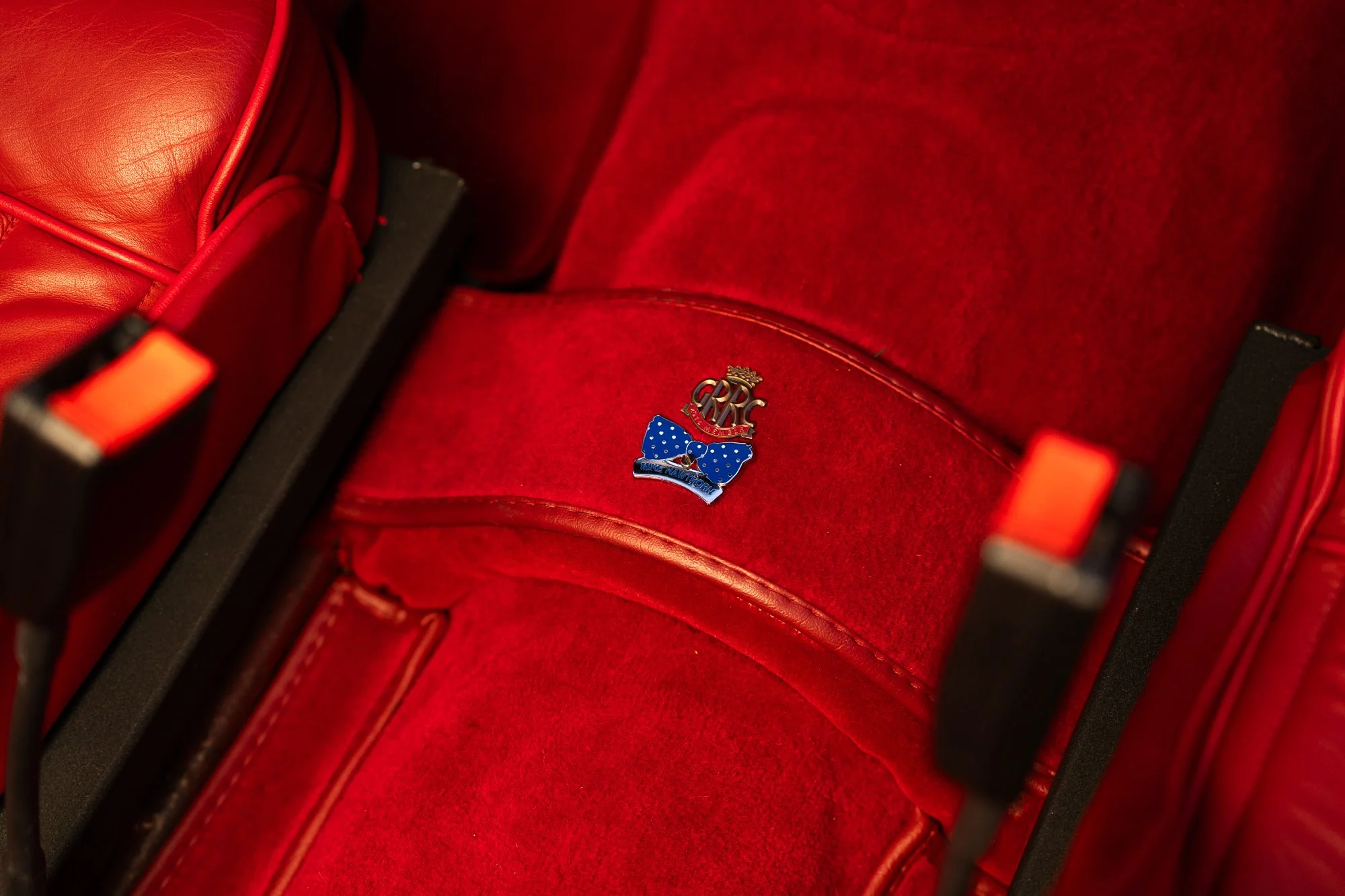
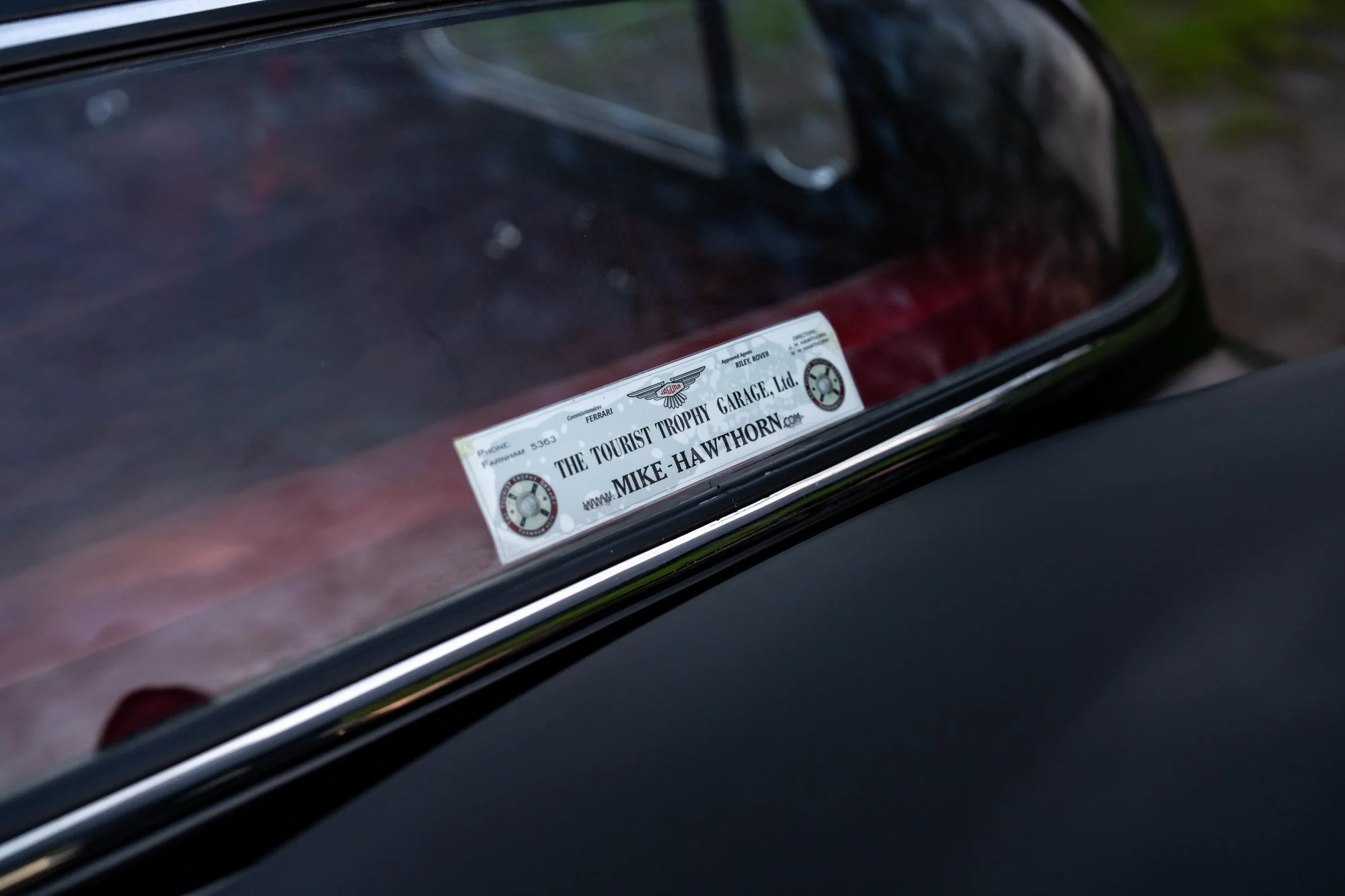
While not sporty looking in comparison to an XK of the same time, the Mk I was quite the competition car, with the likes of Stirling Moss, Mike Hawthorn and Roy Salvadori competing in them in period. In fact, over in Australia the Mk I won the Touring Car Championship two years on the trot in 1960 and 1961.
In late 1959 the Mk I was replaced by the Mk II. The styling was subtly changed with most of the changes being tweaks to the suspension and disc brakes being fitted as standard. Oh and you could order one with the 3.8 Litre engine and a limited slip differential.
No wonder these appealed to bank robbers back in the day, as there was nothing the “Old Bill” had to keep up!.
Motor Car for Sale
The Jaguar Mark I for sale with Wrightson Automotive is a very special example indeed.
I love it when a car has some lovely old paperwork from early in its life, a few old invoices when the car was 10 years old, or something like that, just marvellous.
When you come across a car that has the original business card of the salesman who sold the first owner the car, the signed order form to Jaguar and even the business card of Pat Appleyard (née Lyons), the daughter of the Jaguar founder, Sir William, you get goosebumps.
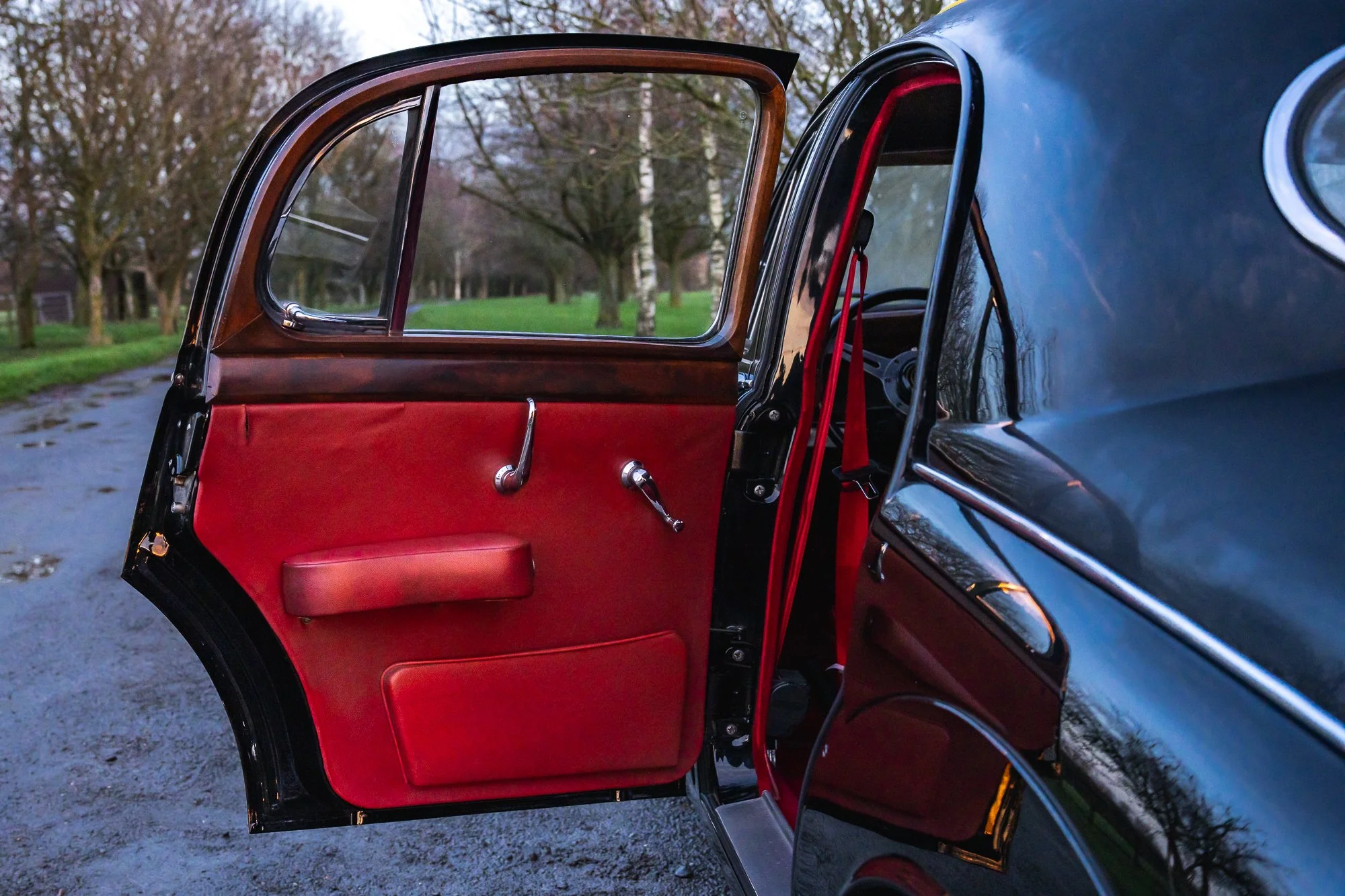
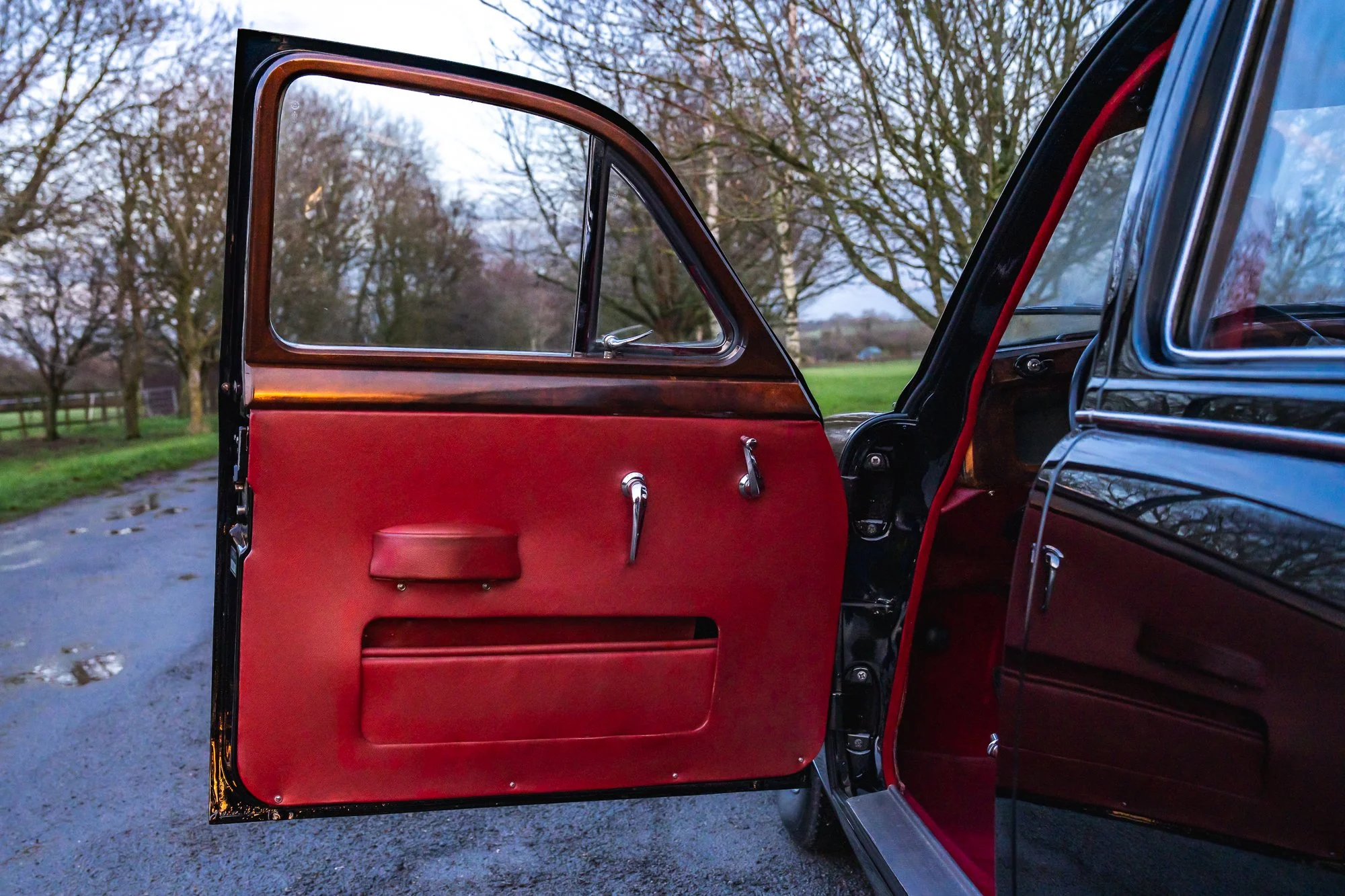
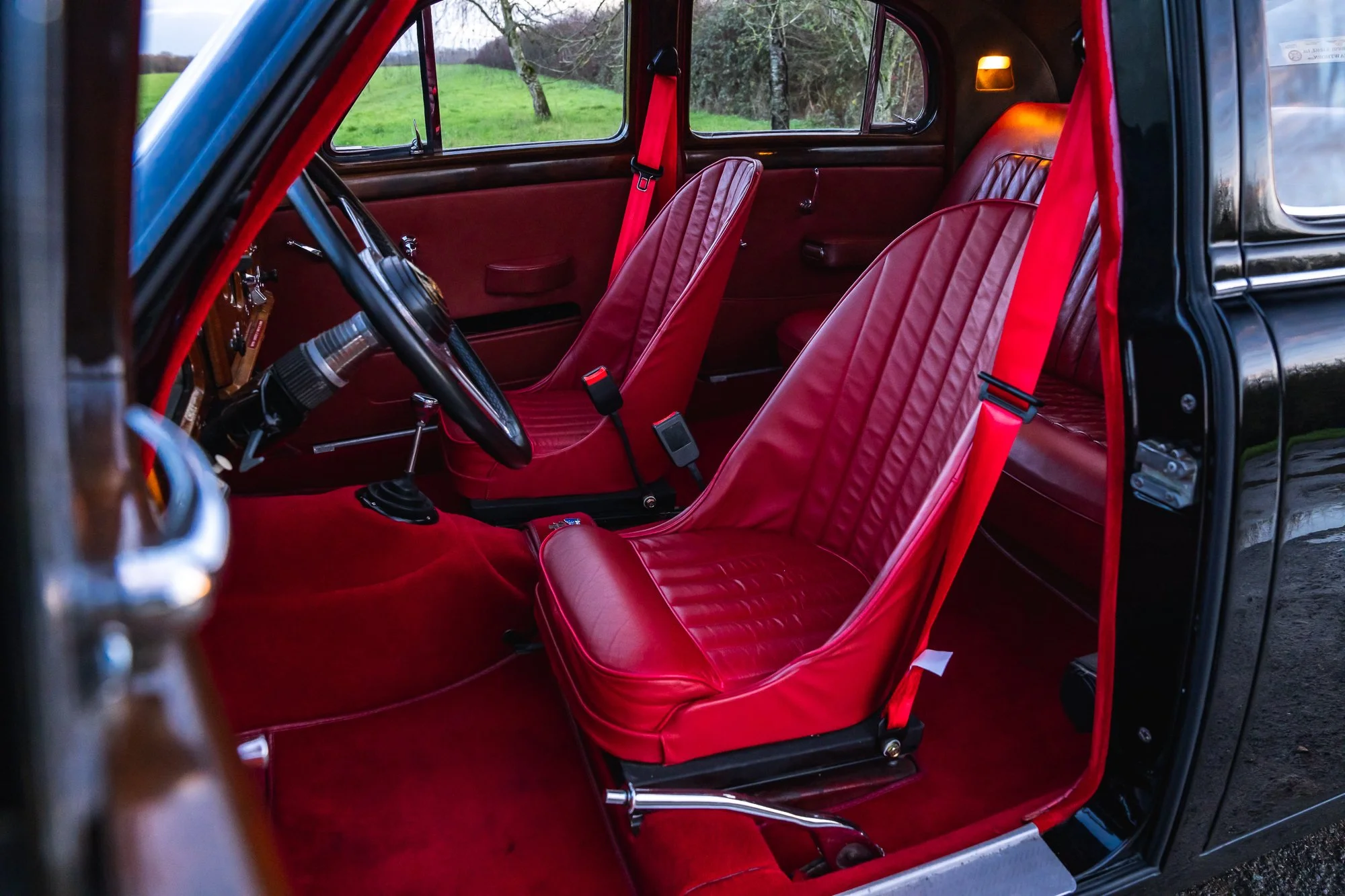
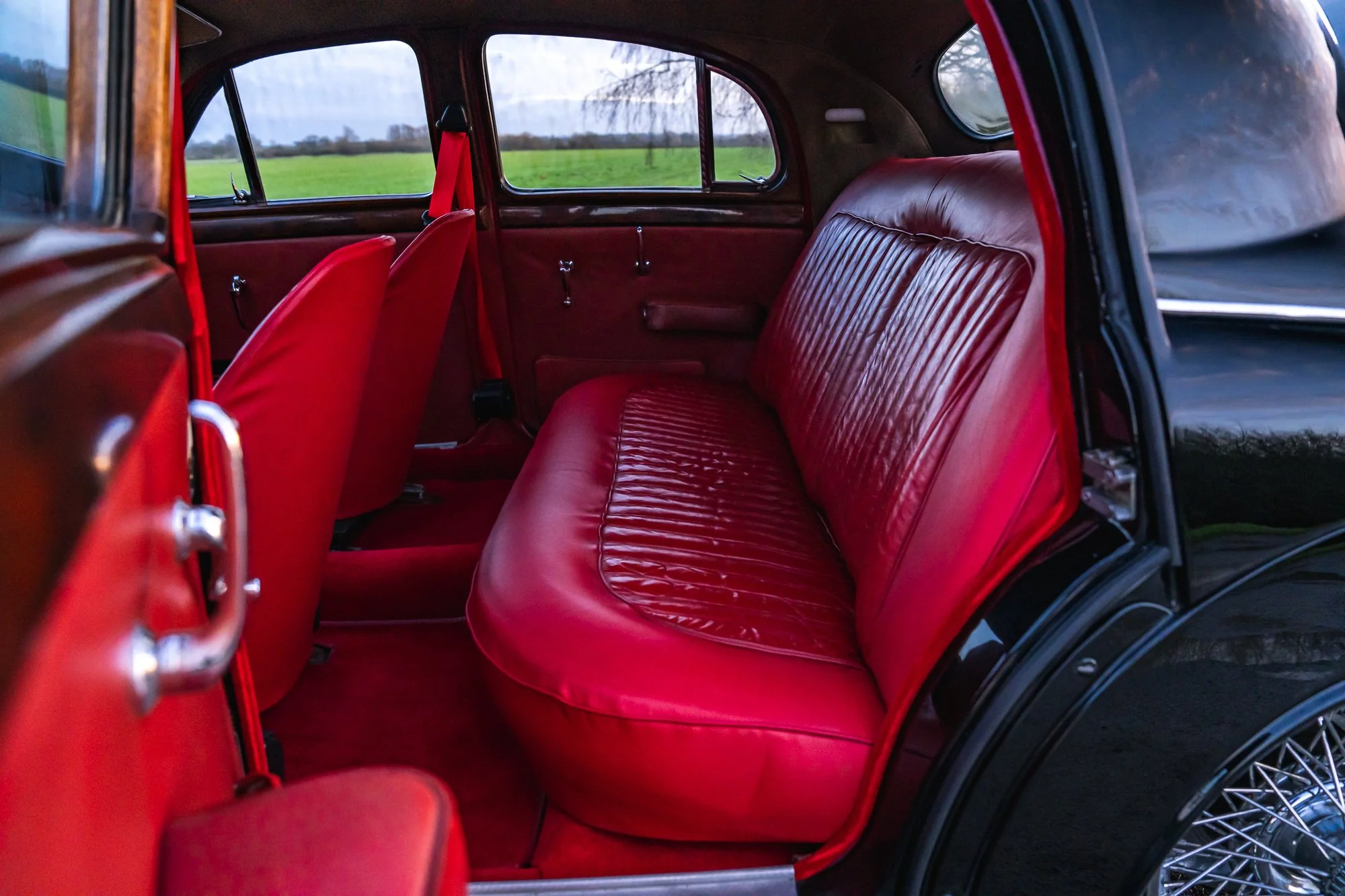
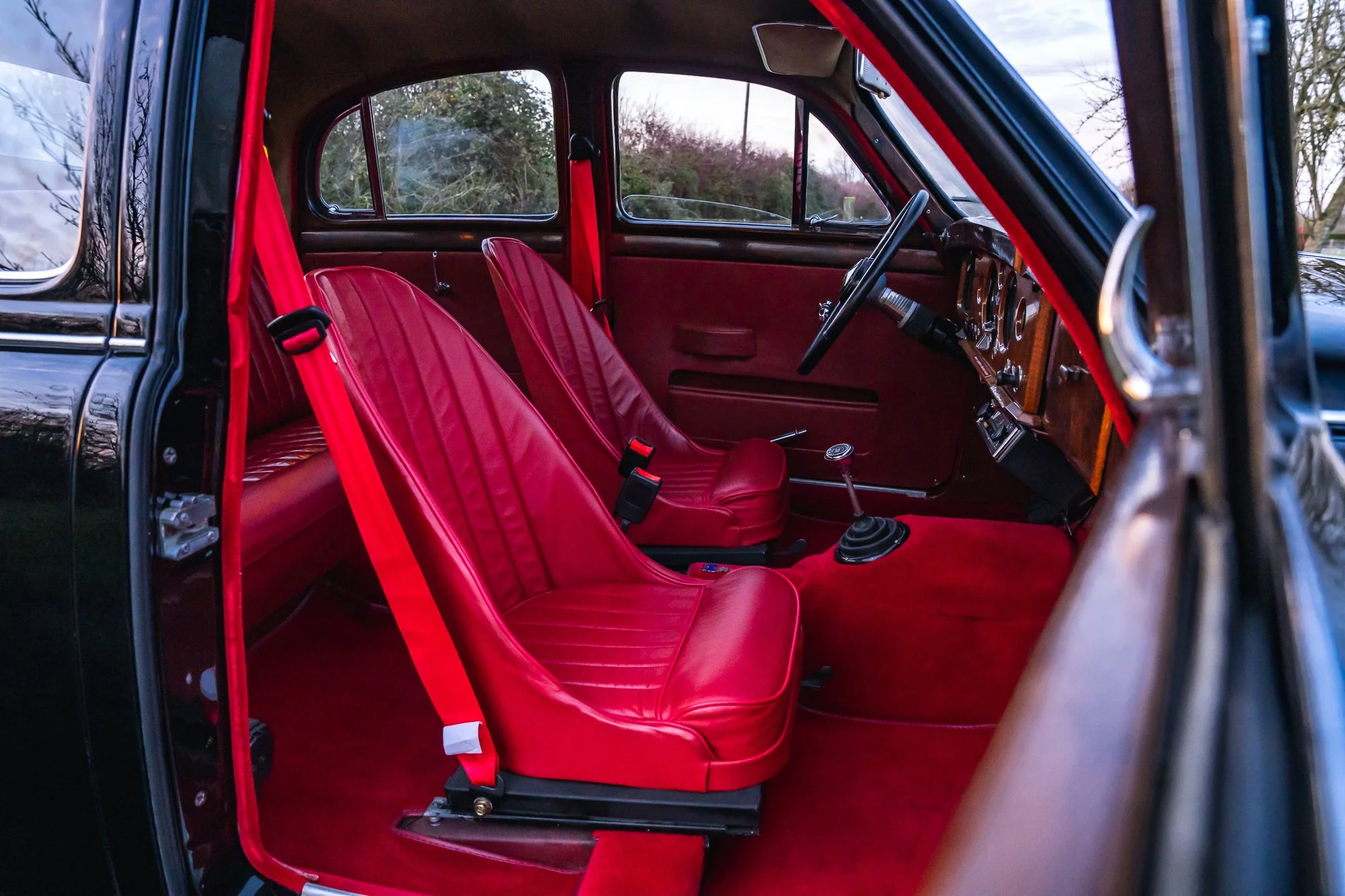
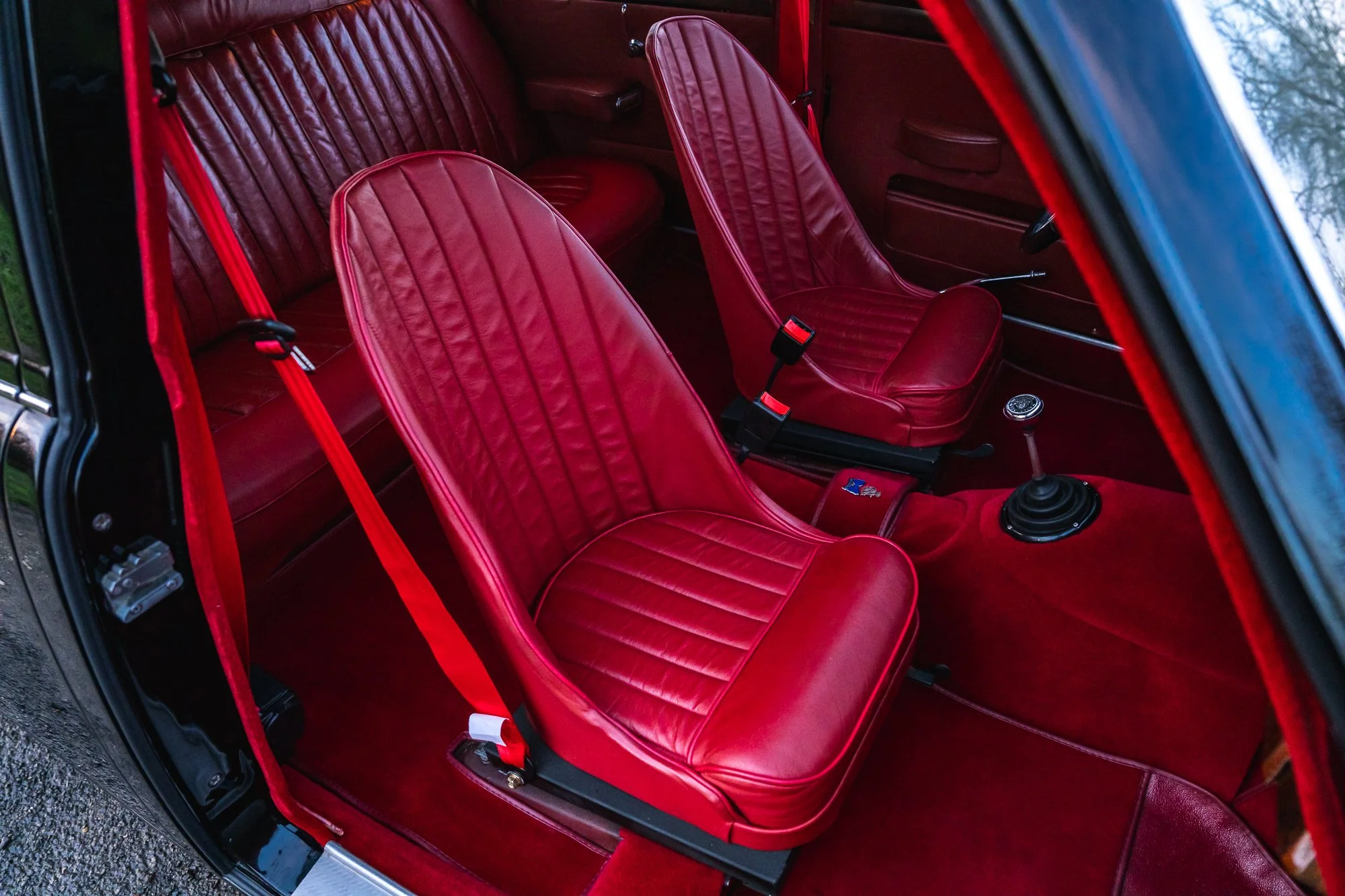
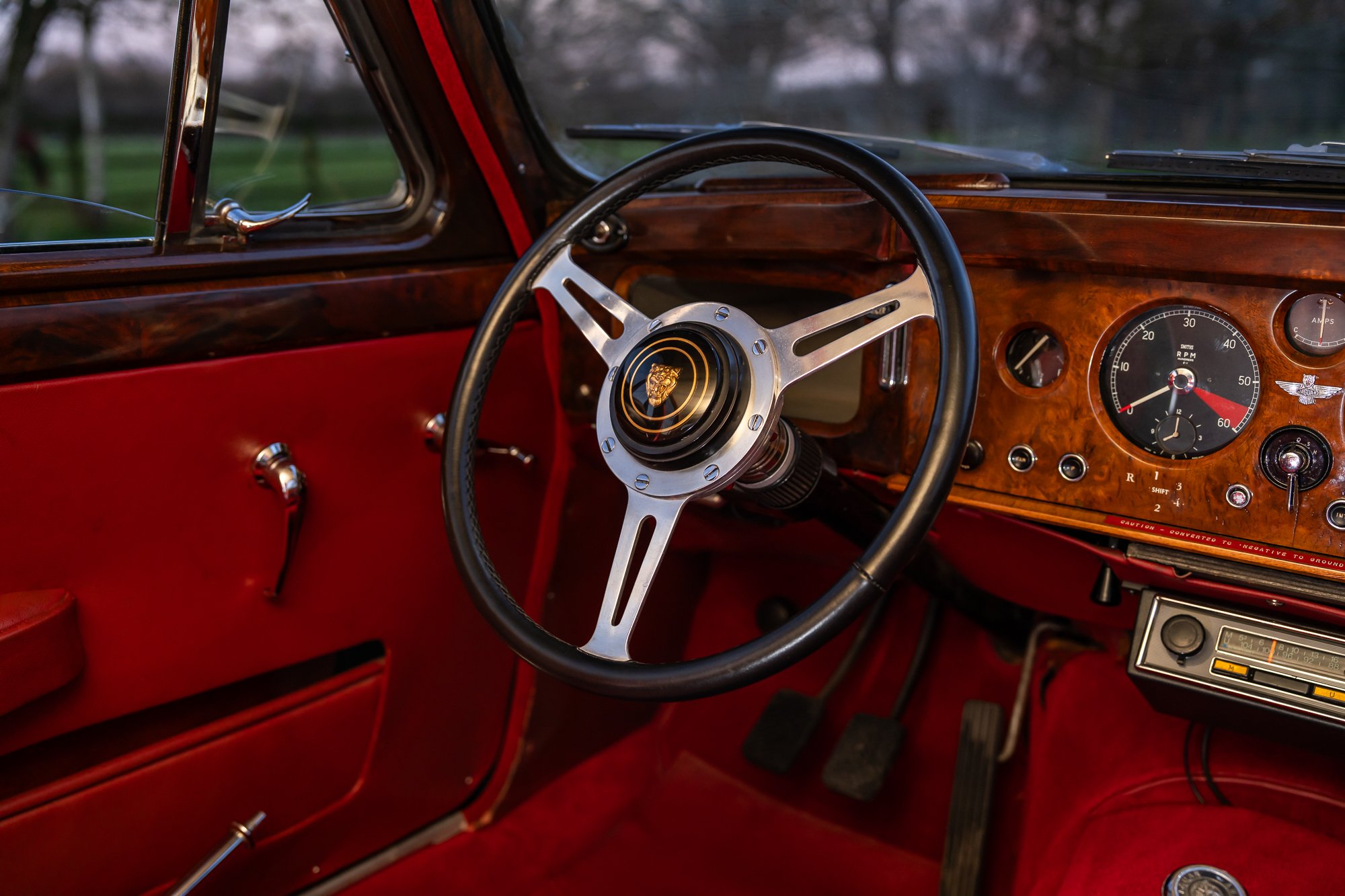
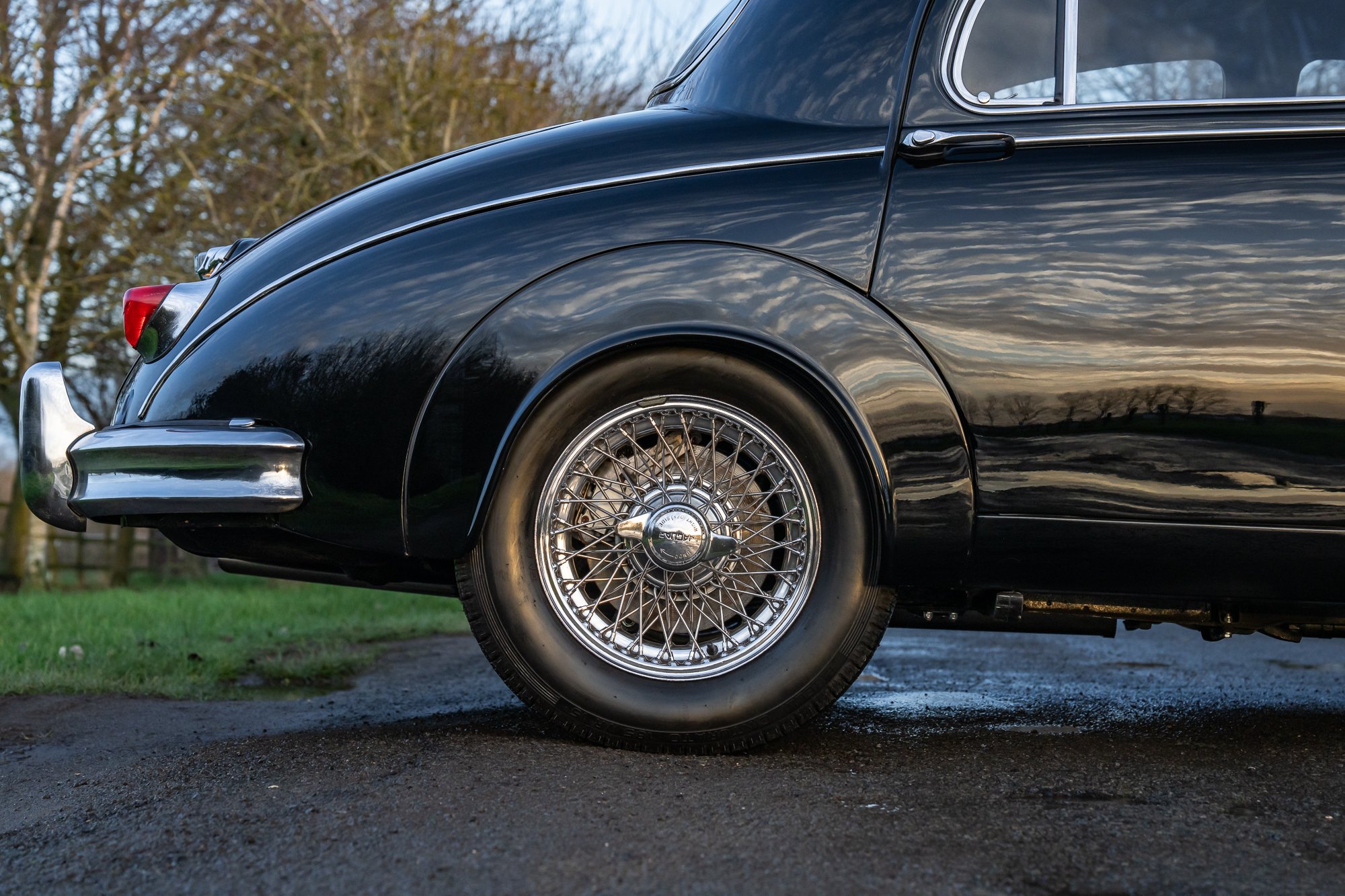
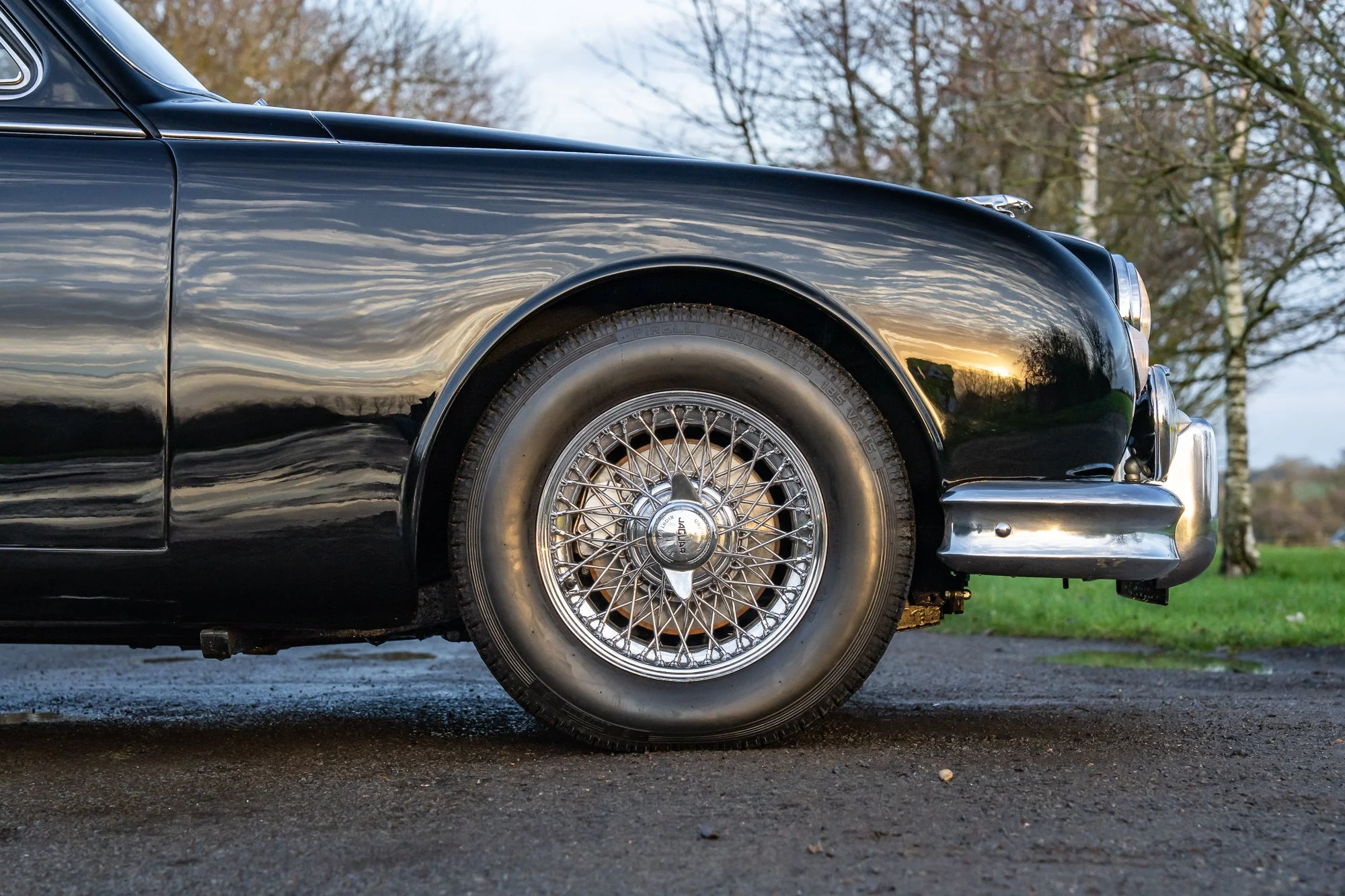
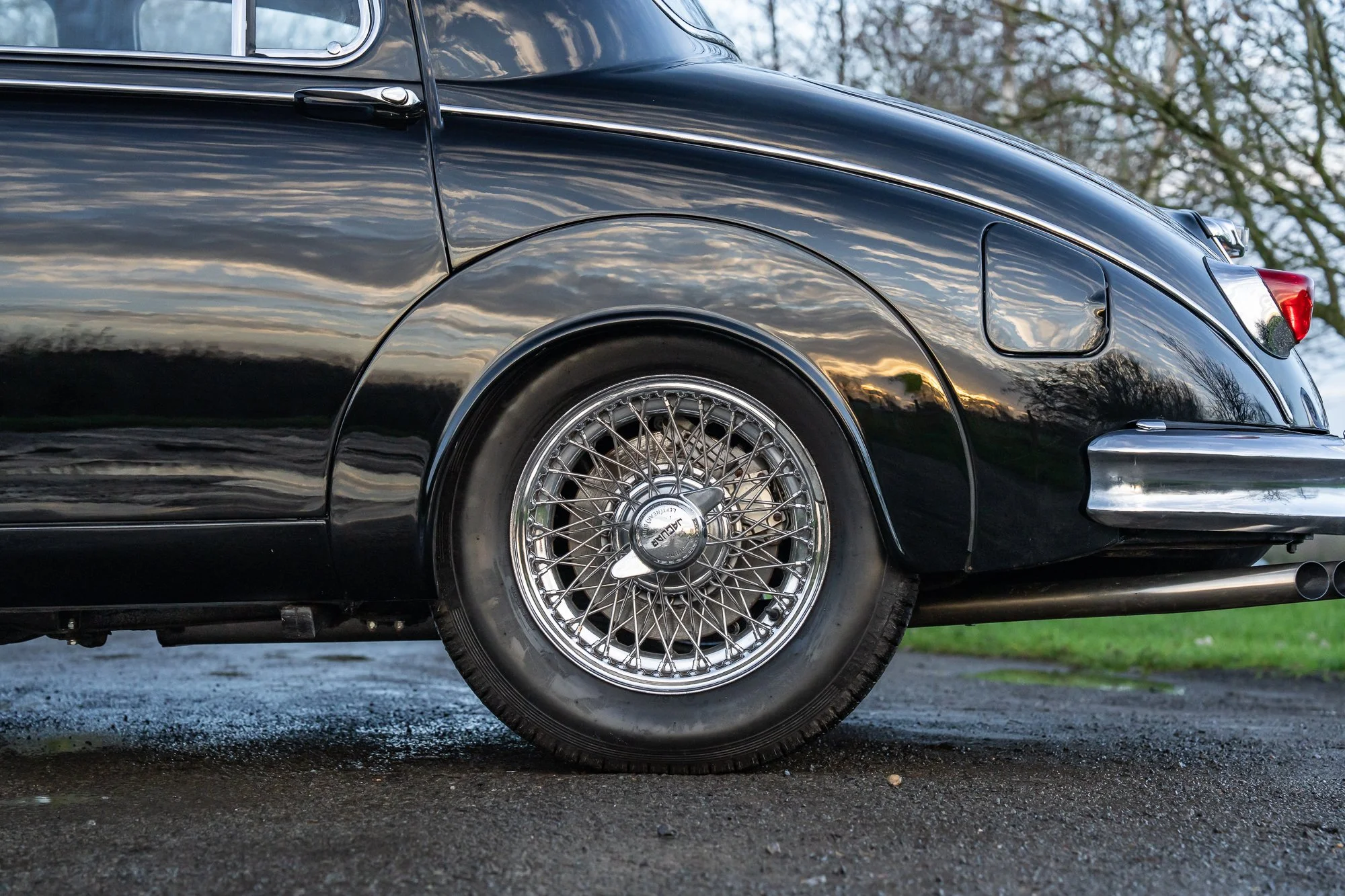
Richard Shideler, the first owner of this Jaguar 3.4 Litre was clearly an organised man when it came to paperwork and thank goodness he was because we can paint the picture of this Jaguar’s early years in full technicolour. When ordering the car at Charles Hornburg Jaguar in Beverely Hills, he specified it in Black with Red interior, disc brakes behind optional chrome wire wheels, white wall tyres and he even opted to collect the car from Coventry, with the intention of touring Europe, before shipping the car back.
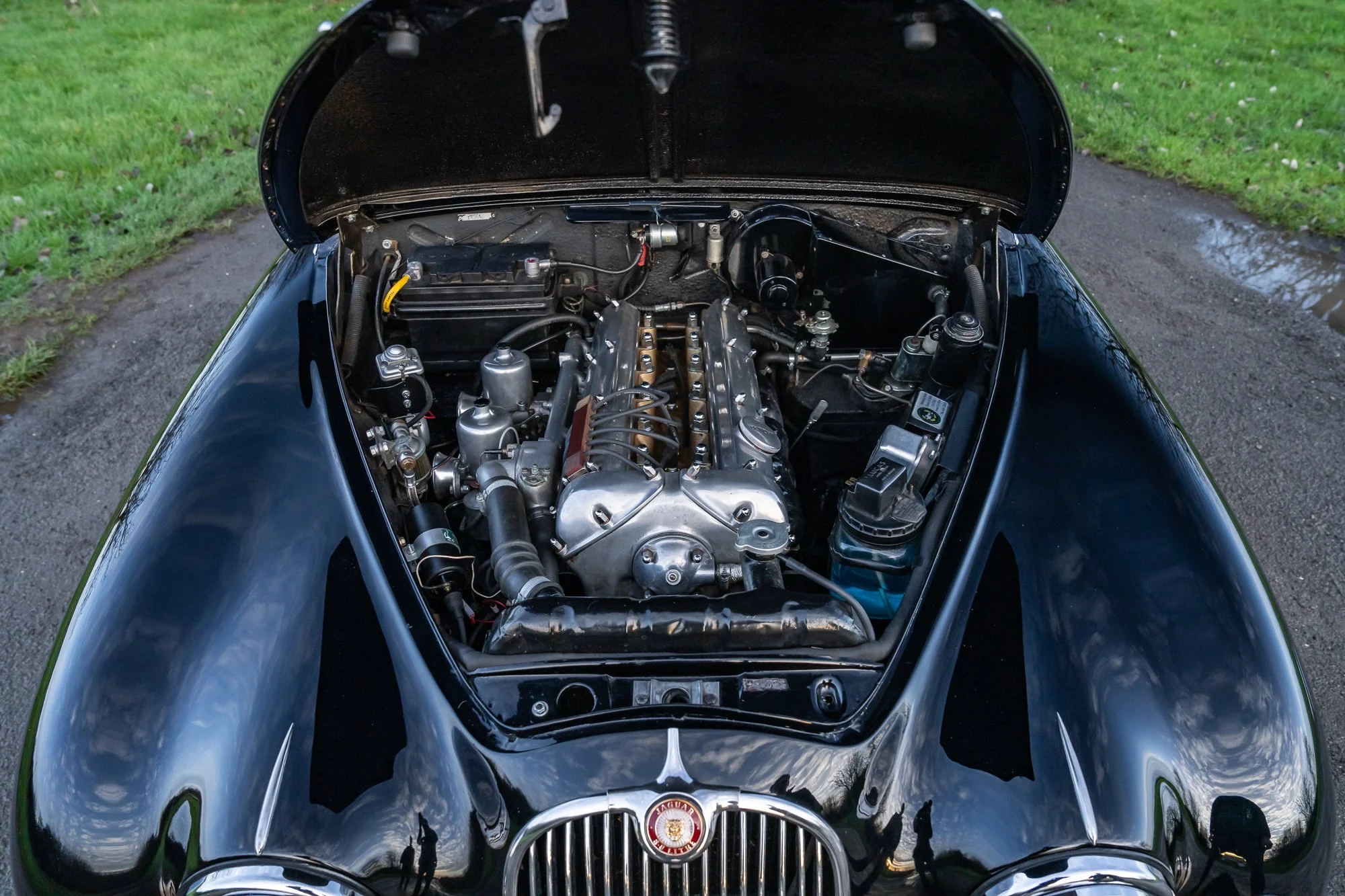
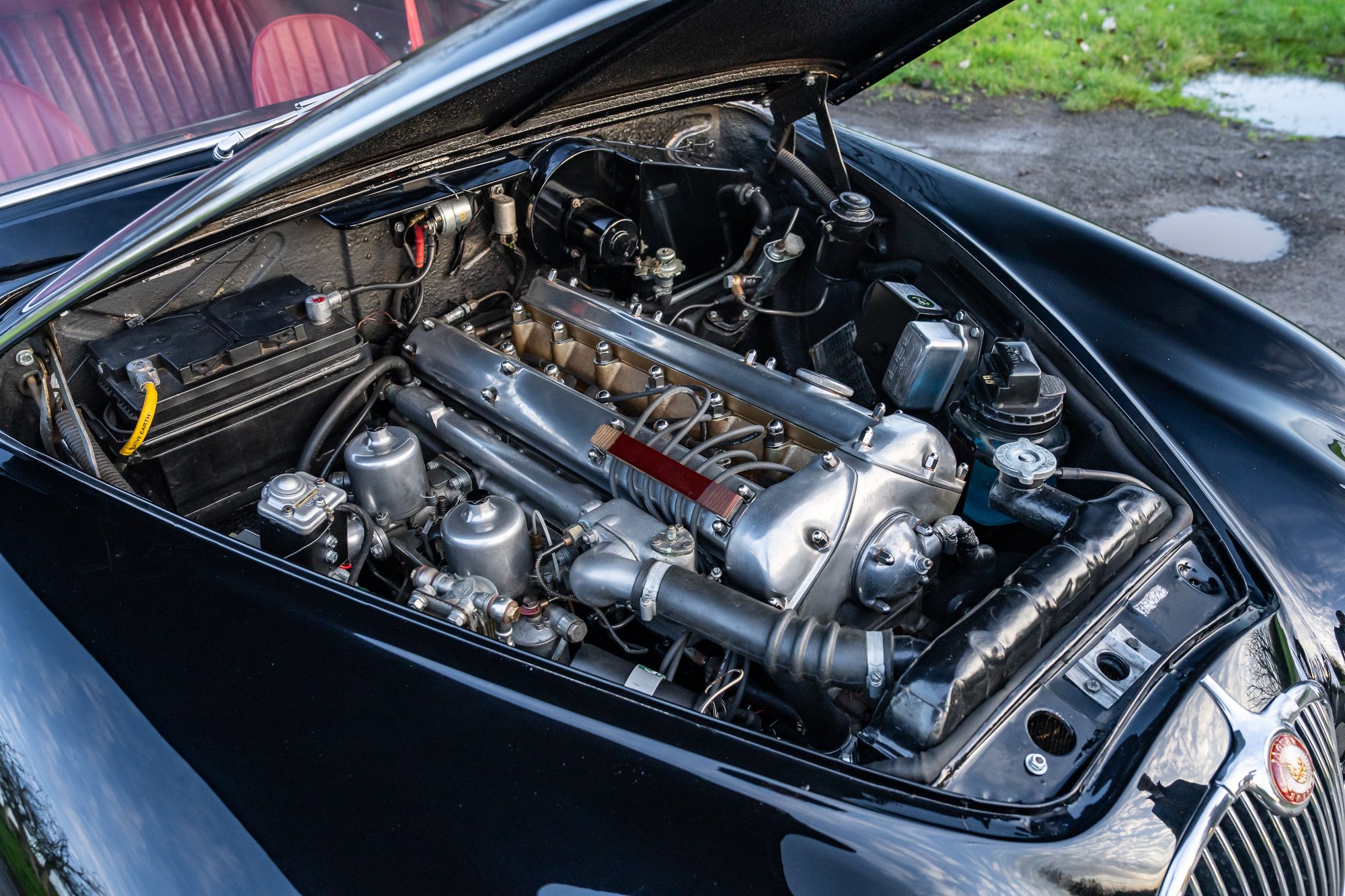
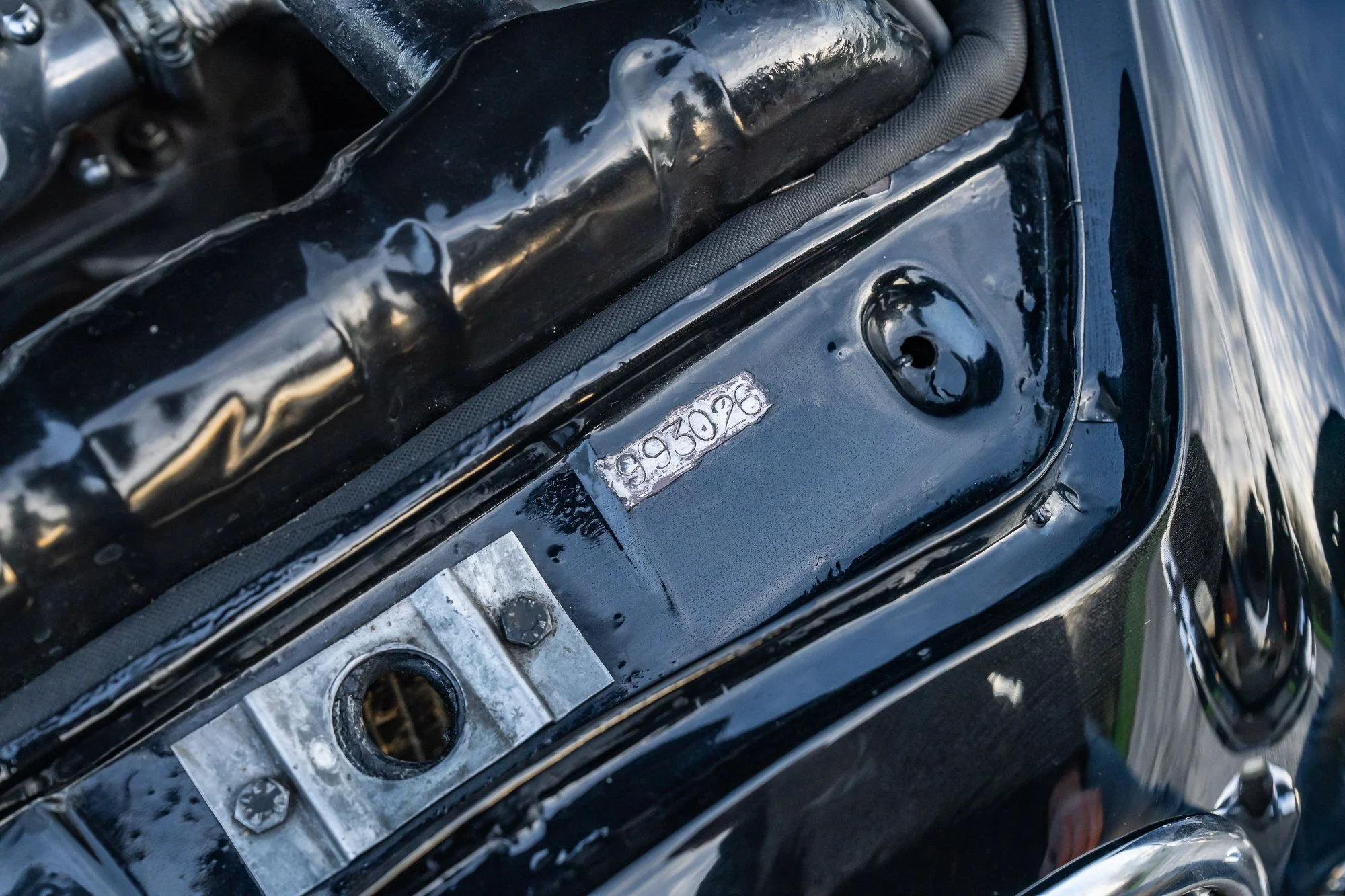
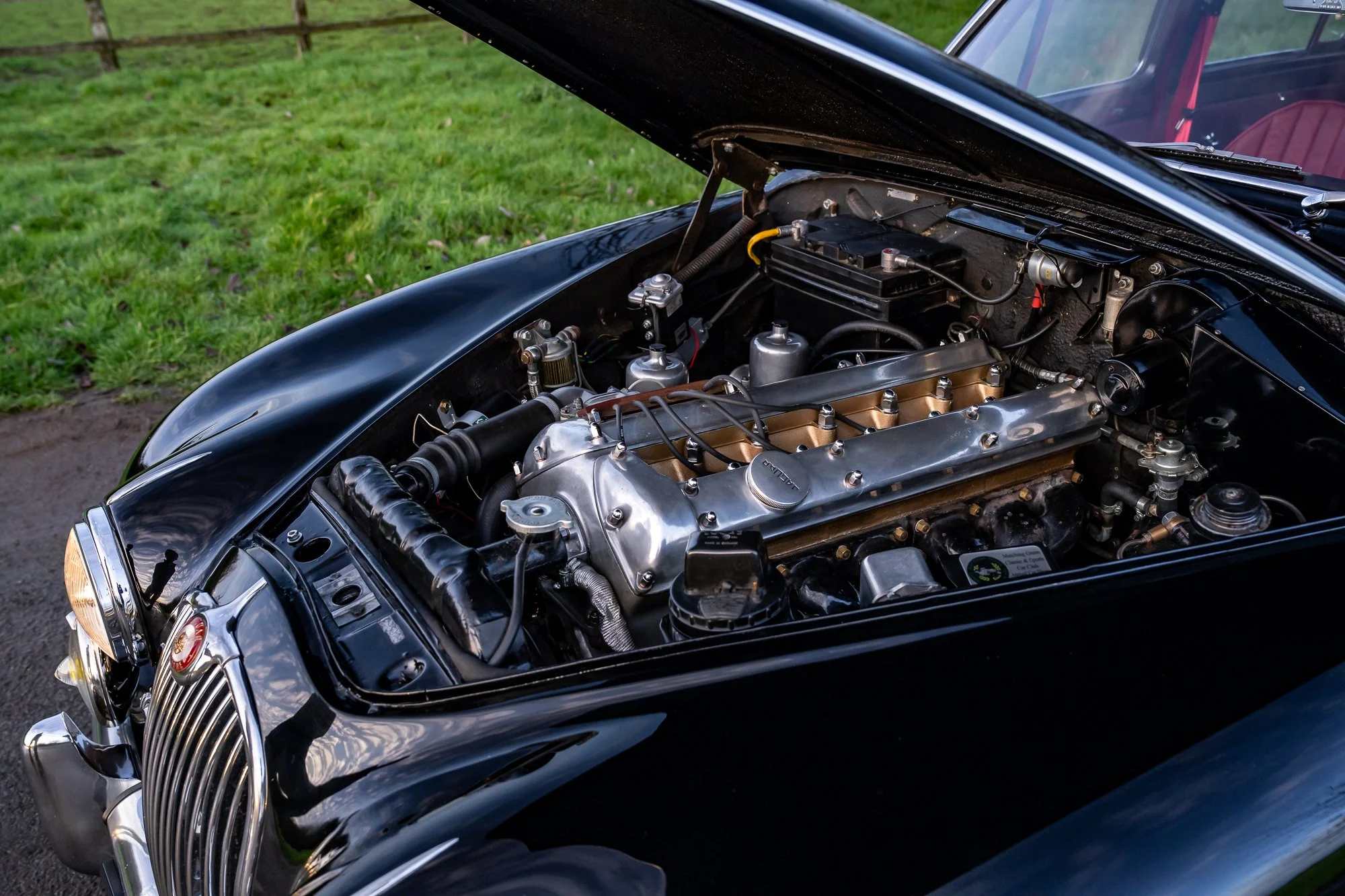
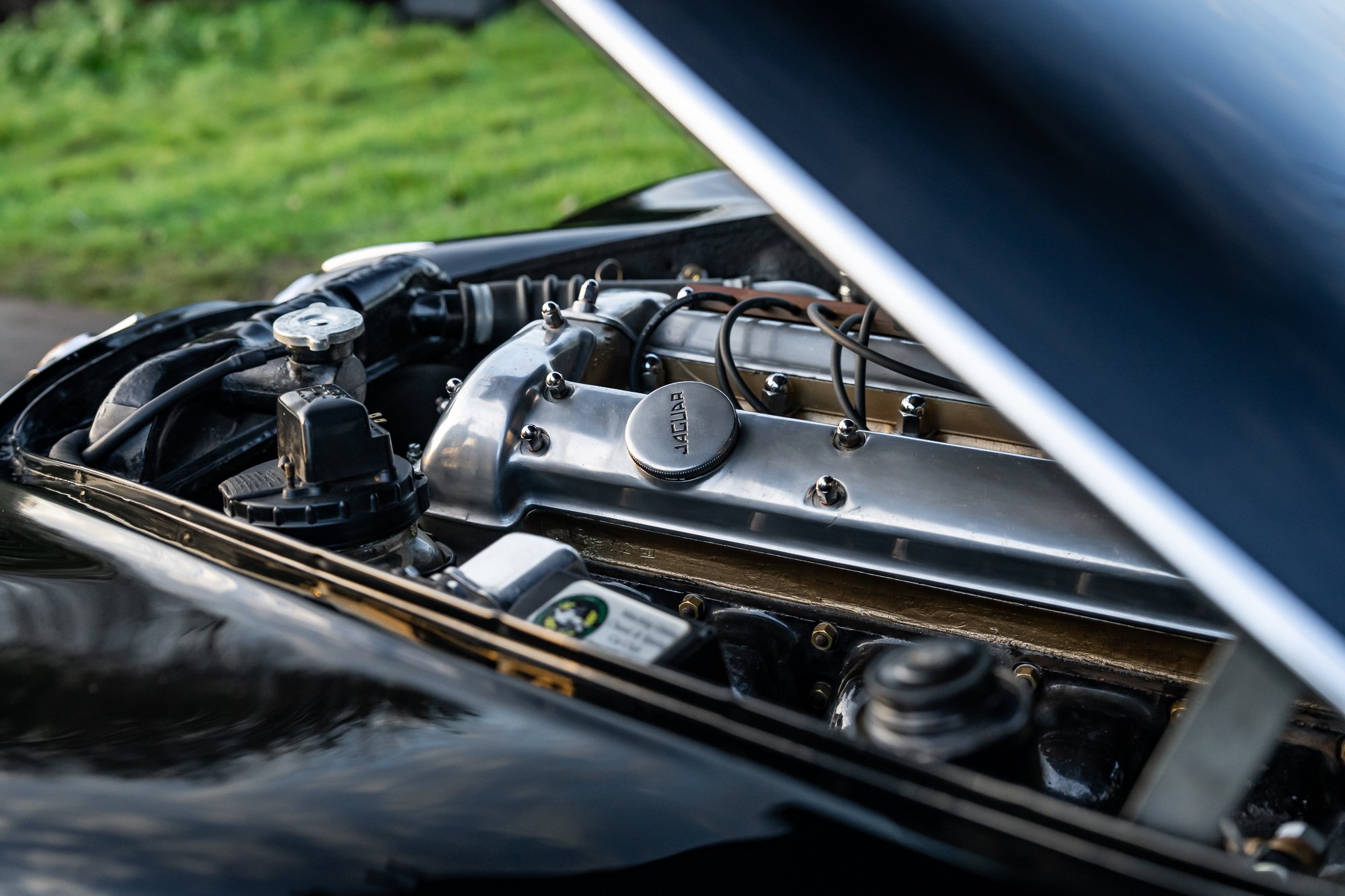
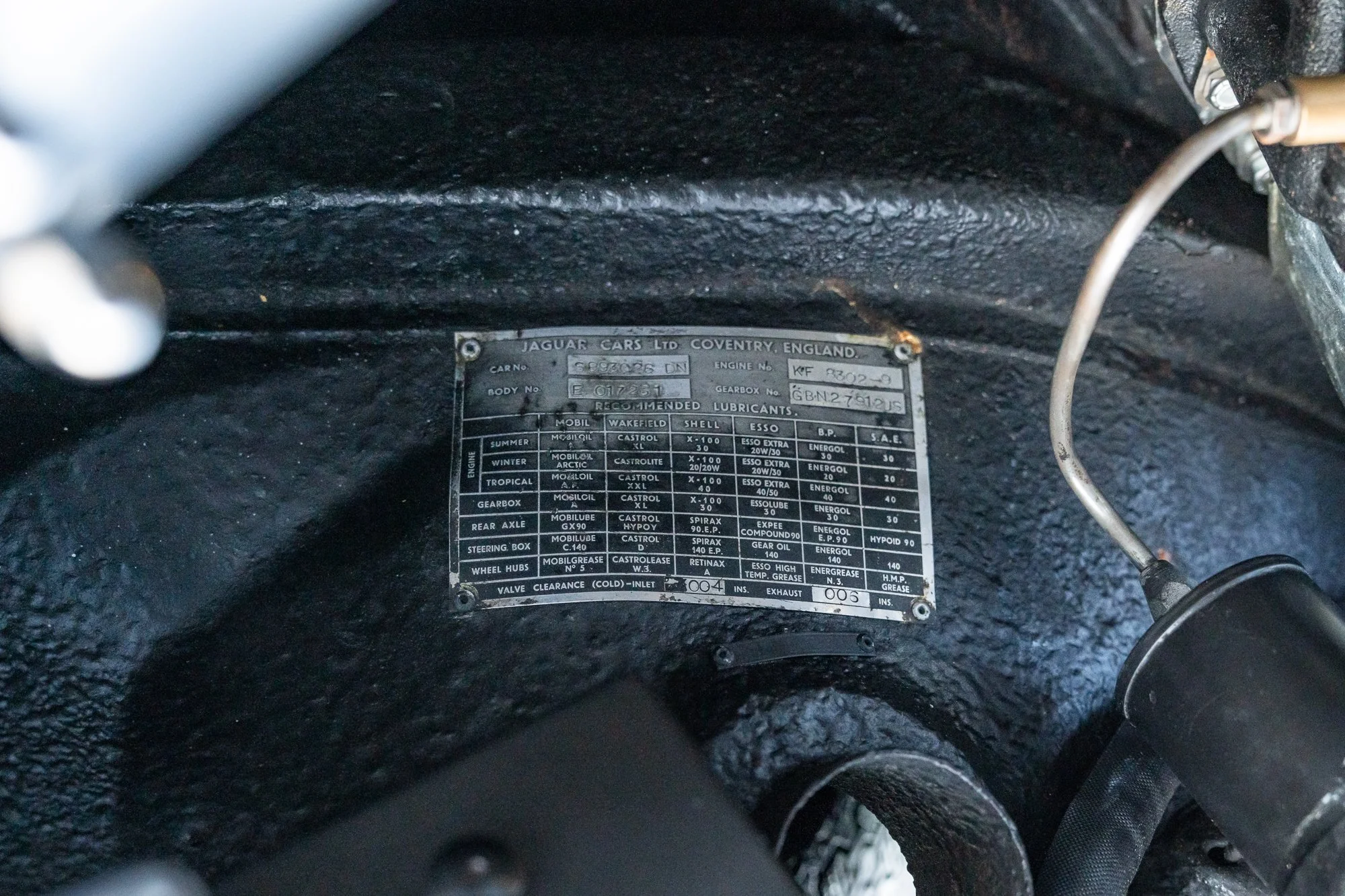
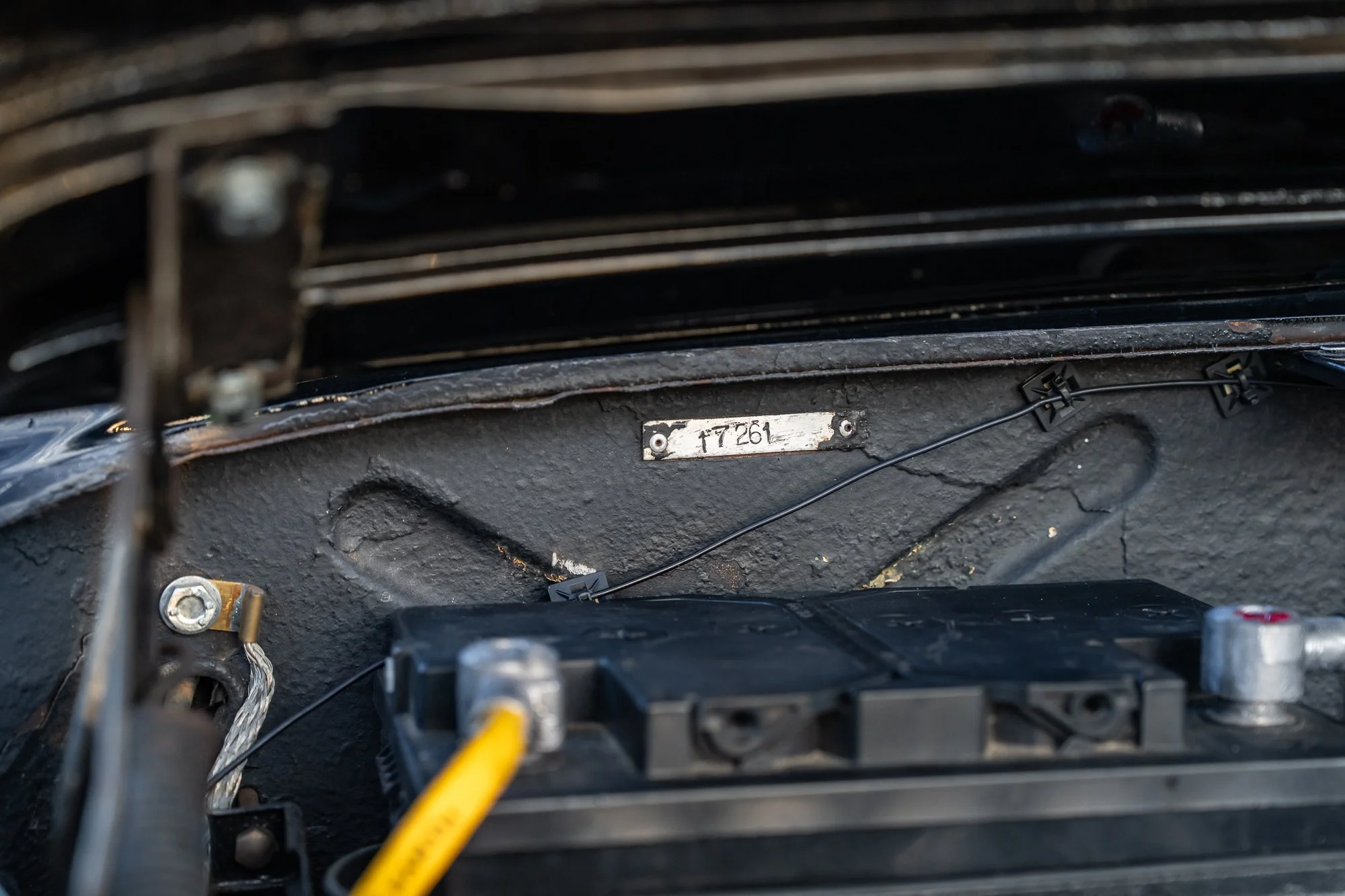
The most fascinating thing about the specification of this Jaguar though, is the engine. A copy of the register of motor vehicles from the time, show 3286 DU being registered on the 6th October 1959 with chassis number S993026DN with engine number KF8302-9 (all of which the car retains today) with a cubic capacity of 3781cc, rather than the 3442cc it should have received. So it would appear that this car left the factory fitted with a 3.8 Litre engine, which if true, is an incredibly cool upgrade indeed.
In order to use an export car in the UK and Europe, he would need an International Certificate for Motor Vehicles from the RAC, we know this because it is in the history file along with the letter telling him he would need it. He would need to arrange insurance too, which we know he did, because the certificate and letters are in the history file. After his touring he would need to arrange the shipping back to the USA, and yes, you guessed it, he did and we have all the letters from the shippers.
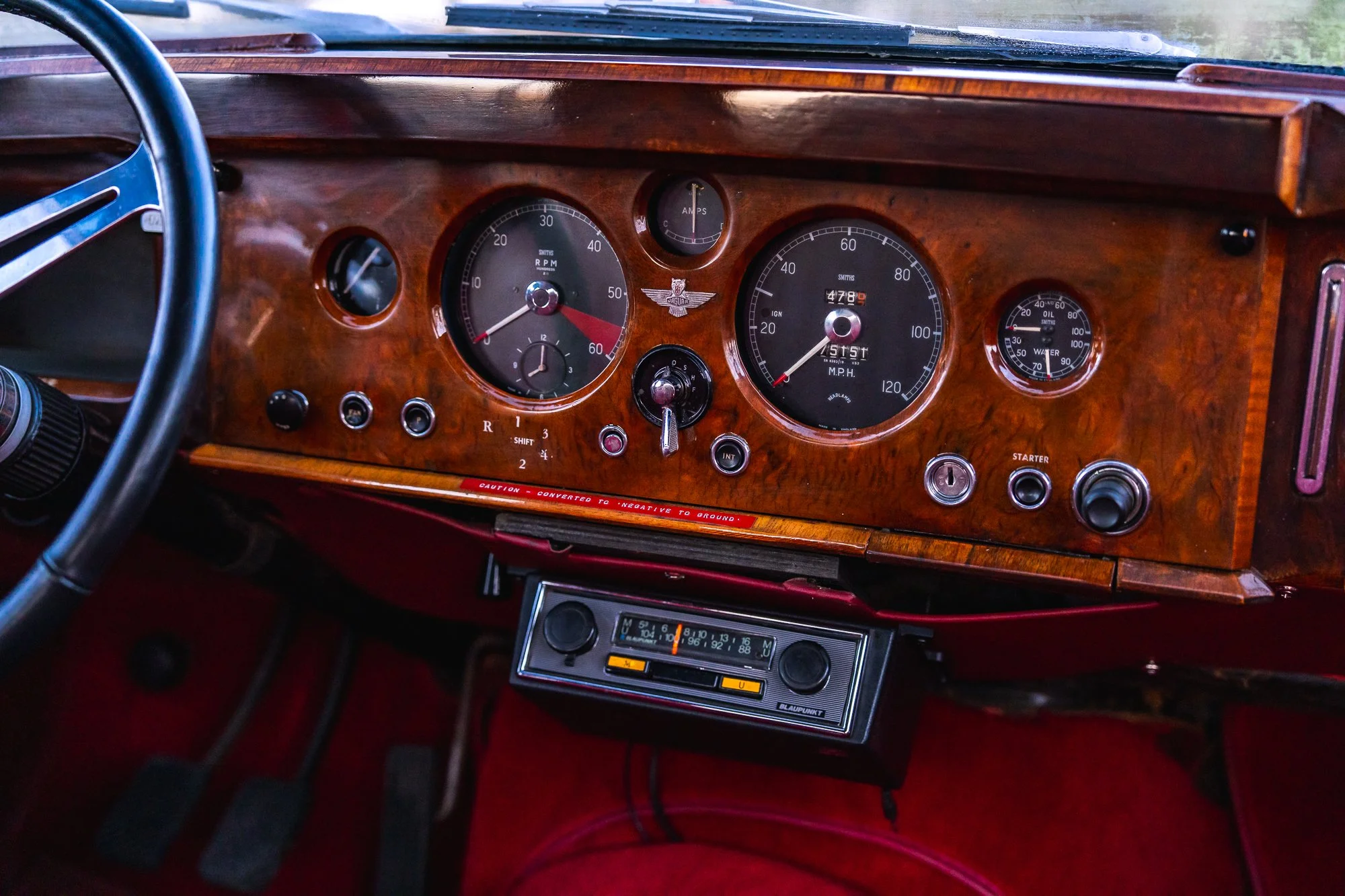
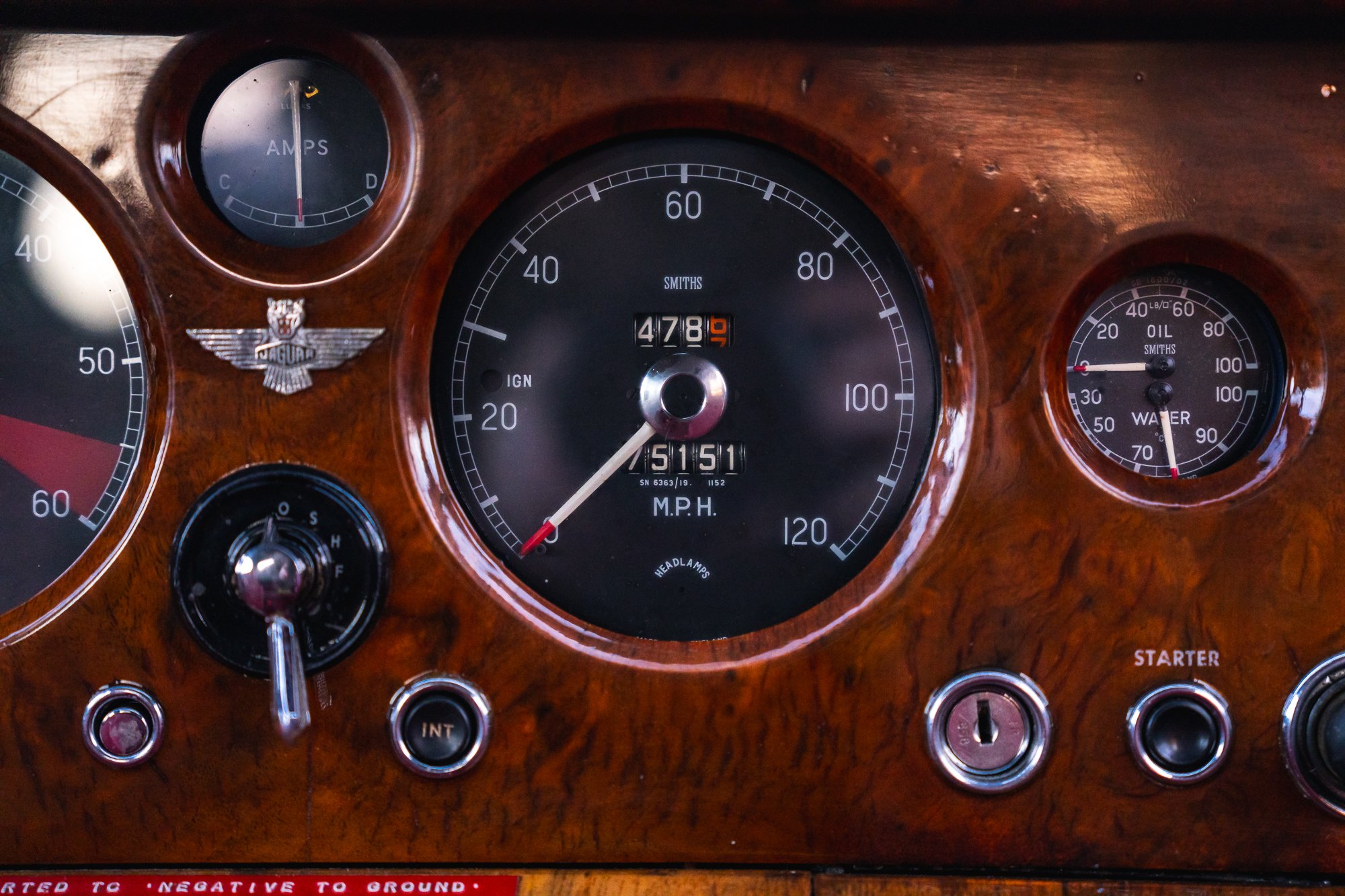
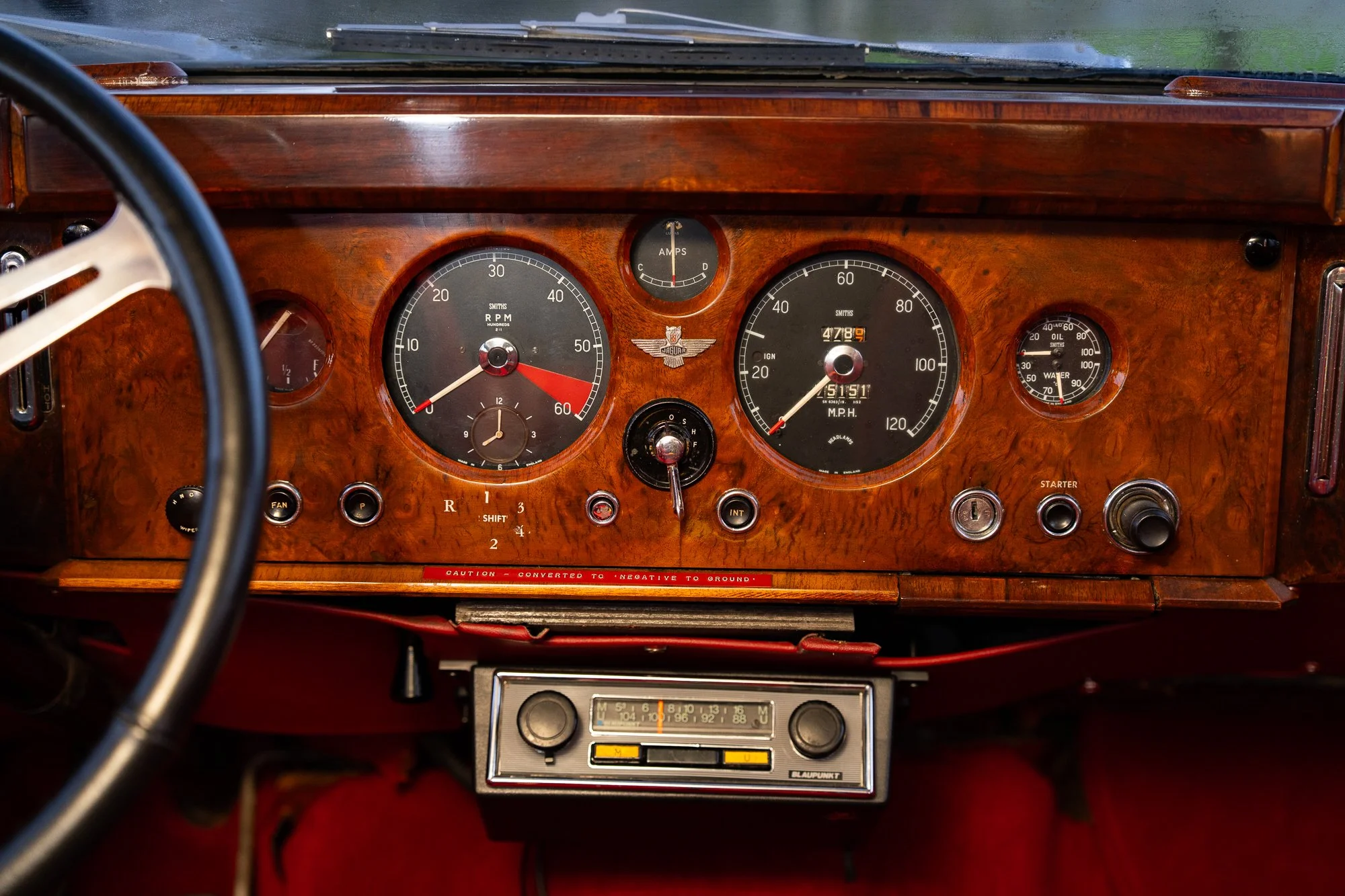
After collecting the Jaguar on Wednesday 7th October 1959, Richard enjoyed the car somewhat before it was later shipped on the 27th December on the SS Hoyanger back to Los Angeles. From here the history file documents numerous work on the car, including a service in June 1960 by Bill Corey where it is already reading 13,000 miles on the clock. Richard was clearly enjoying his new Jag! He would go on to enjoy his Jag for the next 15 years, owning the car until 1975 at which point it was sold to Mr. Anil Prem of Los Angeles. Unfortunately, the paper trail dries up around this point until 2014 when the car is bought and shipped to the UK by a very prominent historical racing driver. We know from the paperwork registering the car again in the UK, that Mr. Prem was the last owner of the car, so can only assume it was laid up in a garage in California all those years.
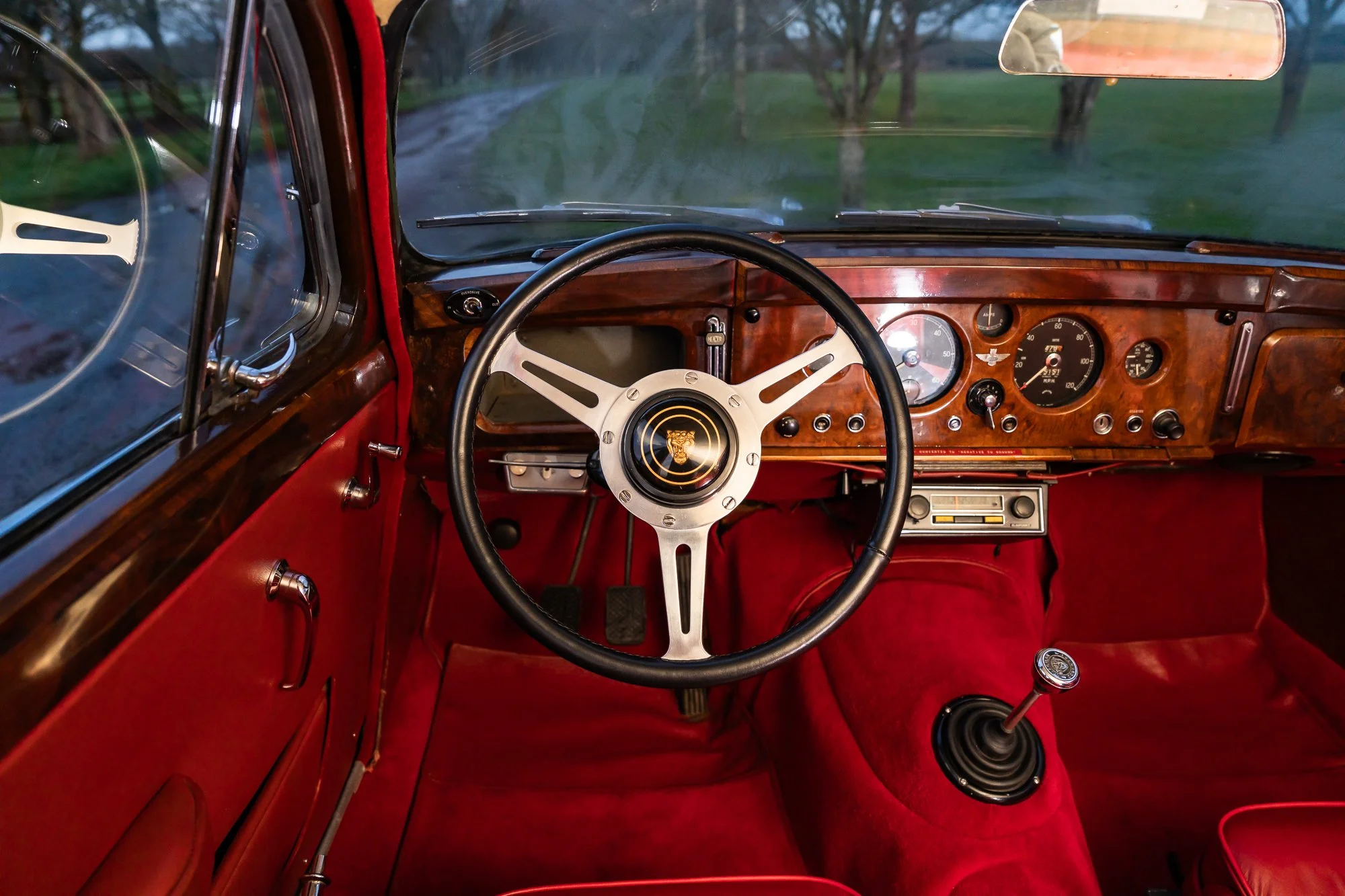
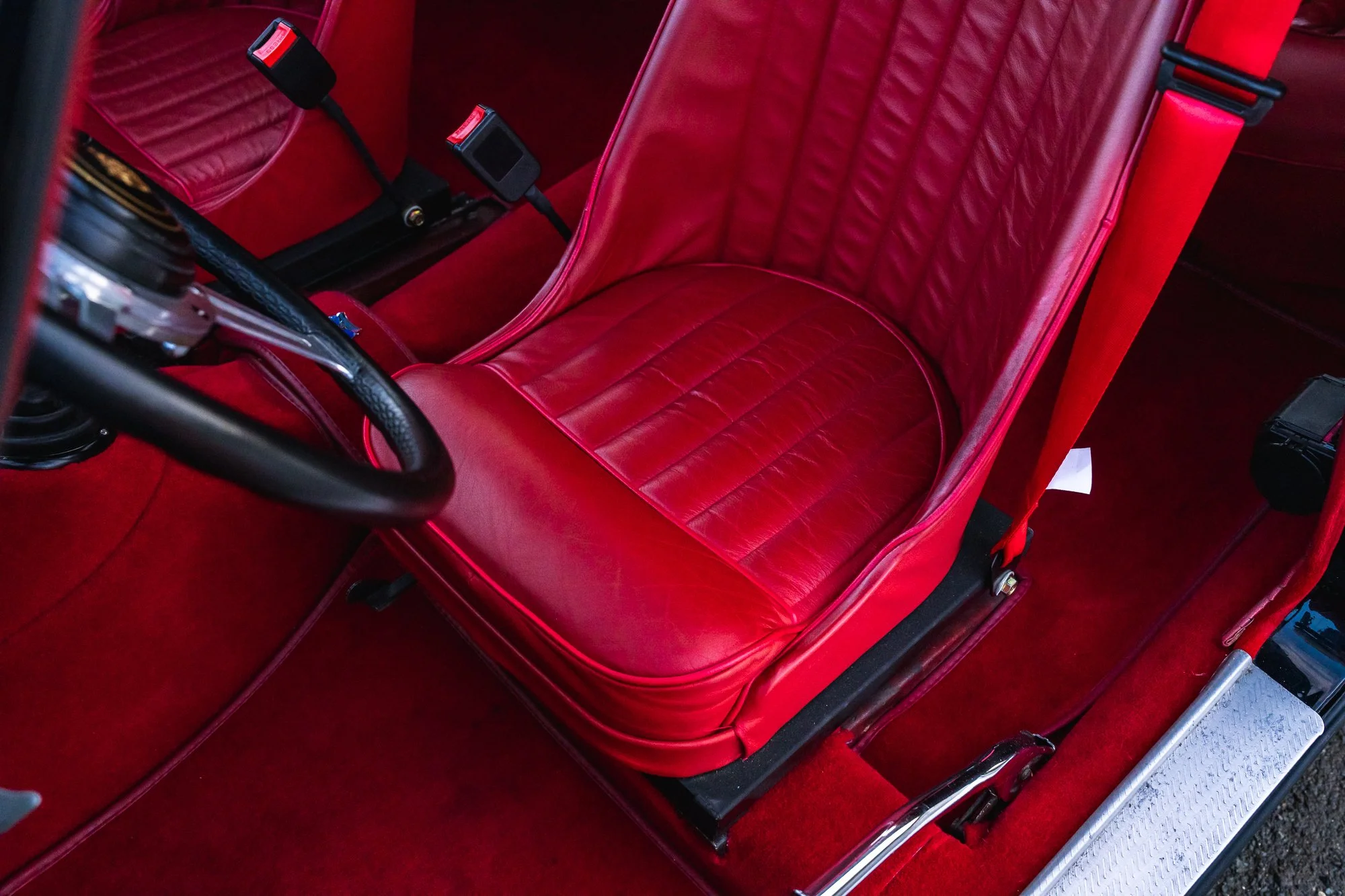
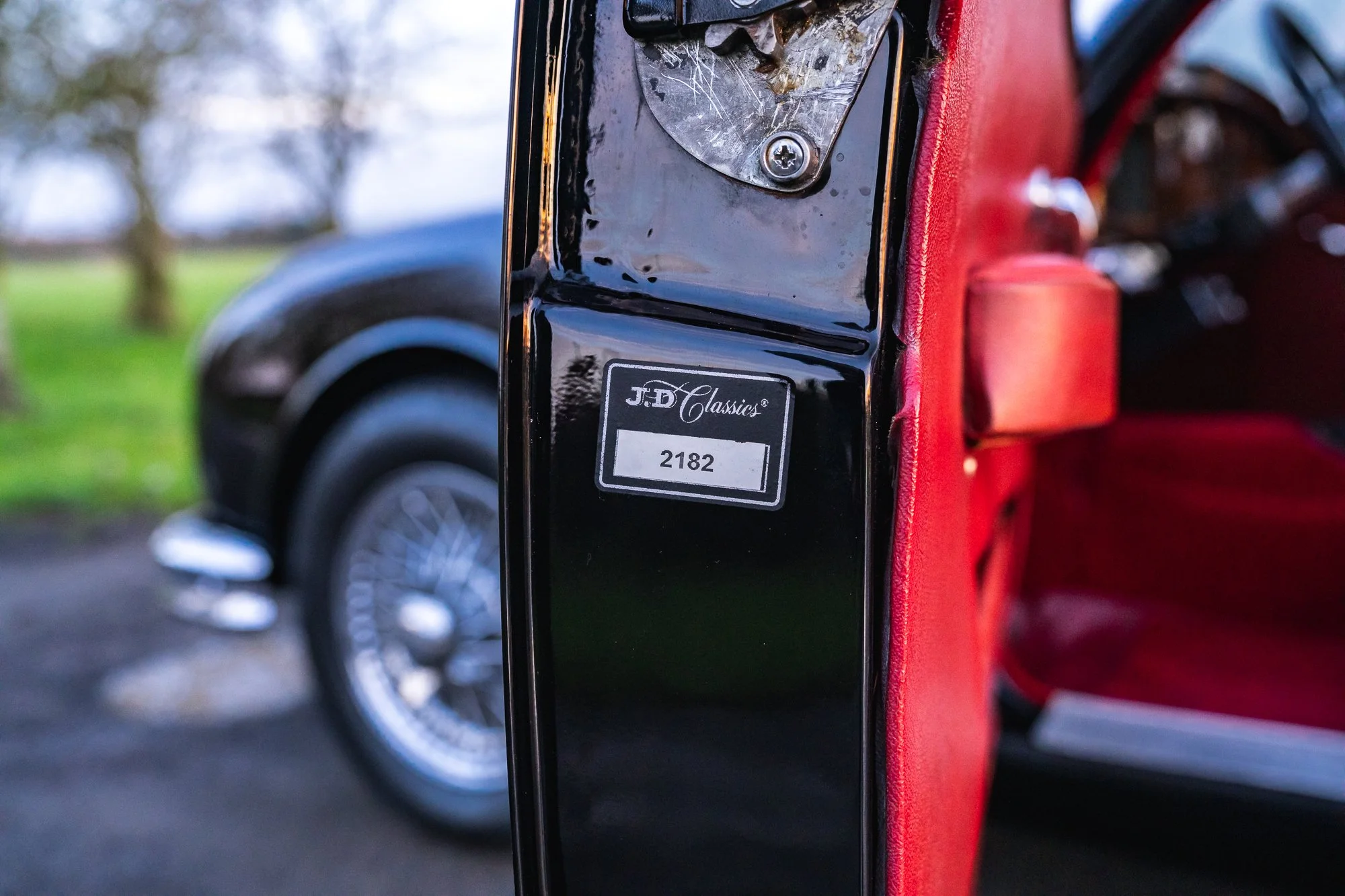
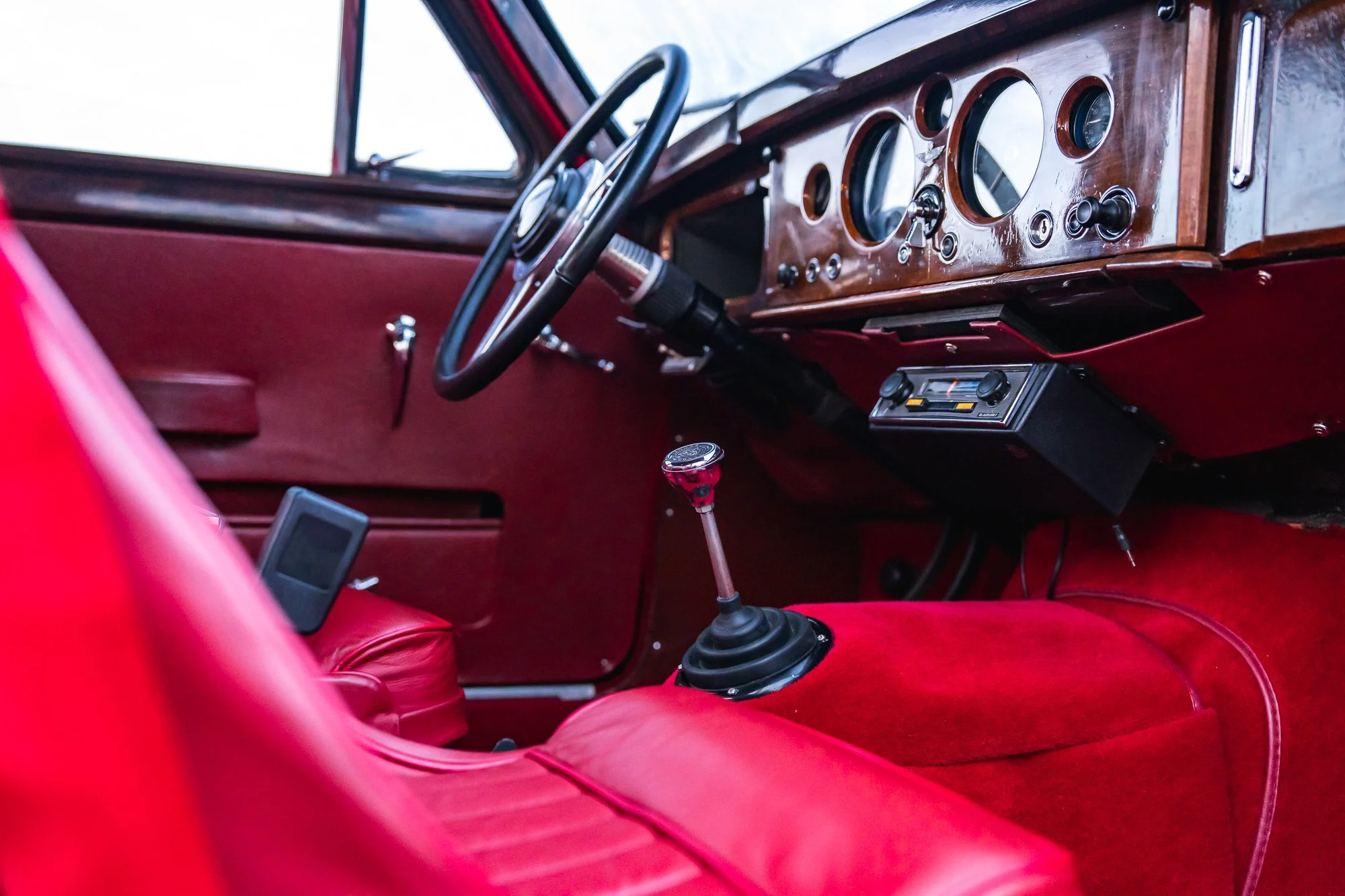
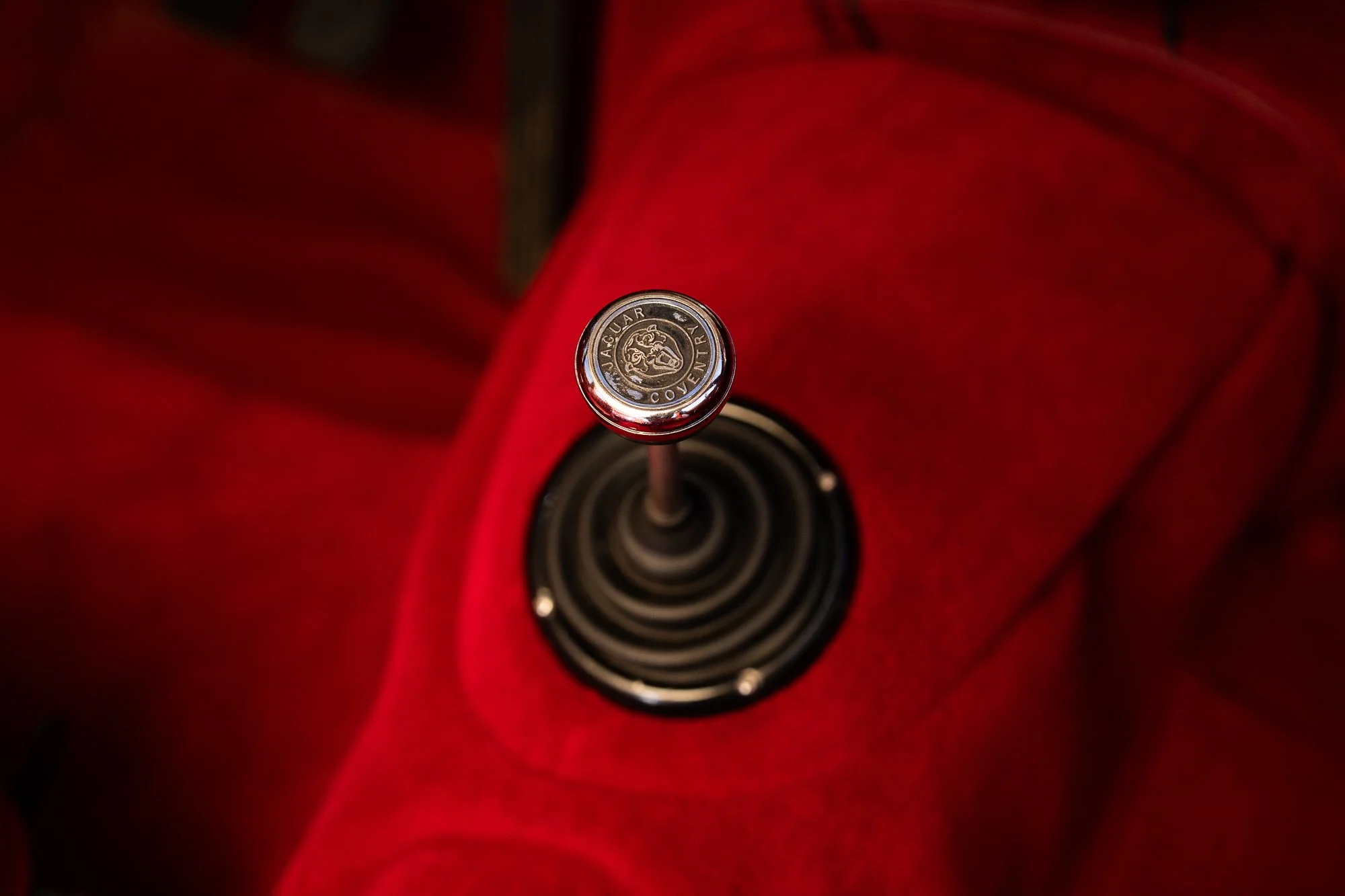
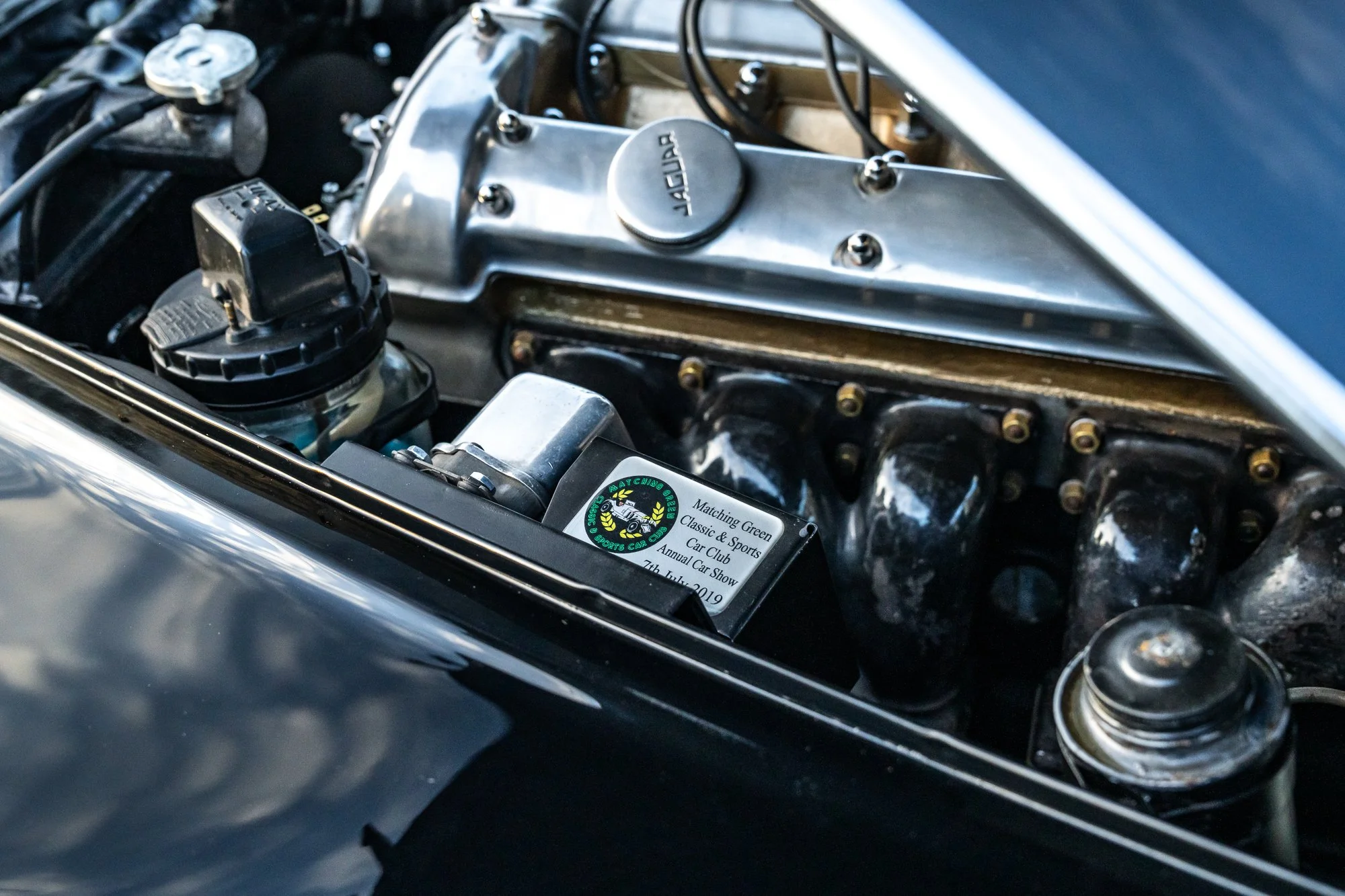
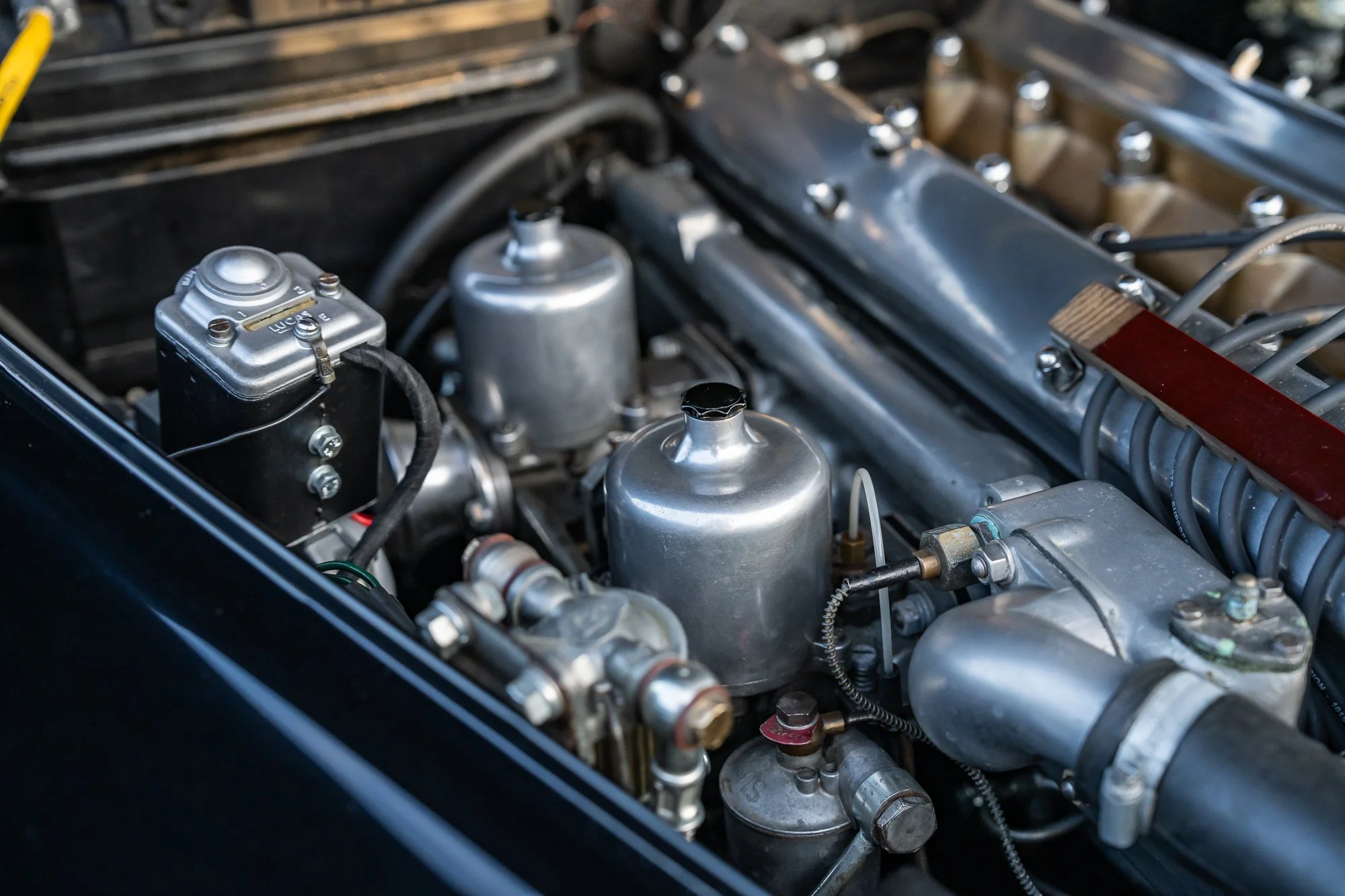
A dry California car also makes a lot of sense for the gentleman who purchased the car. He was a works driver for Jaguar Heritage and his mission was to create the ultimate Mk I, after all the legendary works driver, Mike Hawthorn, had just such a car in period. At this time JD Classics ran a lot of the Jaguar Heritage racing cars and most likely helped source this car in the USA. Upon arrival in the UK, the car was stripped to shell and treated to a full respray and retrim, although lovely original items like the headlining and the door cards were retained. Period bucket seats were fitted along with seatbelts. The engine is the real star of the show though, being rebuilt to fast road spec with D-Type specification cams and top end. Breathing through 2” SU carburettors the noise of this sedate looking gentleman’s express is something to behold, whether that be the induction noise or the crisp bark of the exhaust note. It is said too often but this truly is a wolf in sheep’s clothing.
The current owner acquired the car in 2022 and has enjoyed it as part of his small collection of British sports cars. Now, the time has come for someone else to enjoy that mischievous grin that surely appears when you surprise something more modern and sporting at a set of traffic lights!